
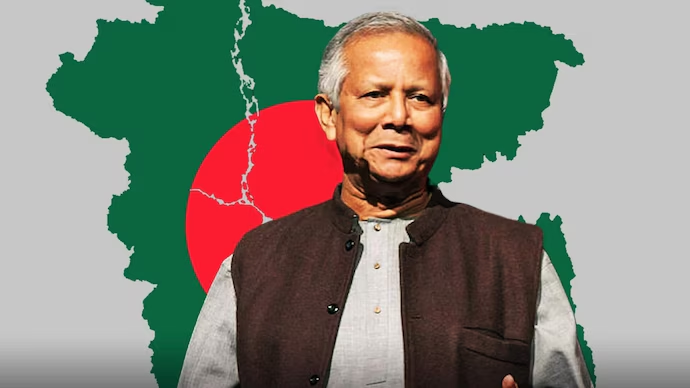
AFP journalist Qadaruddin Shishir put the student revolutionaries in touch with Mohammad Yunus. The revelation raises a serious question about the boundary between journalism and political involvement, when a journalist helps protest leaders establish contact with a prospective head of government before an incumbent government falls, is the journalist merely facilitating communication, or becoming a participant in the political transition?
According to reports published on October 29, 2026, Shafiqul Alam, Muhammad Yunus’s former press secretary, claimed that Qadaruddin Shishir, then an editor with AFP’s Dhaka fact-check team, connected Bangladeshi student protest leaders with Yunus approximately two days before Sheikh Hasina’s government fell on August 5, 2024. Alam said Shishir helped initiate contact because the student leaders wanted Yunus to head a possible interim government. Navbharat Times+1
That is a significant disclosure. But it is important to distinguish what has been alleged from what has been established: the account is attributed to a former Yunus aide, and it does not, by itself, establish that AFP as an organisation planned or supported regime change.
The key issue: journalism versus political coordination
There are three distinct questions here.
- Was there advance planning? The reported account suggests student leaders were considering a post-Hasina government before she left office. That is evidence of contingency planning, although it does not establish that the entire uprising was orchestrated in advance. Navbharat Times+1
- Did the journalist go beyond reporting? If Shishir actively arranged a confidential introduction to help the protesters recruit a prospective interim leader, that would be a form of political facilitation, not simply reporting a story. Whether it violated professional standards would depend on the circumstances, his intentions and any applicable newsroom rules.
- Does this prove a regime-change operation? No. Establishing contact with a potential successor does not, on its own, prove that the journalist, AFP or a foreign organisation engineered Hasina’s downfall. The protests had already escalated amid a violent government crackdown and widespread demands for her resignation. reutersinstitute.politics.ox.ac.uk+1
There is also a revealing detail: in a March 2025 account based on student leader Asif Mahmud’s book, The Daily Star reported that student leaders had begun reaching out to Yunus as early as August 1, 2024, and had been preparing for a possible transition. That predates the latest revelation and lends support to the narrower claim that succession planning was underway. The Daily Star
The most important test is transparency. Did the journalist merely connect two parties who wanted to speak, or did he use his position, newsroom resources or professional access to help organise a political transition? Those are materially different actions.
If the account is accurate, it warrants scrutiny of journalistic independence and conflicts of interest. But the label regime-change operator requires evidence of a broader role than the reported introduction alone establishes. The next questions are whether AFP knew of the activity, whether Shishir has responded to the allegation, and whether any independent evidence corroborates Alam’s account.

