
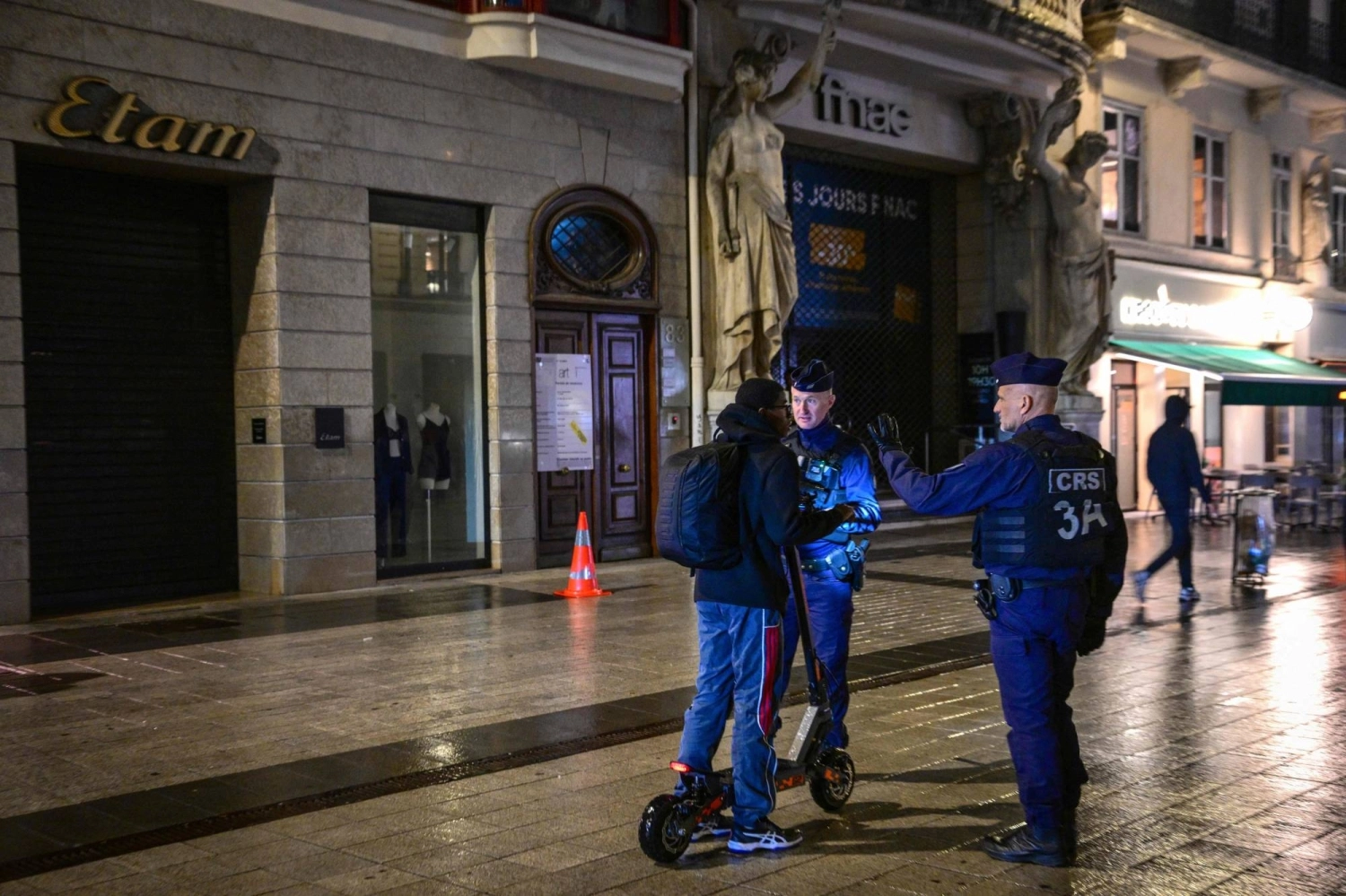
Apparently, the definition of democracy depends on geography. When protesters take to the streets in Delhi, and the government deploys police to maintain law and order during the protest, international commentators discover an alarming threat to civil liberties. But when Paris imposes an overnight curfew to stop the protests, the conversation suddenly shifts towards public safety, restoring order and protecting citizens. The double standards of news coverage and global commentators couldn’t be clearer.
On October 19, 2026, Paris police imposed an overnight curfew from 11 pm to 6 am in two areas of the French capital, Place de la République and the Les Halles shopping district, following a weekend of violent unrest. Demonstrations were also banned during specified hours. The unrest followed nationwide protests over living costs and educational conditions, with violence and damage to businesses prompting authorities to take emergency measures. Several other cities in France also saw these extreme measures.
Now imagine the same headlines being written about India. Delhi police deployed force to prevent any violence and protect public property. Protesters were detained to prevent any of the violence which we are seeing in Paris.
Would the deployment of Delhi Police personnel be described as a necessary measure to prevent further disorder, or as another chapter in the alleged decline of Indian democracy?
We do not have to imagine the international reaction to Delhi. The October 10 protests in the Indian capital attracted considerable scrutiny. Reuters reported allegations of excessive police force against journalists, while international rights organisations raised concerns about mass detentions and restrictions on press freedom. The Washington Post and The Guardian also published commentary critical of the Indian government’s handling of the demonstrations.
There are legitimate questions to ask about both countries. Were peaceful demonstrators treated proportionately? Were journalists allowed to report freely? Were restrictions necessary, lawful and limited to what public safety required? These are questions every democracy must answer, whether the police wear uniforms in Delhi or Paris.
But why does the language surrounding these events so often appear to change with the country involved? In India, police deployment can become evidence of authoritarianism. In France, curfews and restrictions are more readily presented as instruments to restore public order. Surely, the standard should be the same. Judge the conduct of the authorities, not the nationality of the government.
The United Nations’ response also deserves scrutiny. On October 10, the UN Human Rights Office expressed concern about mass detentions in Delhi and called for the right to peaceful assembly to be respected.
However, claiming that the UN has remained entirely silent about France would be inaccurate. On October 9, its human rights office expressed concern about French student protests and warned against disproportionate police force. But their response to France and India are again entirely different.
Ultimately, democracy cannot mean that governments friendly to international commentators receive the benefit of the doubt while governments they dislike face immediate condemnation. Nor does the imposition of a curfew automatically prove that a government is justified. Restrictions must be assessed against the circumstances, the law and their impact on fundamental rights.
The test of consistency is simple that if police deployment in Delhi deserves scrutiny, so does police action in Paris. If a French curfew can be discussed in the context of public safety, India’s security measures deserve the same contextual examination.
Civil liberties are universal, not a diplomatic privilege. Either the standard applies everywhere, or the grand speeches about universal democratic values are little more than selective outrage dressed up as principle.

