
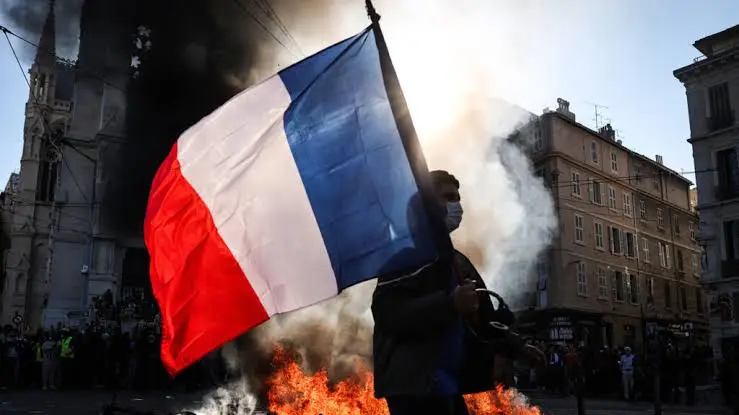
During the past few days, the world has witnessed dramatic visuals of arson, looting, street protests, and police brutality emerging from France. Now, the fire is spreading to many more countries.
Europe has long presented itself as a model of economic prosperity, social welfare and political stability. But these street protests are telling a different story. From France to Belgium, Italy and Portugal, protests over living costs, housing, wages and public services have exposed growing dissatisfaction of residents with the European Union.
France witnessed particularly intense unrest on October 17, when student-led demonstrations expanded into a broader movement involving trade unions and citizens angry about economic pressures and deteriorating public services. While many demonstrations remained peaceful, some descended into looting, arson and clashes with police.
The cost-of-living squeeze is central to the anger. Even when inflation slows, prices rarely return to their earlier levels. Food, energy and everyday essentials remain expensive, leaving households struggling to stretch their incomes. Across the European Union, food and non-alcoholic beverage prices rose by 34% between August 2021 and August 2026, according to Euronews.
Housing has become another flashpoint. In Portugal and Spain, rising rents and affordability concerns have fuelled demonstrations, while younger Europeans increasingly worry about whether they can afford independent lives despite working or studying hard.
Public services are also under pressure. In France, students have protested against teacher shortages, deteriorating school facilities and an education system they consider increasingly inadequate. Their grievances have attracted support from workers and unions demanding better wages, pensions and public investment.
Many people have blamed the unchecked immigration into Europe for these protests. They say that these immigrants are at the forefront of these protests and are behind the vandalism and the looting. However, just dismissing these protests as immigrants causing trouble will mean ignoring all the economic reasons behind these protests.
All these protests have different causes, and the scale of violence varies considerably. The challenge for European governments is to address legitimate economic grievances while maintaining public order and protecting peaceful protest. The violence on the streets and police cracking down even on peaceful protests may result in these protests spiralling out of control. Arrests and police deployments may restore immediate control, but they cannot resolve unaffordable housing, strained schools or stagnant purchasing power.
If European governments want calmer streets, they will need more than appeals for order. They will need credible answers on jobs, prices, housing and the quality of public services.

