
In a democracy, criticism of the government is not merely acceptable, it is essential. Citizens, opposition parties, activists and lawyers have every right to question those in power, demand accountability and campaign for political change. However, when a prominent public figure uses the phrase “regime change,” the context, implications and potential consequences of those words deserve serious scrutiny.
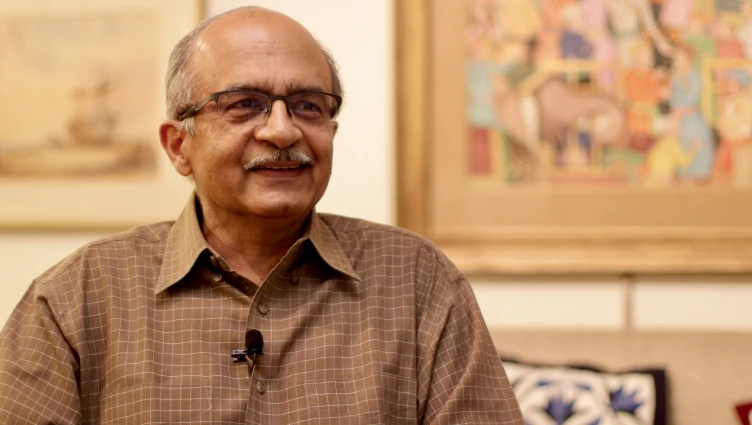
Prashant Bhushan is not an ordinary political commentator. He is a senior advocate of the Supreme Court of India, a well-known activist and a public figure whose comments frequently attract national attention. His professional standing gives his words a weight that extends beyond social media debates. When someone with his legal credentials makes a politically charged statement, people may interpret it not simply as an expression but as an assessment carrying institutional or constitutional authority.
The central question is what exactly is meant by “regime change.” If Bhushan is advocating that an elected government should be replaced through elections, peaceful political mobilisation and constitutional processes, that is entirely legitimate. Indeed, defeating a government at the ballot box is a fundamental feature of democracy.
But the phrase can also carry a more troubling implication when used without clarification. “Regime change” is often associated with efforts to dislodge governments through extra-constitutional pressure or external intervention. In a country governed by a written Constitution, such language can blur the distinction between demanding a change of government and suggesting that the existing political order must be forcibly displaced.
That distinction matters, particularly when the speaker is a senior lawyer who understands the importance of constitutional procedure.
There is also the question of influence. Bhushan commands attention because of his legal background and his father Shanti Bhushan, his public profile and his association with important political and constitutional debates. His statements can shape how opposition supporters understand political developments and how wider audiences perceive the legitimacy of elected institutions. With that influence comes a responsibility to choose words carefully, especially when those words concern the removal or replacement of a government.
This does not mean public figures should be silenced or that strong opposition to a government is inherently undemocratic. Quite the opposite. Democracies depend on outspoken critics. But the credibility of democratic criticism rests partly on whether it offers a constitutional path forward rather than simply expressing hostility towards those in power.
If Bhushan believes the government has failed, he can make that case through evidence, legal arguments, public debate and electoral mobilisation. He can demand accountability, support political alternatives and encourage citizens to vote for change. These are legitimate democratic methods, and his stature could make such arguments particularly influential.
However, if the phrase “regime change” is intended to suggest that an elected government should be removed outside constitutional processes, that would raise serious democratic concerns. The precise meaning and context of his remarks therefore matter.

