
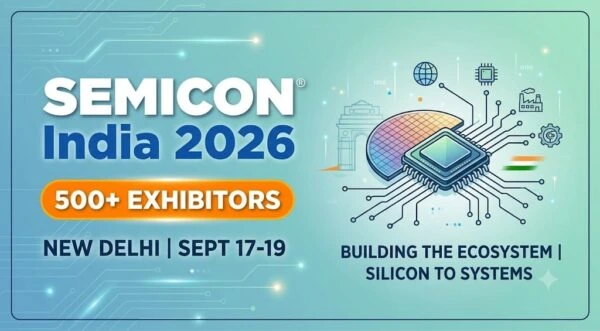
India is preparing to host one of its biggest semiconductor events as SEMICON India 2026 is scheduled to take place from September 17 to 19 at Yashobhoomi, also known as the India International Convention and Expo Centre, in Dwarka, New Delhi.
The 5th edition of the event is expected to highlight India’s progress in chip manufacturing, electronics production, semiconductor design and technology development. The programme will bring together companies, investors, policymakers, researchers, startups and technology experts from different parts of the world.
Prime Minister Narendra Modi is expected to inaugurate the three-day event on September 17. The programme is being organised by the India Semiconductor Mission under the Ministry of Electronics and Information Technology, in partnership with SEMI and industry organisations. The event is being viewed as an important platform for presenting India’s growing role in the global semiconductor supply chain.
The central theme of SEMICON India 2026 is “Silicon to Systems: Building the Ecosystem”. In simple terms, the theme reflects a shift from focusing only on semiconductor chips to developing the complete system around them. This includes chip design, manufacturing, testing, packaging, electronic products, skilled workers, supply chains and supporting businesses. The larger aim is to create a strong and reliable ecosystem within India, instead of depending heavily on overseas sources.
More than 500 exhibitors are expected to participate in the exhibition. The official event information says that companies from more than 20 countries will display their products, technologies and solutions across the microelectronics sector.
The exhibition is also expected to include more than 240 international companies, over 150 speakers and delegations from more than 40 countries. The official exhibitor map lists more than 500 participating organisations, showing the scale of the event.
The participating firms are expected to represent several parts of the semiconductor and electronics industry. These may include chip design companies, equipment manufacturers, materials suppliers, testing and packaging firms, electronics manufacturers, research institutions and technology solution providers. Such participation can help Indian companies find new business partners, understand advanced technologies and connect with international investors.
The event will also focus on India’s efforts to build a stronger domestic semiconductor industry. The government has introduced several measures to attract investment and support chip manufacturing, semiconductor packaging and related activities. The India Semiconductor Mission is working to create better infrastructure, improve production capacity and encourage companies to become part of the global value chain. SEMICON India 2026 will provide an opportunity to present these developments before a global audience.
A major attraction is expected to be the interaction between industry leaders and policymakers. Discussions may focus on investment opportunities, trusted supply chains, artificial intelligence hardware, skilled employment, research and development, and the future of electronics manufacturing. A roundtable involving global chief executive officers is also planned before the formal inauguration, adding importance to the event.
The semiconductor sector is important because chips are used in mobile phones, vehicles, computers, defence equipment, medical devices, renewable energy systems and many other products. A stronger domestic industry can support manufacturing, create skilled jobs and reduce supply-related risks. It can also help India increase its presence in high-value technology exports.
SEMICON India 2026 is therefore expected to be more than a technology exhibition. It will serve as a meeting point for businesses, governments and researchers working towards a stronger semiconductor future. Through the theme “Silicon to Systems”, the event will communicate India’s larger ambition to build a complete, competitive and globally connected electronics ecosystem.

