
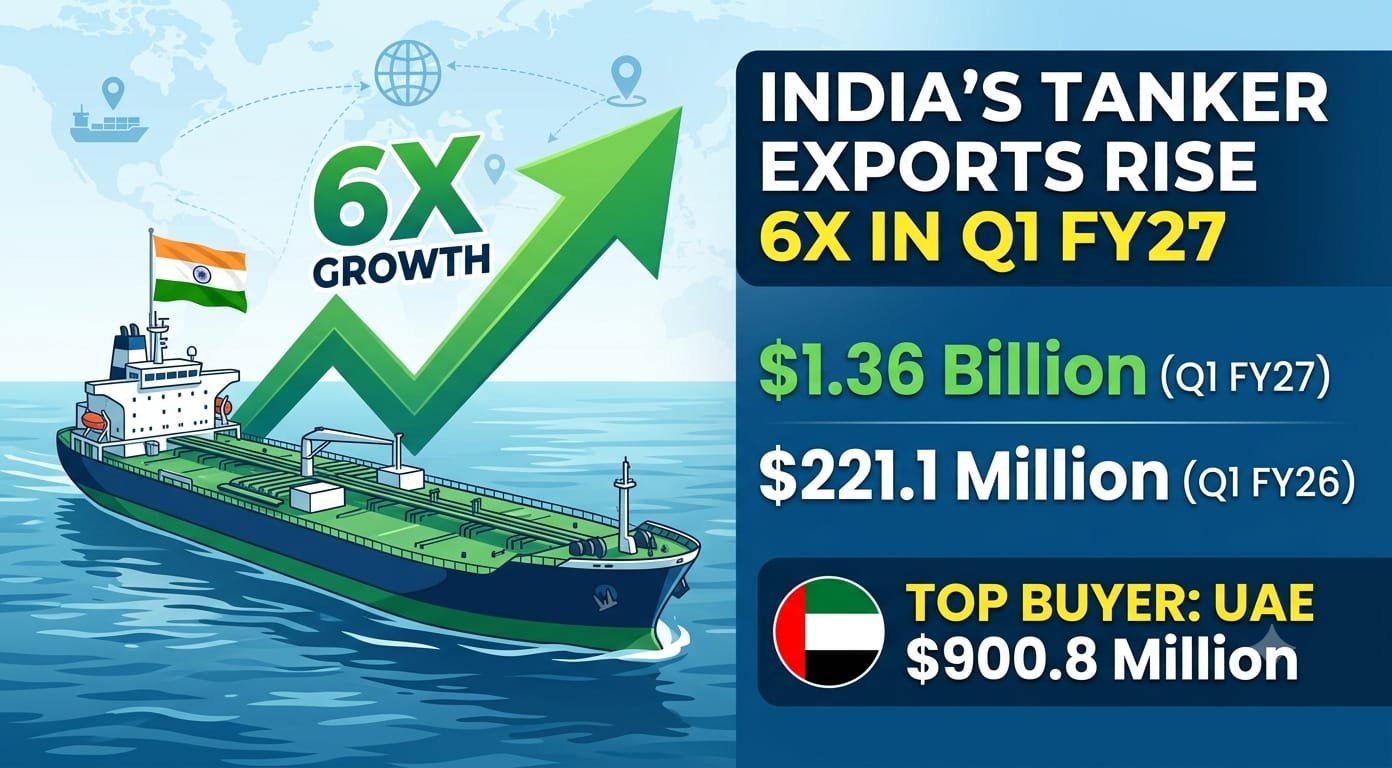
India’s tanker exports recorded a remarkable rise during the first quarter of financial year 2026-27. Between April and June 2026, the country exported tankers worth around $1.36 billion. In the same period a year earlier, the value stood at nearly $221.1 million. This means that tanker exports increased more than six times in just one year, according to data from the Commerce Ministry.
The sharp rise is important because tankers are not ordinary goods. These large vessels are used to transport crude oil, petroleum products, chemicals and other liquid materials across the sea.
Their construction requires advanced engineering, specialised equipment, skilled workers and strong technical knowledge. The latest export figures therefore suggest that Indian shipyards are gradually becoming more capable of producing vessels for international customers.
The growth was visible not only in export value but also in the number of vessels shipped abroad. India exported 23 tankers during the April-June period of FY27, compared with 10 vessels in the same quarter of the previous financial year. The increase in both value and volume points towards stronger demand for Indian-built marine assets in overseas markets.
The United Arab Emirates emerged as the largest destination for Indian tankers during the quarter. Exports to the UAE rose to approximately $900.8 million from $103.6 million a year earlier. The number of tankers shipped to the country also increased from four to seven vessels. This made the UAE the biggest contributor to India’s tanker export earnings during the period.
The UAE’s leading position is closely connected with its importance as a global energy and logistics centre. The country has major ports, oil storage facilities, shipping companies and maritime businesses.
Its location between Asia, Africa and Europe makes it a key point for international trade. Demand from the UAE can therefore provide Indian shipbuilders with access to a large and important maritime market.
The export performance also reflects the wider importance of shipping in the global economy. A large share of world trade moves through the sea, and tankers are essential for transporting energy and industrial materials.
As countries expand their energy infrastructure and strengthen supply chains, the need for reliable vessels is also expected to remain important. Indian companies may benefit from this demand if they can offer quality vessels at competitive prices.
For India, the development of tanker exports can support several economic activities at the same time. Shipbuilding creates demand for steel, machinery, electronics, design services and marine equipment. It also provides employment for engineers, welders, fabricators, technicians and port workers. A stronger shipbuilding industry can further reduce dependence on imported vessels and improve India’s position in the international maritime sector.
The figures also offer a positive signal for the government’s efforts to promote domestic manufacturing and maritime development. India has been trying to increase its presence in shipbuilding, port services and coastal logistics.
Higher exports indicate that Indian shipyards are finding opportunities beyond the domestic market. However, maintaining this growth will require timely delivery, modern technology, efficient financing and strong safety standards.
The latest numbers should also be viewed carefully because a few large vessel deliveries can significantly influence quarterly export data. Even so, the increase from $221.1 million to $1.36 billion is large enough to attract attention. If similar demand continues in the coming quarters, tanker exports could become an important part of India’s engineering and manufacturing export story.
India’s tanker export growth in Q1 FY27 highlights a changing picture of the country’s industrial capabilities. The UAE’s strong demand shows that Indian shipyards are receiving greater recognition in international markets. The development is not only about selling ships; it also represents the growth of technology, skilled employment, manufacturing capacity and India’s role in global maritime trade.

