
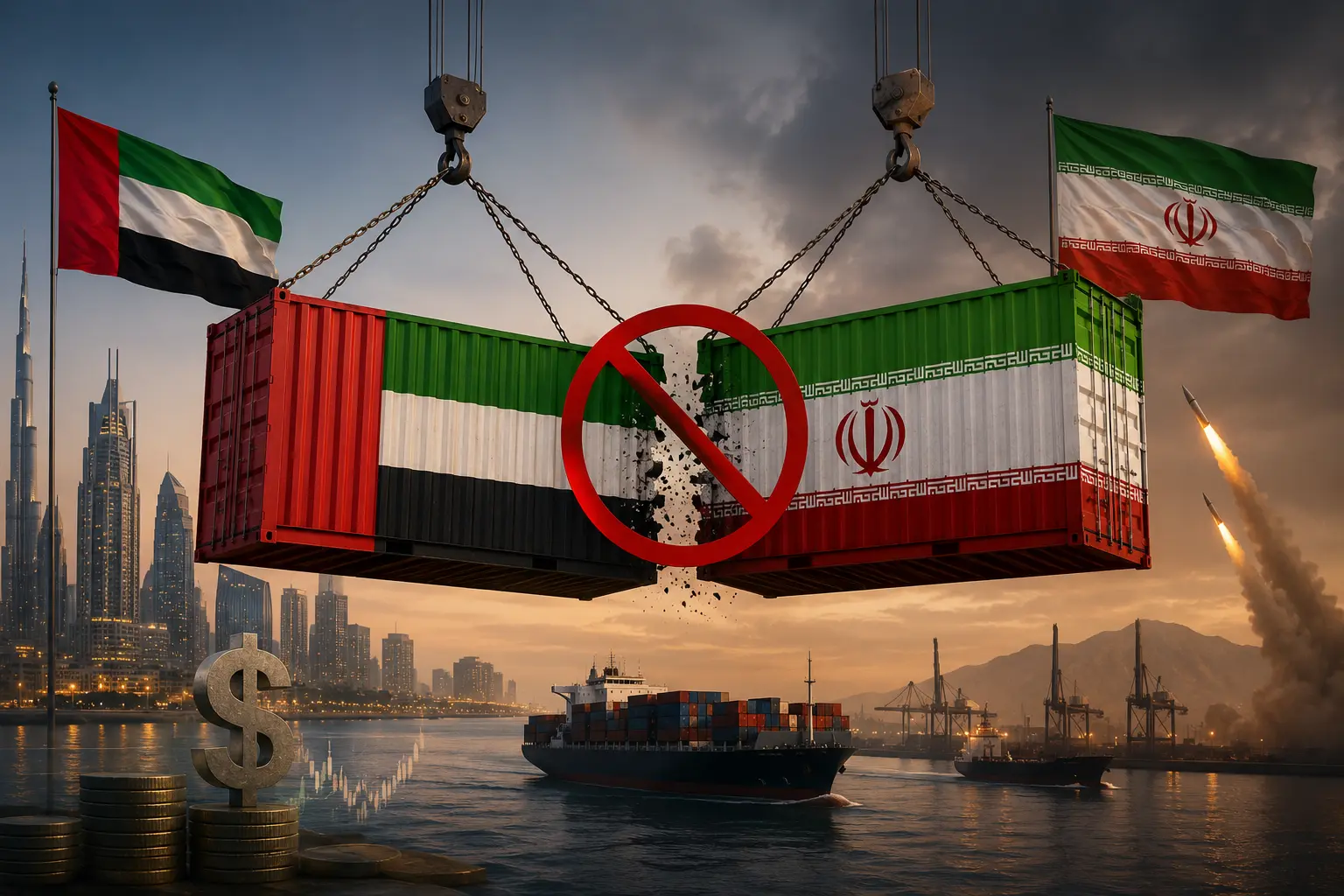
The United Arab Emirates has suspended all trade, commercial exchanges and financial transactions with Iran until further notice, marking a dramatic deterioration in economic ties between the two neighbours separated by the Gulf (Persian or Arabic Gulf, depending on how you see it).
The decision came after the UAE said it detected two ballistic missiles launched from Iran that were allegedly targeting maritime traffic. Both missiles fell into the sea, according to the Emirati Defence Ministry. Iran, however, has denied launching the missiles and described the accusations as harmful to regional security and diplomacy.
The UAE’s decision comes against the backdrop of the wider and increasingly dangerous conflict between Iran and the United States and Israel. The confrontation, which began with US-Israeli military strikes against Iran on February 28, has expanded beyond the two principal sides, with Gulf states and commercial shipping through the Strait of Hormuz increasingly caught in the crossfire. Attempts to establish a durable ceasefire and revive a US-Iran interim agreement have stalled, while the strategic Strait of Hormuz remains blocked, triggering a global energy crisis.
Iran has repeatedly accused Gulf countries hosting American military facilities of enabling US operations against it. The UAE, despite stressing that it does not want to become a party to the conflict, has faced repeated missile and drone threats from Iran. During the initial weeks of the war, UAE air defences intercepted large numbers of Iranian missiles and drones. Reports indicated that the country was targeted by thousands of missiles and drones during the first phase of the conflict, making it the most heavily targeted Gulf state.
There was also the May 4 strike on Fujairah port, which the UAE identified as an Iranian attack. Fujairah is one of the UAE’s largest ports after Jebel Ali Port in Dubai. The August 18 missile incident was the first such major attack against the UAE since that strike. More recently, two UAE-linked tankers were attacked while transiting the Strait of Hormuz, further increasing concerns over the safety of Emirati shipping and energy exports.
For Abu Dhabi, suspending economic relations is therefore not merely a diplomatic gesture. It represents a significant security response designed to reduce exposure to an increasingly unpredictable conflict. Iran and the UAE have historically maintained substantial commercial links despite political differences, making the decision particularly consequential for businesses, traders and financial institutions on both sides.
The move could also deepen pressure on Iran as Washington maintains economic and maritime pressure on Tehran. At the same time, it risks further disrupting regional trade and energy flows at a time when shipping through the Strait of Hormuz has already slowed sharply.
UAE’s stand is clear, repeated threats to its territory and maritime interests have crossed a threshold where economic ties with Iran can no longer be insulated from the wider military confrontation.

