
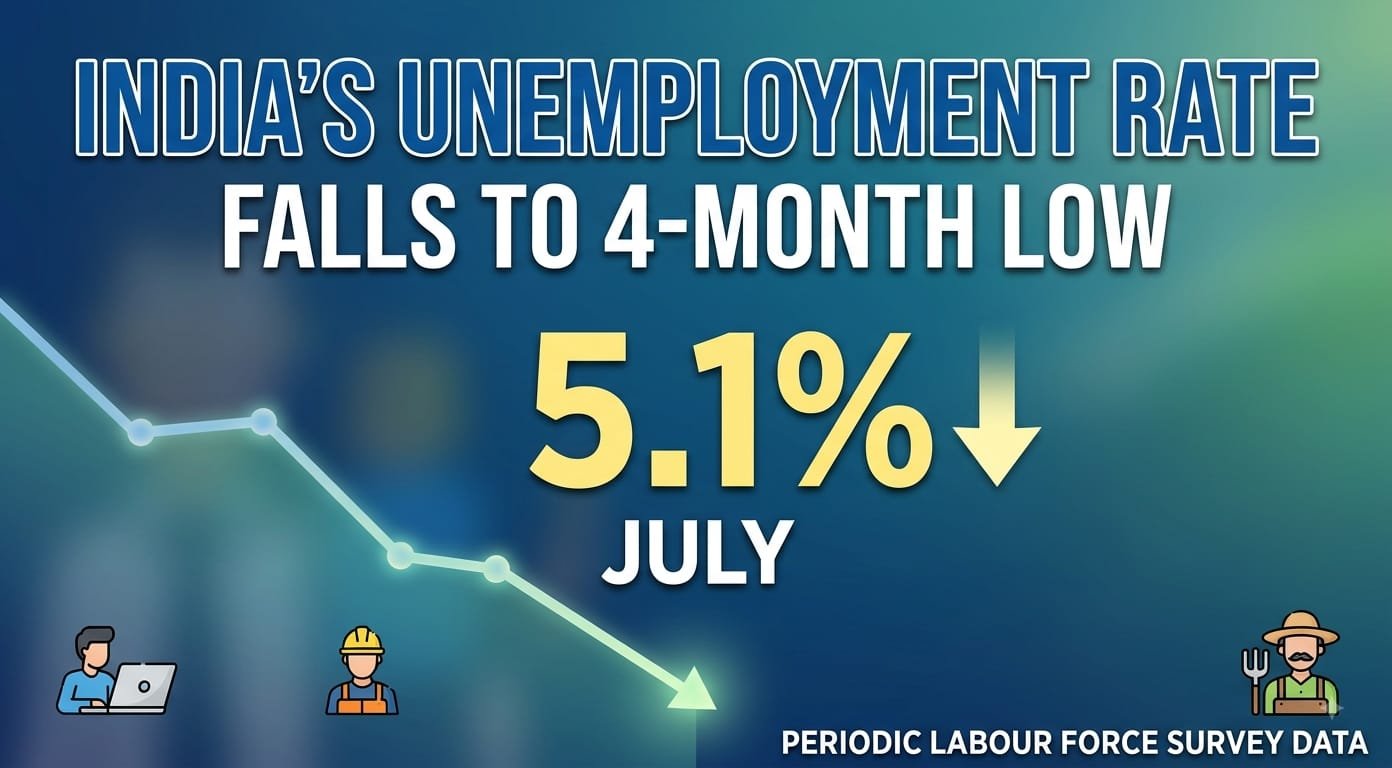
India’s employment situation improved in July 2026, with the overall unemployment rate declining to 5.1% from 5.5% in June. This became the lowest unemployment level recorded in the last four months.
The latest figures were released through the Periodic Labour Force Survey conducted by the National Statistics Office. The data covers people aged 15 years and above and provides an understanding of how many are working, seeking work, or outside the labour market.
The fall in unemployment suggests that employment conditions improved during the month. However, the bigger change came from the rise in the Labour Force Participation Rate, or LFPR. This rate increased from 54.4% in June to 55.4% in July. LFPR shows the share of people who are either working or actively looking for work. When this number rises, it generally indicates that more people are entering the labour market with the expectation of finding employment.
Rural India played the most important role in this improvement. The unemployment rate in rural areas declined from 5% in June to 4.5% in July. At the same time, the rural LFPR increased sharply from 56.6% to 58%.
This means more people in villages joined the workforce or started searching for jobs, while the number of unemployed people reduced. Seasonal agricultural work, construction activity and other rural employment opportunities may have supported this movement, although the survey figures alone do not identify the exact reason behind the change.
The situation in cities was different. Urban unemployment increased slightly from 6.6% in June to 6.7% in July. Urban LFPR, however, rose marginally from 50.1% to 50.4%. This shows that a few more people entered the urban job market, but employment creation did not grow enough to reduce the unemployment rate. For many young people and skilled workers in cities, this may reflect continued competition for private-sector jobs, formal employment and better-paying opportunities.
Female participation in the workforce also improved during July. The female LFPR increased from 32.7% in June to 34.4% in July. Rural female participation rose from 36.6% to 38.8%, while urban female participation increased from 24.8% to 25.3%. The rise is important because women’s participation in paid work remains lower than men’s participation. Greater access to suitable jobs, safe transport, childcare support and flexible work arrangements could help this improvement continue in the coming months.
The unemployment rate among men declined from 5.3% in June to 5% in July. Among women, it fell from 5.9% to 5.4%. The reduction across both groups indicates that the improvement was not limited to one section of the workforce. Even so, the figures should be read carefully because a lower unemployment rate does not always mean that all new jobs are stable, regular or well-paid. Some people may also be working in temporary, informal or part-time occupations.
The Worker Population Ratio, or WPR, increased to 52.5% in July from 51.4% in June. WPR measures the share of the working-age population that is actually employed. Its rise indicates that a greater proportion of people aged 15 years and above found work during the month. This makes the July decline in unemployment more meaningful because it was accompanied by both higher workforce participation and higher employment.
Overall, the July data presents a mixed but encouraging picture. Rural employment strengthened considerably, female participation improved, and the national unemployment rate reached a four-month low. At the same time, urban unemployment remained elevated, and the quality and stability of new employment remain important issues. The coming months will show whether the improvement continues beyond seasonal rural activity and whether cities generate enough jobs for the growing number of people entering the labour market.

