
“गर्भस्थे चैव जन्तौ च वृत्तिं सृजति वै विधिः…”
Rooted deeply in Sanatan Dharma is the eternal truth that the Cosmic order (vidhih) designs a soul’s sustenance well before it enters the physical world; a design mirrored beautifully in how a mother’s milk precedes a newborn’s first breath.
Over the last 12 years, Indian governance has attempted to operationalise this timeless philosophy into a modern, state-backed reality. Welfare is no longer a series of isolated political handouts; it has been re-engineered into an automated, infrastructure-level companion tracking a citizen’s entire life journey. From the first heartbeat to the final flame, this is the story of Womb to Welfare: How good governance met the citizen at every milestone.
Act I: The welcome (womb to infancy)
The state’s intervention begins before the child even draws their first breath. Historically, rural welfare was reactionary, waiting for a citizen to fall into distress. Today, the system is predictive. The core focus here is shifting the very locus of birth from unsafe, unmonitored settings into a structured, digital medical ecosystem.
The micro-details of onboarding life:
- The conditional trigger (PMMYV 2.0): Under the restructured Pradhan Mantri Matru Vandana Yojana, maternal support is treated as a series of health milestones. The state transfers ₹5,000 in two strict, algorithmic tranches: ₹3,000 only after the mother logs her first Antenatal Check-up (ANC), and ₹2,000 once the child’s birth is officially registered and the zero-day immunisation cycle is complete. To actively counter female foeticide, an additional ₹6,000 top-up is instantly pushed if the second child born is a girl.
- The ‘Zero-Day’ Identity: Under the Ayushman Bharat Digital Mission (ABDM), the hospital delivery room is now an onboarding portal. Immediately at birth, before a child is even named, the hospital begins creating a unique, lifelong ABHA (Ayushman Bharat Health Account) ID.
- Algorithmic Growth Tracking: Simultaneously, the child is plugged into the U-WIN portal for automated vaccination tracking via SMS. At the grassroots level, workers use the Poshan Tracker app to log the child’s height and weight monthly. The app automatically flags deviations using WHO growth standards; if a child is marked as Severely Acutely Malnourished (SAM), it triggers an automated administrative alert for immediate therapeutic nutrition.
Act II: The anchor (childhood to adolescence)
As the child grows, the state’s role shifts from biological tracking to structural stability. The underlying governance philosophy is simple: a child cannot learn, stay healthy, or break the cycle of poverty if their domestic container is constantly precarious.
Rewriting the Domestic Blueprint:
- The Mandatory Matriarchy Deed: Under the Pradhan Mantri Awas Yojana (PMAY), the physical structure of the home is used to rewrite household power dynamics. The state mandates that the legal property deed (patta) for the concrete pucca house cannot be issued solely to a man; it must list the woman as the primary owner or co-owner. This structural rule secured the child’s home from being liquidated or gambled away by male dependency.
- The Financial Guardrail (Sukanya Samriddhi Yojana): For a girl child, the state introduced a financial lock against early marriage. Parents can open an SSY account under her name with high tax-free interest (8.2%). However, the operational rules strictly mandate that the fund is legally locked until she turns 18, and even then, up to 50% can only be withdrawn upon producing formal admission receipts from a higher education institution.
- The High-School Safety Net (PM-YASASVI): For boys and students from marginalised backgrounds (OBC, EBC), the state ensures that a sudden family income shock doesn’t cause them to drop out. Meritorious boys in Classes 9 and 10 receive ₹75,000 per annum, and those in Classes 11 and 12 receive ₹125,000 per annum, pushed straight into their accounts to cover tuition and hostel fees.
Act III: The velocity (youth to livelihood)
This phase marks the most visible paradigm shift of the last 12 years: the complete democratisation of the marketplace and the weaponisation of economic mobility. Welfare transitions from keeping citizens afloat to launching them into the formal grid.
- Shifting Capital from Collateral to Transaction History: The Skill India Digital (SID) Registry: For young men and women entering the workforce, traditional paper resumes have been replaced by the National Skills Qualifications Framework (NSQF). Young men log onto the SID portal for free, industry-aligned technical training (such as Drone Piloting, AI Language Processing, and Industrial Robotics). Once verified, the digital certification drops directly into their DigiLocker, making them instantly auditable and hireable by corporate partners.
- The SVANidhi Credit Ladder: Take a roadside vegetable vendor. Under PM SVANidhi, they aren’t given a handout; they are given an initial, collateral-free ₹10,000 micro-loan. If they repay it on time using digital UPI QR codes, a 7% interest subsidy is automatically clawed back into their account, and the system automatically unlocks a ₹20,000 second-tier loan, leading up to a ₹50,000 third-tier loan.
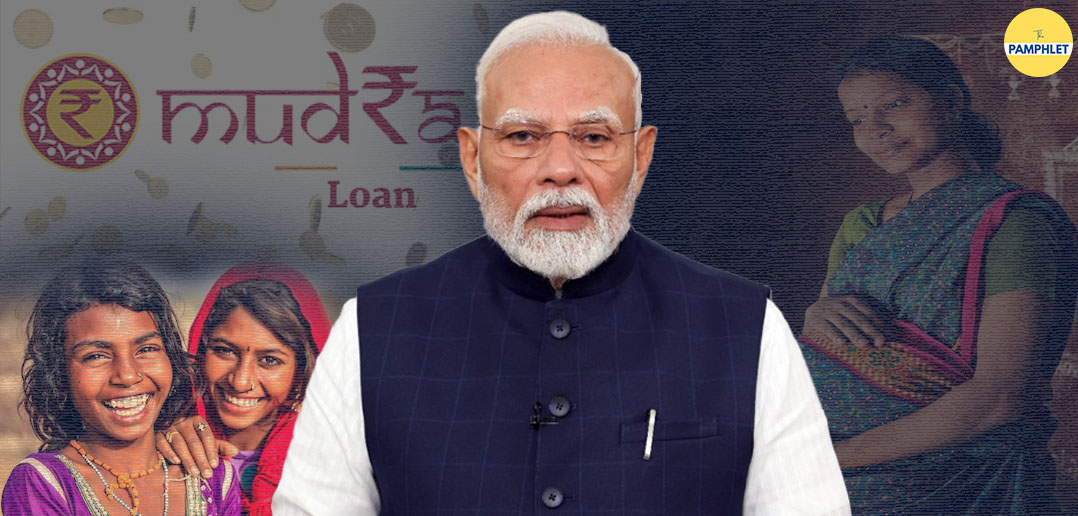
- The Mudra Graduation: This is mirrored on a larger scale by the Pradhan Mantri Mudra Yojana, which graduates young entrepreneurs from Shishu (up to ₹50,000) to Kishor (up to ₹5 Lakh) and Tarun (up to ₹10 Lakh). By shifting credit history from physical land assets to digital transactional history, millions of young men graduated from daily wage labourers to formal shop owners.
Act IV: The shield (adulthood to crisis)
When global macroeconomic shocks, pandemics, or sudden medical emergencies strike a household, the state shifts roles from a growth facilitator to an absolute shock absorber. The objective is to stop a family from sliding backwards into poverty due to a single catastrophic event.
The Frictionless Safety Net:
- The Cashless Wallet (AB-PMJAY): Historically, a single major illness meant a family selling their land or entering lifetime debt with a local money lender. Under Ayushman Bharat, eligible families receive a permanent Golden Card providing ₹5 lakh annual health cover. When admitted to an empanelled hospital, the citizen does not see a bill or deal with insurance adjusters. The National Health Authority utilises pre-negotiated package rates paid directly to the hospital via a digital claims engine.
- Insulating Basic Sustenance: Through the PM Garib Kalyan Anna Yojana, a massive, logistics-heavy food security network feeds over 80 crore people. By providing free food grains, the state ensures that regardless of global inflation or domestic supply chain disruptions, basic caloric needs remain entirely insulated from market fluctuations.
Act V: The last dignity (old age to last rites)
The lifecycle framework concludes by ensuring old-age autonomy for informal labourers and maintaining absolute human dignity at the final moment of life, closing the circle precisely where Sanatan philosophy dictates.
- Frictionless Persistence and the Final Payout: The Auto-Debit Net (PMJJBY & PMSBY): For informal workers like drivers, maids, or construction labourers, remembering to manually renew insurance is an impossible friction point. The state designed PM Suraksha Bima Yojana (Accident Insurance at ₹20/year) and PM Jeevan Jyoti Bima Yojana (Life Insurance at ₹436/year) with a mandatory Auto-Debit mandate linked to their Jan Dhan bank accounts. Every year on May 31st, the algorithm silently pulls the premium, ensuring the family remains covered without ever filling out a form.
- Unorganised Sector Pensions: Programs like PM Shram Yogi Maan-dhan brought gig workers and labourers into a formal pension structure, offering financial predictability when the physical capacity to labour stops.
- Antyeshti Sahayata & The National Family Benefit Scheme: The final milestone occurs when a family faces bereavement. Under state-administered Antyeshti Sahayata and the central companion grant of ₹20,000 under the National Family Benefit Scheme, local panchayats and municipal boards utilise fast-tracked DBT portals to disburse immediate financial aid. This ensures that poverty never denies an Indian citizen their final rites and a dignified departure.
Conclusion: The architecture of ease
The true baseline legacy of the last 12 years is a fundamental redefinition of what “sustenance” actually means in a modern society. Historically, survival for millions of Indians meant navigating an agonising, lifelong friction. To get a basic birth certificate, to prove a medical emergency, to secure a crop loan, or to claim a relative’s funeral aid required a citizen to cross an adversarial terrain of middlemen, physical offices, and political patronage.
The profound shift of this decade is that the state made life easy by making it automatic.
By translating welfare into sterile lines of code, unconditional banking triggers, and real-time smartphone registries, governance stopped being an event you had to beg for. Sustenance was woven directly into the state’s background infrastructure. Just as the ancient verse from the Hitopadesha recognises that nature builds the mechanism for a child’s survival before they arrive, this digital lifecycle architecture ensures that the modern Indian state is already waiting for its citizens at every crossroad; quietly anchoring their dignity from the first heartbeat in the womb to the final ash of the pyre.

