
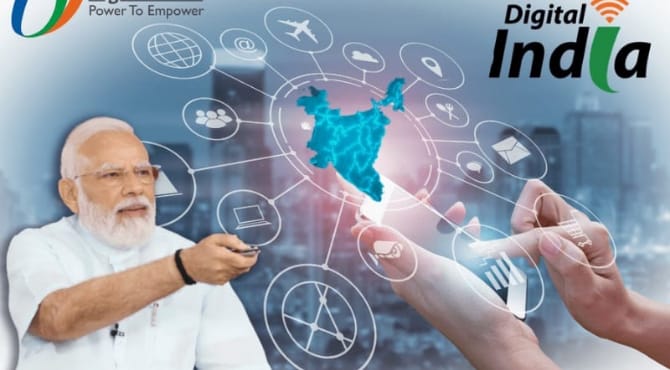
India’s economic landscape has undergone a digital revolution over the past decade, with the Unified Payments Interface (UPI) emerging as its most transformative innovation. Introduced in 2016 by the National Payments Corporation of India (NPCI), UPI has not only simplified payments but also become a key driver in formalizing the economy. According to Reserve Bank of India Governor Sanjay Malhotra, nearly 85% of digital payment transactions in the country now take place through UPI. This shift toward a cash-light economy has accelerated financial inclusion and transparency, aligning with India’s vision of “Digital India.”
The turning point: 2017–2018
The year 2017–2018 marked a pivotal moment in India’s digital journey. Following the 2016 demonetization and the launch of the Goods and Services Tax (GST), digital payment infrastructure rapidly expanded. UPI transactions grew from just 17.9 million in 2017 to over 915 million by 2018, an astonishing 5,000% jump. According to RBI and NPCI data, the number of banks integrated with UPI rose from 50 to over 120 during this period.
This surge in adoption brought millions of small merchants, vendors, and consumers into the formal financial system. Earlier, informal cash transactions dominated India’s small-scale economy, making credit access difficult and tax compliance low. With UPI, even a roadside tea seller could accept instant digital payments, leaving a financial footprint that enabled access to formal credit.
Driving financial inclusion and transparency
Between 2017 and 2018, India’s banked population rose significantly, aided by the Jan Dhan Yojana and digital initiatives like Aadhaar and UPI. The World Bank’s Global Findex Report 2018 noted that 80% of Indian adults** had a bank account — up from 53% in 2014 — one of the fastest inclusion rates globally.
UPI became the practical link connecting identity, banking, and mobility. It helped bridge the gap between urban and rural India, allowing digital payments to reach smaller towns and villages. Government subsidies, welfare payments, and micro-loans began flowing directly to beneficiaries’ accounts through digital channels, reducing leakages and corruption.
UPI and the path to a formal economy
The formalization of India’s economy is now visible through its digital footprints. As of 2025, UPI handles over 20 billion transactions monthly, valued at more than USD 280 billion. These data trails empower financial institutions to assess creditworthiness more accurately, bringing micro and small enterprises into the fold of formal credit markets.
Moreover, digital payments enhance tax transparency and contribute to higher GST compliance. The ecosystem of UPI, Aadhaar, and GST has created a virtuous cycle of inclusion, documentation, and efficiency.
UPI’s role extends far beyond digital convenience; it is the cornerstone of India’s journey toward a formal, inclusive, and transparent economy. What began as a tool for instant transfers has evolved into a platform for empowerment, bridging economic divides and redefining how India transacts. As RBI Governor Malhotra noted, India today stands as a “case study in inclusive, secure, and scalable Digital Public Platforms” — a model the world can learn from in building the economies of tomorrow.

