
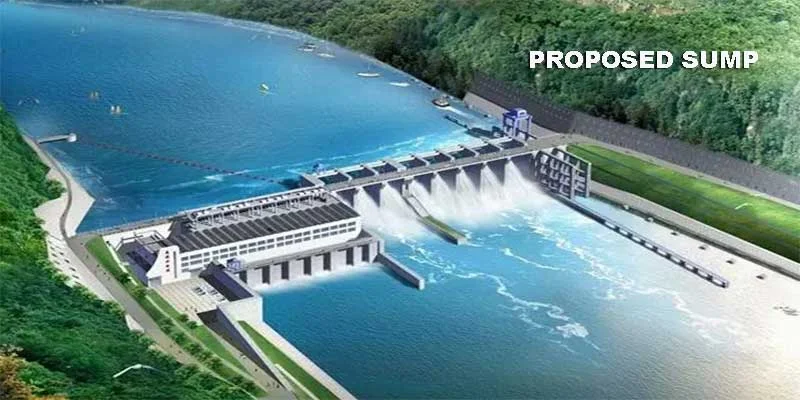
India’s proposed mega dam in Arunachal Pradesh has become the centre of a contentious debate involving national security, indigenous rights and China’s expanding hydropower ambitions. The protests against the mega project turned violent on Friday and Saturday, with incidents of arson and vandalism. The protesters also targeted offices of local BJP leaders.
While New Delhi sees the Siang Upper Multipurpose Project as a potential safeguard against Beijing’s massive upstream dam, some local residents fear displacement, environmental destruction, and the loss of ancestral lands. The question of whether China is exploiting these protests remains unanswered, but it is clear who benefits if the project doesn’t go ahead.
China’s 60,000 MW mega dam
On December 25, 2024, China approved a massive hydropower project on the lower reaches of the Yarlung Tsangpo in Tibet, close to where the river enters India. Construction officially began in July 2025, with the project’s estimated investment reported at approximately 1.2 trillion yuan, or around $167 billion. Its planned capacity is approximately 60,000 MW, potentially making it the world’s largest hydropower project.
The river flows into Arunachal Pradesh at Siang and subsequently forms part of the Brahmaputra River system. Indian officials and experts have raised concerns about the consequences of upstream water regulation, including possible changes in seasonal flows and the risks associated with sudden water releases. However, the precise downstream impact remains uncertain because detailed Chinese engineering and operating plans have not been fully disclosed.
India’s answer: The 11,200 MW Siang project
India’s proposed Siang Upper Multipurpose Project (SUMP), being assessed by state-owned NHPC, is planned across the Siang valley in Arunachal Pradesh. Its proposed generating capacity is 11,200 MW. Crucially, it is designed not just to generate electricity but also to provide substantial water storage, flood moderation and greater control over river flows.
Reuters reported in August 2025 that the proposed Indian reservoir could provide around 14 billion cubic metres of storage, potentially helping regulate water availability during dry periods. The project is therefore a strategic countermeasure to the risks posed by China’s upstream dam. However, it remains at the assessment stage, and its effectiveness would depend on its final design and operating arrangements.
Why are locals protesting
Opposition has intensified among sections of the indigenous Adi community, whose livelihoods, farms and cultural heritage are closely connected to the Siang River. Community organisations, including the Siang Indigenous Farmers’ Forum, have demanded that survey work be halted, and further consultations take place before the project advances.
The agitation escalated on October 23, 2026, when protests in Pasighat turned violent. Police reportedly used tear gas after clashes involving stone-pelting, while the NHPC office, police facilities and other properties were damaged. Authorities subsequently reported arrests and detentions.
Is China exploiting the unrest
Given the strategic implications of the Siang project, concerns about possible Chinese exploitation of local discontent are understandable. Opposition to a dam that could strengthen India’s water security would plainly have strategic consequences for Beijing.
India faces a difficult balancing act, prepare for potential upstream water risks without disregarding the rights of the communities living downstream. Transparent environmental assessments, credible rehabilitation packages and genuine consultation are essential.

