
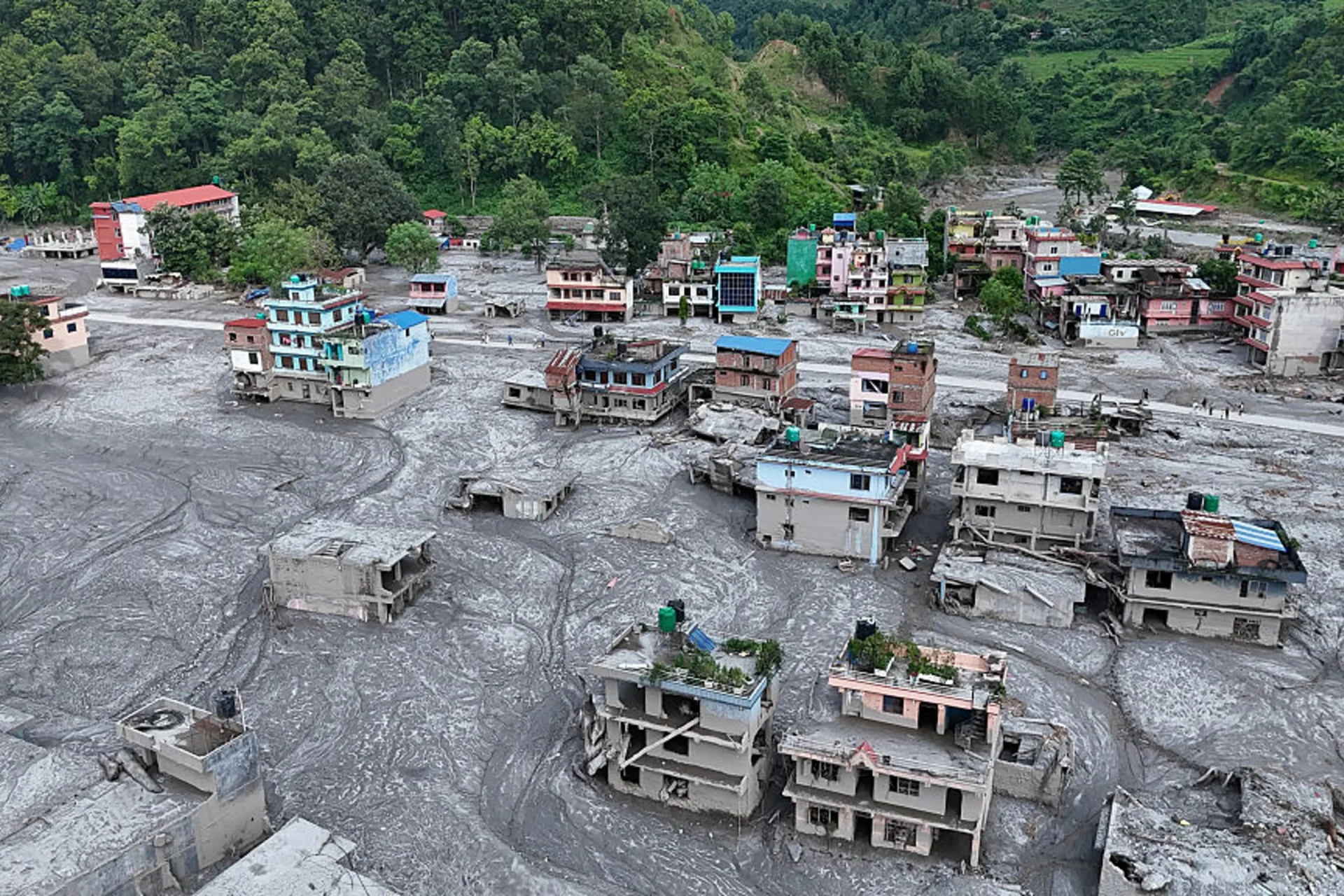
Nepal is facing one of its worst natural disasters in recent years as the death toll from devastating flash floods and landslides has climbed to 1,344, according to the latest update issued by the Nepal Police on Saturday, September 5. Rescue and relief operations remain underway across several affected areas, with authorities continuing their search for thousands of people who are still missing.
रसुवा भोटेकोशी बाढी सम्बन्धी खोज तथा उद्धार अपडेट २०८३।०५।२० गते ०५:०० बजेसम्म pic.twitter.com/C9XgRjnPmX— Nepal Police (@NepalPoliceHQ) September 5, 2026
The disaster struck on August 26 after a massive surge of water, mud, rocks and debris swept through communities along the Bhote Koshi River and other parts of the Himalayan region. The flooding, linked to a glacial collapse, caused widespread destruction, damaging homes, roads, bridges and critical infrastructure. Several hydropower projects were also severely affected, leaving hundreds of workers feared trapped or missing.
The scale of the rescue operation has forced Nepal to deploy its security forces across the affected region along Nepal-Tibet border. The Nepal Army, Nepal Police and Armed Police Force are working alongside disaster-management authorities and local administrations to locate survivors, recover bodies and provide emergency assistance. As of September 4, more than 13,000 people had been rescued, including over 300 foreign nationals.
One of the biggest challenges is the search for workers trapped inside tunnels at hydropower projects. Rescue teams from India, China and South Korea are assisting the Nepali Army, using specialised equipment, drones and other technology to reach areas buried under mud and debris.
There have also been remarkable moments of hope amid the devastation. Two workers trapped inside a hydropower tunnel were rescued alive after spending nine days underground, highlighting both the dangers faced by workers and the determination of rescue teams.
Beyond the immediate loss of life, Nepal is now confronting a major humanitarian challenge. Floodwaters have contaminated drinking-water sources, raising concerns about the spread of waterborne and communicable diseases. Damaged roads and bridges have also made it difficult to reach isolated communities and deliver essential supplies.
The government has said that saving lives, locating missing people and providing relief remain its immediate priorities. With thousands still unaccounted for, rescue teams continue to work against difficult terrain, unstable conditions and the possibility of further flooding.

