
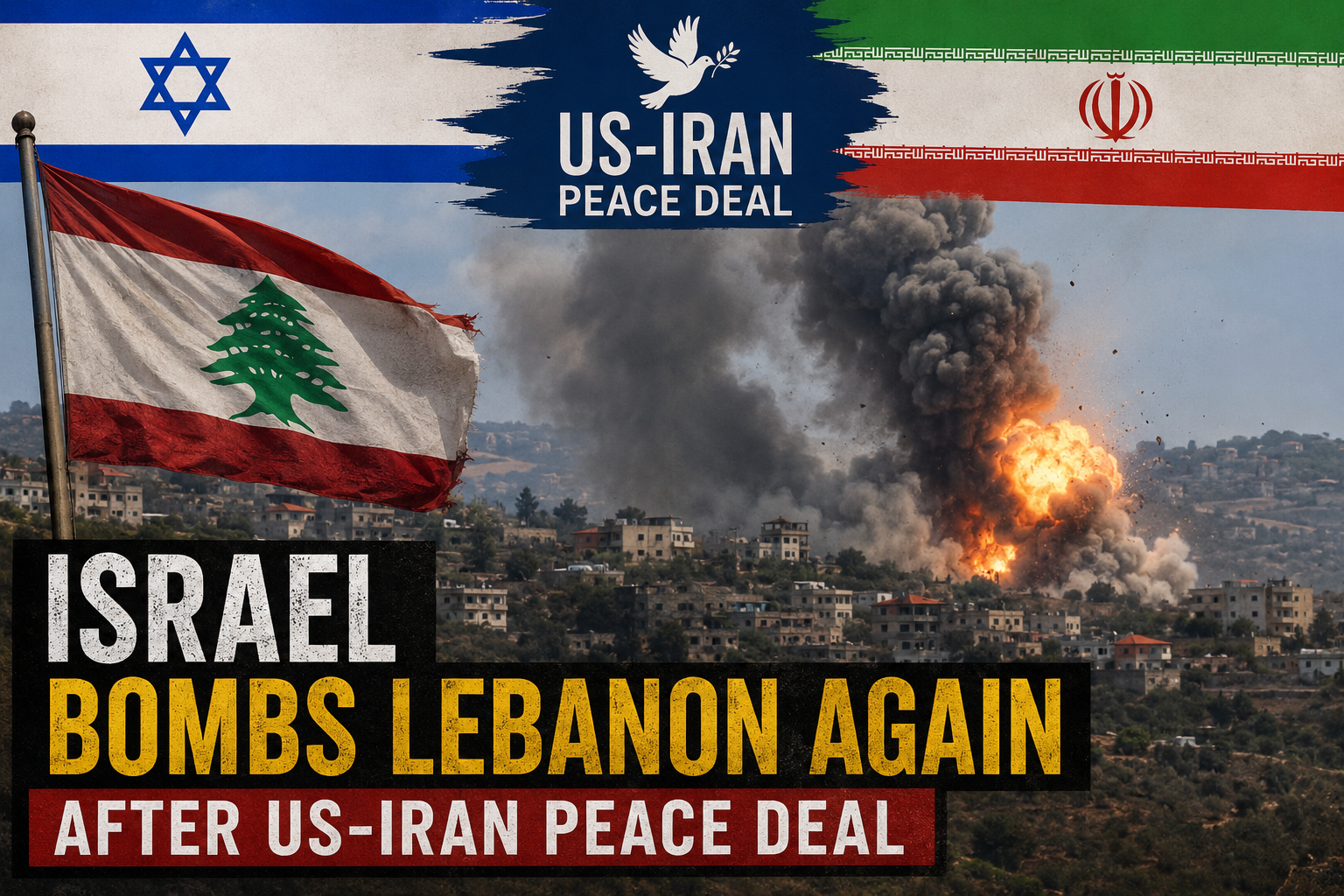
Hopes that the recently announced United States-Iran peace agreement would usher in a broader period of stability across the Middle East have suffered an early setback, as Israel has once again carried out strikes in Lebanon against Iran backed Hezbollah. These attacks once again confirm that the region remains far from lasting peace.
According to news reports, Israeli drone and air strikes targeted locations in southern Lebanon (area controlled by Hezbollah) in recent days, resulting in several casualties and renewed tensions along the Israel-Lebanon border. The attacks came just days after US and Iran announced a breakthrough agreement aimed at ending months of escalating confrontation and reducing the risk of a wider regional war. The peace deal is going to be signed on June 19 in Geneva, Switzerland.
The US-Iran deal had generated optimism that violence across interconnected regional fronts—including Lebanon—would begin to subside. Many Lebanese civilians who had been displaced by months of fighting started returning to their homes following news of the agreement. However, continued Israeli military operations have cast doubt on whether the peace initiative can translate into stability beyond the immediate US-Iran relationship.
Israel maintains that its operations are directed against Hezbollah positions and infrastructure, arguing that it must continue acting against security threats regardless of diplomatic developments elsewhere. Lebanese officials and Hezbollah, however, view the strikes as evidence that the broader conflict remains unresolved despite the diplomatic breakthrough between Washington and Tehran.
The renewed attacks have also complicated ongoing discussions about the future of Lebanon and the role of Hezbollah. Iranian officials have reportedly indicated that a lasting peace arrangement would require the withdrawal of Israeli forces from Lebanese territory and an end to military operations inside the country. Continued strikes, they argue, undermine confidence in any wider regional settlement.
Even within the United States, concerns are growing that Israeli actions could jeopardize diplomatic gains. Reports from the G7 summit suggest that President Donald Trump urged Israel to act more responsibly in Lebanon and warned that continued escalation could undermine efforts to consolidate the peace agreement with Iran.
The situation highlights a central challenge facing Middle East diplomacy: while the US-Iran agreement may have reduced tensions between two major adversaries, several interconnected conflicts continue to simmer. Lebanon remains one of the most volatile theatres, where Israeli security concerns, Hezbollah’s armed presence, and regional power rivalries intersect.
For now, the latest Israeli strikes serve as a reminder that a peace deal between Washington and Tehran, while significant, does not automatically resolve the many conflicts that have emerged across the region. As bombs continue to fall in Lebanon, questions remain about whether the agreement marks the beginning of a new era of peace or merely a pause in a wider and still unresolved struggle.

