
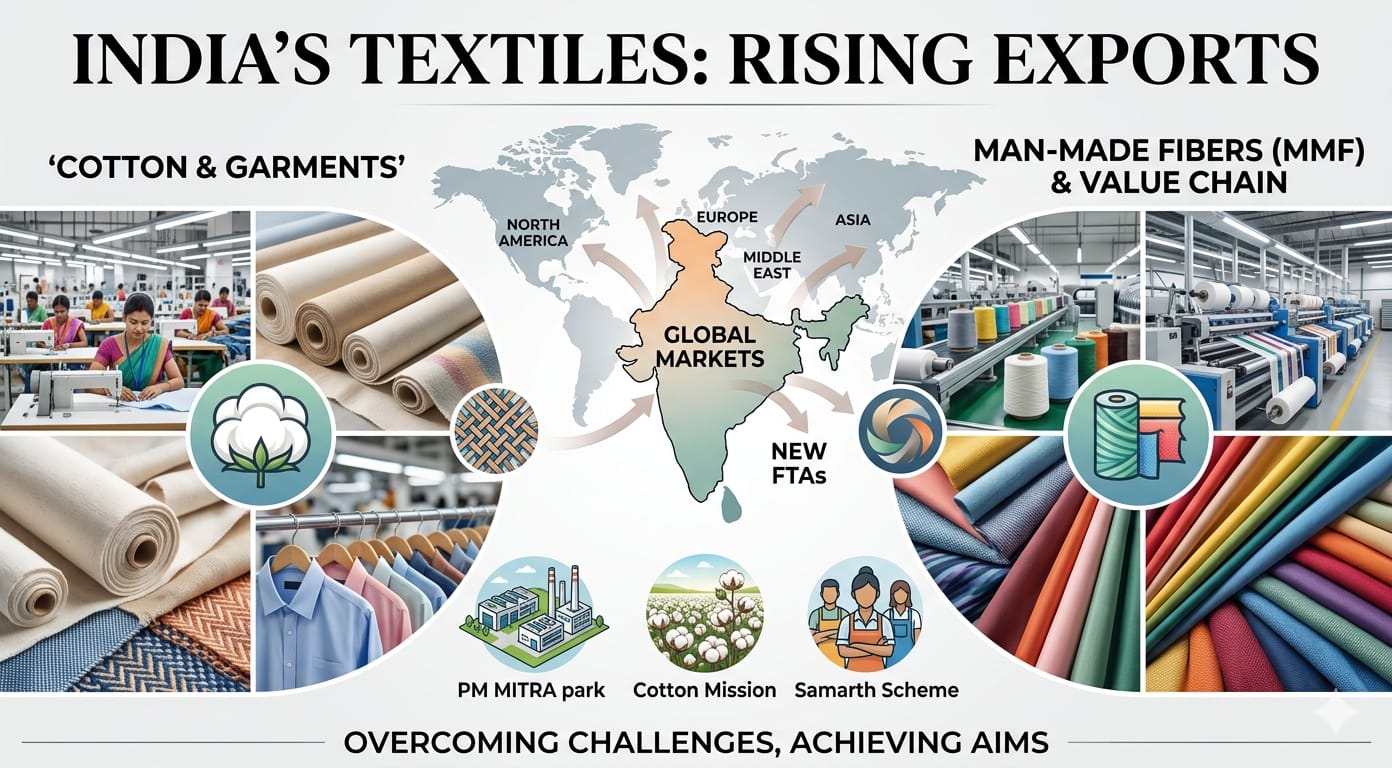
With a growth of 2.1%, India’s textiles and garments exports rose to ₹3,16,334.9 crore in FY25-26, up from ₹3,09,859.3 crore in FY25. This was reported by Ministry of Textiles data released by PIB.
Readymade garments of all textiles saw a growth of 2.9% to ₹1,39,349.6 crore, with cotton yarn, fabrics, made-ups and handloom products showing a 0.4% increase to ₹1,02,399.7 crore.
Man-made yarn, fabrics and made-ups saw a 3.6% growth to ₹42,687.8 crore, while handicrafts excluding handmade carpets grew by 6.1% to ₹15,855.1 crore. The exports were across over 120 countries from April 2025 to February 2026 and increased by 22.3% in UAE, 20.6% in Japan, 15.5% in Spain, 9.9% in Germany, and 7.8% in UK. Significant growth was also seen in Egypt, Nigeria, Senegal and Sudan.
Despite the 2.1% increase in exports in FY26 against global tariff pressures, these figures also reflect the slow pace of the country in moving up the value chain since the MFA quotas ended in 2005. The MFA had provided the textile industry, mainly Cotton based products, with access to developed nations via quotas and the ATC ended in 1994, which began a phase-out of quota system over 10 years from January 1, 2005, and exposed Indian textile companies to free competition. Early on, exports had increased by 23.14% in FY05-06 over 2.69% in the previous year, but was hampered by factors like dispersed production, employment constraints and infrastructure, as discussed in a study published in the Christ University Artha journal.
The Indian government’s trade policy in the WTO era intensified the problem. In 2008 India launched Duty Free Tariff Preference (DFTP) scheme offering preferences to Least Developed Countries (LDCs) and became the first developing country to do so with 85% of tariff lines being offered duty-free by 2012. After being broadened in 2014, the DFTP offered duty-free market access to LDCs, covering 98.2% tariff lines and reducing exceptions from 326 to 97, according to information from the UNCTAD/WTO and guides from the government.
This facilitated free import of garments into India from LDCs like Bangladesh (which were already low-cost producers) who were offered EBA preferential access by EU markets. Indian exporters faced stiff competition and lost out on the market as EU offered a tariff of 9-10% to Indian exporters whereas countries like Bangladesh did not. The loss was also reflected in falling share in the global garment market with the share for India coming down from $18.41 billion to $16.36 billion over a period of 2017 to 2024, according to WTO data used in various analyses.
The issue of inverted duties within man-made fibre (MMF) segment further illustrated this systemic issue where PTA and MEG input material carried higher duty than output products, and also a lack of integrated policy making hindered its growth. Indo Rama Synthetics (India) Ltd., with capacities over 2.6 lakh tonnes in polyester staple fiber and 2.59 lakh tonnes in filament yarn, in Nagpur facility in India had pleaded pre-budget cuts on excise on MMF from 12% to 4% and duty on PTA/MEG from 10% to nil while asking for a 10% rise in filament duty in their pre-budget requests. Lack of any duty rationalisation added to the delays and stunted MMF’s growth, despite a global shift towards synthetics which put Indian producers at a disadvantage against integrated competitors.
The recent policy measures are trying to shed light from this darkness of post-quota decade. The Union Budget 2025-26 allocated ₹5,272 crore to the textiles sector (19% more than the last budget) and launched a 5 year Cotton Mission to develop the productivity of the crop and reduce imports. Seven PM MITRA parks at seven locations in Tamil Nadu, Telangana, Gujarat, Karnataka, Madhya Pradesh, Uttar Pradesh and Maharashtra are aimed at creating world-class infrastructure. The Samarth scheme had provided training to over 4.57 lakh people by mid-2025 and provided support to the sector, which has over 45 million workers directly working and produced over 22,000 million garments annually.
India is working towards achieving its $100 billion textile export target by 2030, and this 2.1% rise in exports is a sign that India has moved towards reclaiming the lost ground. The FTAs, especially with the EU and US, along with policy changes that help rationalise duties on MMF products, and implementation of PM MITRA scheme will help sustain the growth of India’s textile sector. India has put itself back on track after the jolt that the ending of quotas dealt to its textile industry in 2005, but much effort still needs to be invested to prevent the same old vulnerabilities from reappearing.

