
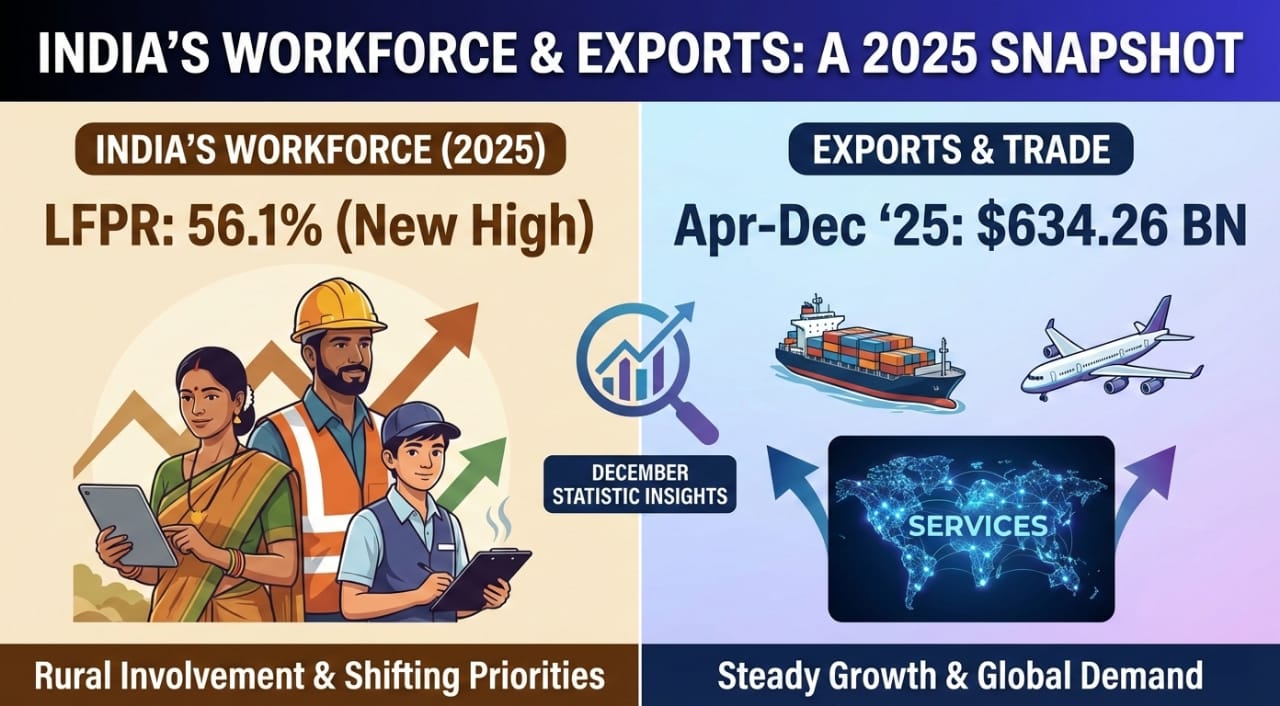
As 2025 came to a close, one number stood out: Labour Force Participation Rate of 56.1%. That’s the highest it’s been since the government started sharing monthly labor info via the Periodic Labour Force Survey. It shows more Indians are looking for or getting jobs, which signals confidence and shifting priorities.
The Ministry of Statistics and Programme Implementation (MoSPI) noted that this happened even as unemployment nudged up from 4.7% to 4.8% in November, proving that getting people involved and employed don’t always go hand in hand.
The increase mostly happened outside of cities. In rural areas, the Labour Force Participation Rate jumped to 59%, with both men and women contributing. Almost 79.3% of village men showed they wanted to work, and women topped 40%. These numbers often mean people feel economic pressure or see possibilities.
But the data hints that rural families are doing more than just farming. They’re trying their luck in construction, services, and small businesses. MoSPI warns against seeing monthly changes as lasting trends because seasons and survey schedules can skew the results. But the consistency of rural numbers suggests real change is happening.
In cities, things were calmer. Participation dipped a bit to 50.2%, and unemployment rose to 6.7%, even though fewer people were looking for work. Experts think city job seekers are playing it safe, waiting for better openings instead of jumping into a tight market. Young people are having a tough time too. Rural youth unemployment rose to 12.6%, which shows that many want to work, but there aren’t enough good jobs around.
The big change in India’s labor situation isn’t just the numbers. It’s how often they’re shared. Since the government started giving frequent labor reports under the PLFS in 2025, officials, companies, and economists can see what’s happening in the workforce almost instantly. This creates some responsibility.
Policies can be tweaked faster, trouble spots can be spotted sooner, and debates are based on data instead of guesses. Many say the real gain is seeing patterns emerge from regular reports.
At the same time, India kept trading with the world. According to the Ministry of Commerce and Industry, India’s combined goods and services exports reached $634.26 billion between April and December 2025. That’s a 4.33% jump from last year.
Non-petroleum exports grew even faster, and service exports kept India’s foreign trade afloat, thanks to IT, business services, and outsourcing. In 2024-25, total exports hit a record $824.9 billion, with services making up almost $387.5 billion.
These export numbers are tied to the labor story because they show demand. Export industries hire people directly and indirectly, from logistics to manufacturing and digital services. Steady export growth gives employers faith, which encourages hiring and investment, even if things are shaky at home. So, exports are a key part of the story: a workforce ready to work, and an economy still finding customers worldwide.
As 2025 wrapped up, India’s economy wasn’t making headlines. It was telling a story. More people were joining the workforce; rural India was stepping up; women were making progress; and exports helped keep things steady. The data, from MoSPI and the Ministry of Commerce, points to an economy that’s moving forward—cautiously, unevenly, but definitely changing. The biggest difference might be how regularly and openly these stories are now told.

