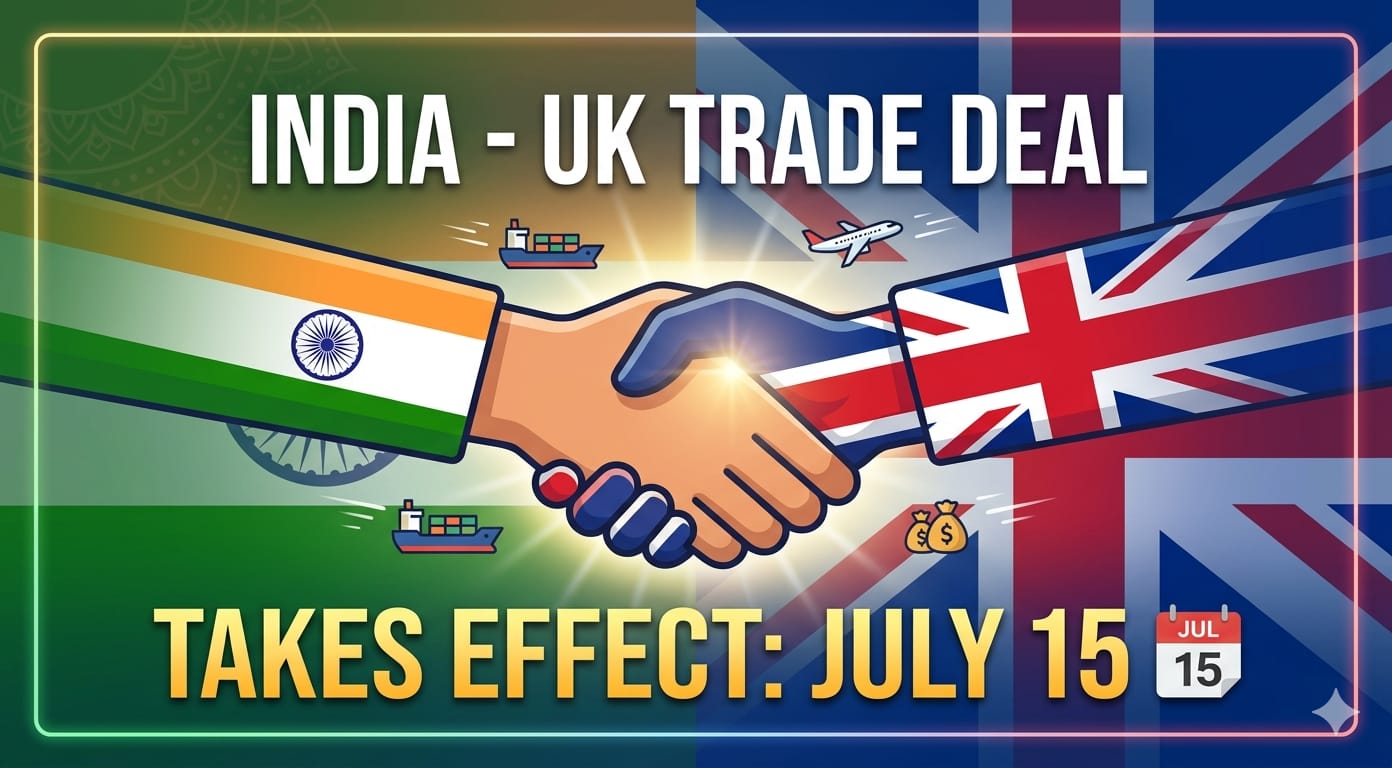
A major trade shift is now very close to becoming real. The free trade agreement between the two sides will start on July 15, 2026, after being signed last year, and the move is being described as one of the fastest implementations of a British trade deal in recent history.
The agreement was signed in July 2025, after years of discussion, and it has now reached the stage where both countries are preparing to apply its terms in daily trade.
This pact matters because it changes the way goods move across borders. Tariffs on a large share of products will come down sharply, and that means lower taxes on trade, better price access for buyers, and a stronger chance for exporters to sell more.
On one hand, nearly 99 percent of goods will get duty-free access, which is expected to help clothing, footwear, processed food, jewellery, and many manufactured products. On the other hand, tariff cuts will help British goods such as whisky, cars, cosmetics, and medical devices enter the market with fewer cost barriers.
The impact can be felt in a very practical way. A small textile unit, a food processor, a farm-based exporter, or a factory making light products may find a wider market and better demand once the deal becomes active.
At the same time, consumers may see more variety, and businesses may face stronger competition, which often pushes them to improve quality and pricing.This is why the deal is being presented not only as a political achievement, but also as a business opportunity with direct economic effects.
The agreement is also linked to a wider story of confidence between the two economies. The signing last year was followed by detailed work on customs rules, system readiness, and implementation planning so that the deal could start smoothly on the fixed date.
The British government has said businesses now have 28 days to prepare, which shows that the rollout is being handled with urgency. Such a process matters because trade deals often look powerful on paper, but their real value appears only when exporters, importers, and logistics networks are able to use them without confusion.
Another important part of this arrangement is the social security side. Along with the trade pact, the Double Contribution Convention will also come into force on July 15, which is expected to reduce double payment pressure on workers moving between the two systems.
That makes the agreement more than a goods-and-tariffs story, because it also touches workers, professionals, and firms with overseas links. In simple terms, the deal is not just about containers, ports, and customs forms; it also speaks to people, jobs, and the ease of doing business across borders.
The wider meaning of this move is easy to understand. When tariff walls come down, trade usually becomes easier, and when trade becomes easier, businesses get a better chance to grow, scale up, and explore new markets.
For many firms, this may feel like a long-awaited opening after years of delay, negotiation, and uncertainty.The coming weeks will now be important, because July 15 will mark the point where promise turns into action, and the real test will begin in ports, factories, shops, and export offices across both sides.