
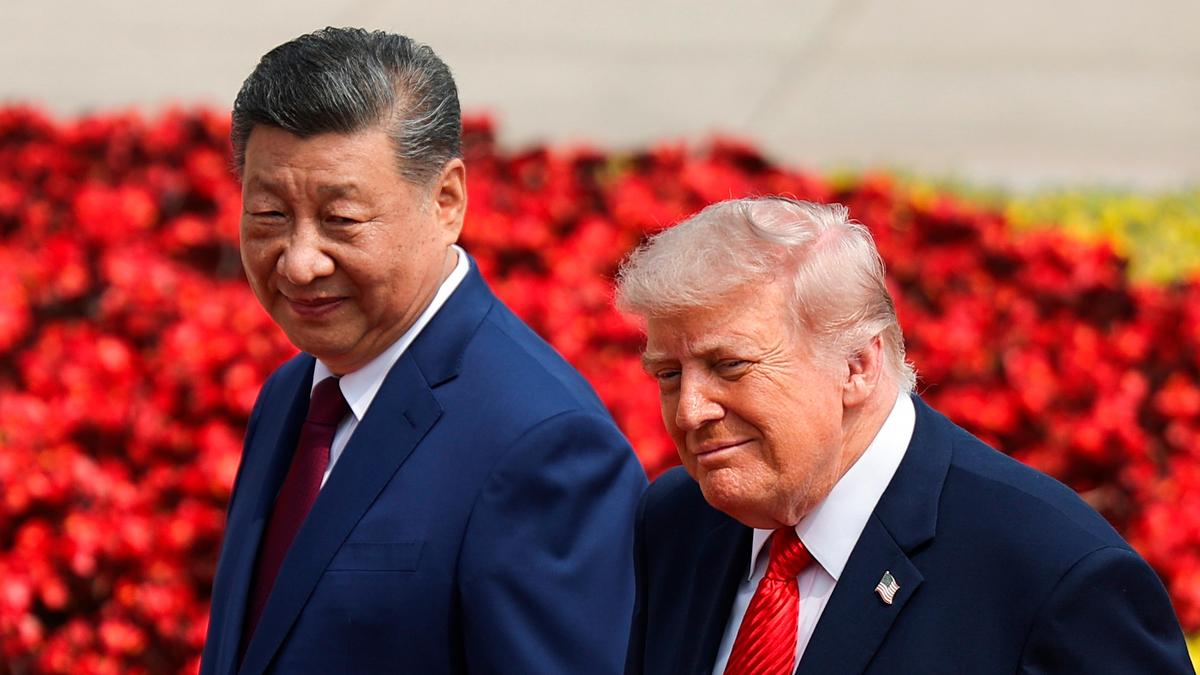
Donald Trump came on a much-publicised 2-days visit to China, the first visit to China by a US President in nearly a decade. The visit was especially considered important due to the tensions in West Asia, rising oil prices globally due to that, and because of rising tensions between China and Vietnam.
The visit was meant to project strength, revive trade negotiations, and reassure US allies that the United States remained firmly in command of the global order. Instead, the visit increasingly appeared to underline the exact opposite , a confident and assertive Xi Jinping presiding over a superpower, while Donald Trump listened carefully and avoided confrontation.
For years, Trump built his political brand around aggressive rhetoric directed against Beijing. He accused China of “ripping off” America, threatened tariffs, and repeatedly promised to force Beijing into making concessions. Yet during this visit, the imagery and messaging told a very different story.
Xi Jinping appeared fully in command throughout the engagements. Chinese state media projected confidence, portraying China not merely as an economic giant but as the central stabilising force in a changing world order. Trump, who is usually quick with sharp remarks and public provocations, appeared noticeably subdued in front of the Chinese leadership. Is this because Trump finally acknowledges that now China holds all the cards in geopolitics, and not US?
The clearest sign of this imbalance emerged on the question of Taiwan. Beijing issued strong warnings against any American interference, reiterating that Taiwan remained a “core national interest” and a red line for China. Rather than responding with his characteristic bravado, Trump largely avoided escalation and adopted a careful tone. For many observers, this was a striking contrast to the confrontational posture he often adopts with allies and rivals alike in other countries.
Xi Jinping reportedly went even further, describing the United States as a declining power struggling to maintain its old dominance in a rapidly shifting global landscape. This remark made it clear that China believes the balance of global power is tilting in its favour.
What made the visit look even weaker from Washington’s perspective was the absence of any major trade breakthrough. Despite weeks of anticipation and speculation, no landmark trade agreement emerged from the meetings. There was no dramatic tariff rollback, no massive new market access arrangement, and no transformational economic framework that Trump could showcase as a victory back home. This despite the fact that Trump landed in China with an entourage of US companies’ CEOs.
For a leader who has consistently measured diplomatic success through the lens of “winning deals,” the lack of a substantial agreement was particularly damaging for Donald Trump. The visit generated headlines and symbolic meetings, but little in terms of concrete deliverables that could benefit the US.
Meanwhile, China succeeded in shaping the optics of the entire event. Xi Jinping projected calm authority, emphasising stability, long-term planning, and China’s growing global influence. Trump, by contrast, appeared eager to maintain cordiality and avoid public friction. The contrast was impossible to ignore.
For critics of the Trump administration, the trip exposed a contradiction at the heart of Trump’s foreign policy. The president who routinely presents himself as uncompromising and dominant appeared unusually accommodating in the presence of Xi Jinping. The bombastic rhetoric that defined much of his political persona gave way to restraint and caution.
For China, however, the visit served a larger strategic purpose. It reinforced Beijing’s narrative that the global order is entering a new phase, the one where China is not just competing with the United States, but increasingly positioning itself as the more confident world power.
Whether that perception fully reflects reality can be questioned, as the United States remains militarily, technologically, and economically very strong. However, international politics is deeply influenced by symbolism, and this visit handed Beijing a powerful symbolic victory.
Instead of demonstrating American dominance, Trump’s China visit may ultimately be remembered as a moment when the world saw the changing balance of power more clearly than ever before.

