
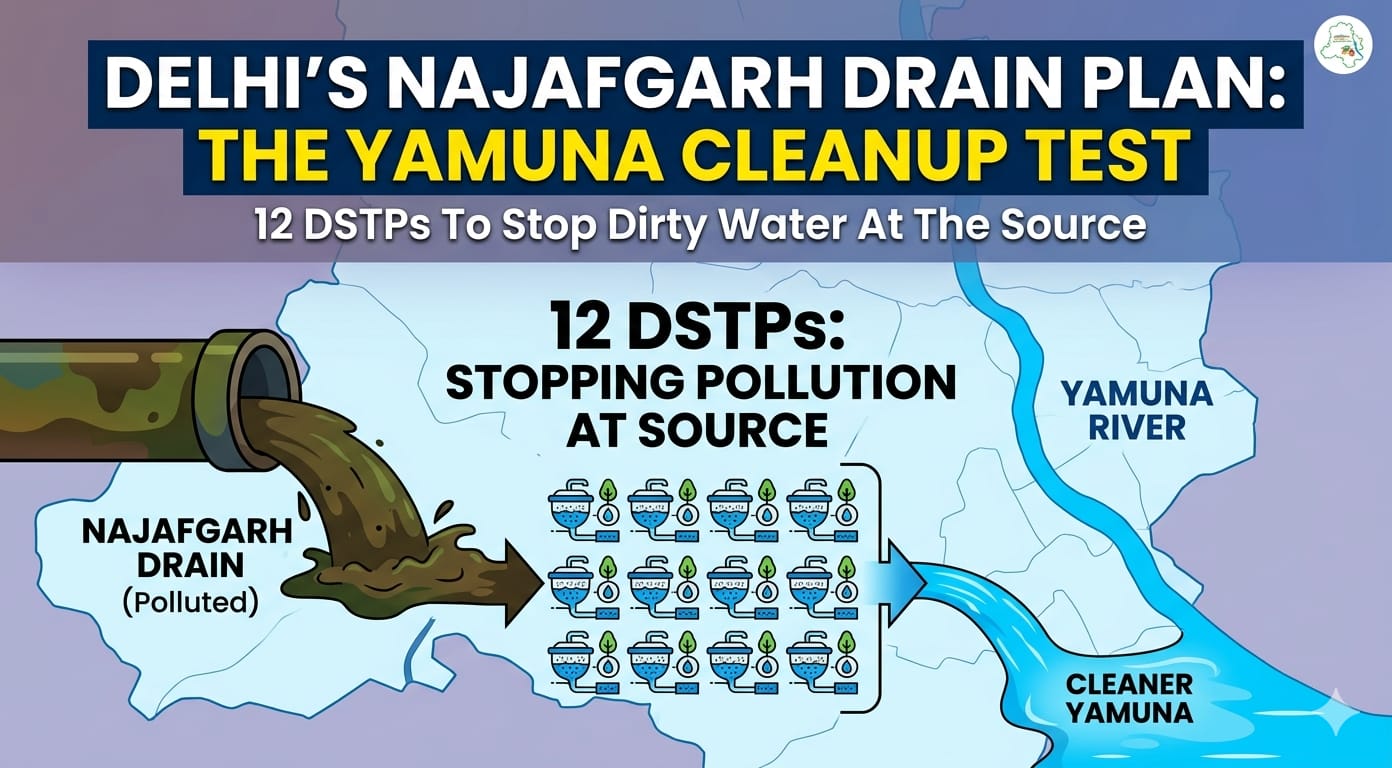
For decades, the Yamuna has been a painful example of how pollution grows when action comes too late. By the time dirty water enters the river, the damage is already done. That is why Delhi’s latest approval of an ₹860 crore plan to clean the Najafgarh drain matters so much.
This drain is one of the biggest carriers of untreated sewage into the Yamuna, and the new project is designed to intercept that waste before it reaches the river. In simple words, this is not about cleaning the river after the mess has already spread. It is about stopping the mess at the door.
The plan includes 12 decentralised sewage treatment plants, or DSTPs, in the Najafgarh region, with a combined treatment capacity of 46.5 million gallons per day. These plants will come up in places such as Mitraon, Kair, Kanganheri, Kakrola, Dichaon Kalan, Galibpur, Sarangpur, Shikarpur, Hasanpur, Jaffarpur, Kazipur, and Khera Dabar.
The project is expected to benefit more than 120 colonies and 27 villages, covering nearly seven lakh people, which means a very large number of families may finally get a cleaner and more reliable sewage system. If implemented properly, this could reduce the flow of untreated waste into the Najafgarh drain in a serious way.
What makes this move important is the basic logic behind it. For years, the Yamuna discussion has often focused on visible cleaning drives, riverfront conversations, or promises made in public. But the real problem has always been the same: sewage enters the system untreated, and the river becomes the final dumping ground.
The current plan tries to correct that pattern by treating wastewater close to where it is generated. That is why people are calling it one of the more practical steps in years. It does not depend on cosmetic cleanup. It depends on infrastructure.
This also invites a fair question from the public: why has the river remained so dirty despite huge spending in the past? Many residents remember that previous governments, including the Kejriwal government, repeatedly announced major spending on Yamuna cleanup.
Yet for ordinary people living near the river, the situation did not change in a way they could easily feel in daily life. That frustration is real, because a big budget does not automatically mean visible results.
What matters is execution, maintenance, and accountability. If plants are built but not run properly, the same problem returns. If sewer lines remain incomplete, untreated water keeps flowing. If the system is not monitored, the investment becomes just another headline.
That is why this latest plan should be judged not by its announcement, but by its delivery. The numbers sound promising, and the design is stronger because it targets the source of pollution rather than only the symptom. The real test will be whether these plants are completed on time, kept functional, and linked properly to local colonies and villages.
People do not need complicated technical language to understand this. They need cleaner drains, less stench, fewer open sewage flows, and a river that is not treated like a waste channel. That is the promise this project must now fulfill.
In the end, the Najafgarh drain plan is important because it represents a shift in thinking. Instead of asking how to hide the pollution after it enters the Yamuna, the government is trying to stop it before it reaches the river.
For a city that has heard many promises on clean water and a healthier river, this is a chance to prove that a serious, source-based solution can still work. The public will be watching closely, because this time the expectation is not just a plan. It is the result.

