
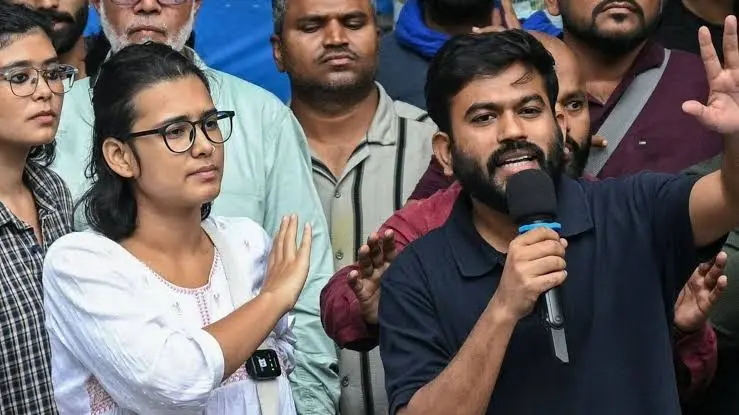
The Cockroach Janata Party’s (CJP) latest protest in Mumbai turned out to be a major flop show with only a handful of protesters. After days of political posturing and demands for the resignation of Chief Election Commissioner Gyanesh Kumar, the party’s October 16 demonstration at Azad Maidan struggled to attract participants. Reports put the turnout at roughly 50–150 people, with some accounts estimating fewer than 50.
For a movement that has sought to turn concerns over electoral rolls, the Special Intensive Revision (SIR) and electronic voting machines into a major political confrontation, the sparse attendance was hardly the spectacle its organisers might have hoped for. The protest demanded the CEC’s resignation, withdrawal of SIR and a return to ballot papers. Yet the numbers suggested that the ability to generate political noise does not necessarily translate into the ability to mobilise people.
Which brings us to an interesting question, has the opposition stopped sending its workers to protests, or are these demonstrations failing to convince ordinary citizens to participate?
The contrast is particularly striking because CJP’s earlier October 2 demonstration at Mumbai’s Shivaji Park reportedly attracted between 9,000 and 10,000 people, according to police estimates reported by The Times of India. Clearly, the latest turnout cannot, by itself, establish that the opposition has abandoned street politics. But it does raise questions about the consistency of mobilisation and the organisational effort behind individual events.
Perhaps the problem is coordination. Perhaps the publicity was insufficient. Or perhaps supporters who enthusiastically share political slogans online are less enthusiastic about spending an afternoon standing at a protest venue.
There is, after all, a difference between clicking a hashtag and showing up in person.
Opposition parties routinely accuse the government of ignoring public sentiment. But if they want their demonstrations to be taken seriously, they must also demonstrate that their concerns resonate beyond their immediate political circles. A handful of protesters cannot automatically be dismissed as insignificant, just as a massive crowd does not automatically prove a movement’s arguments correct.
The lesson is simple, political campaigns require more than slogans, dramatic announcements and demands for resignations. They need public engagement, credible arguments and sustained organisation.
Otherwise, the loudest thing about a protest may end up being the silence of the missing crowd.

