
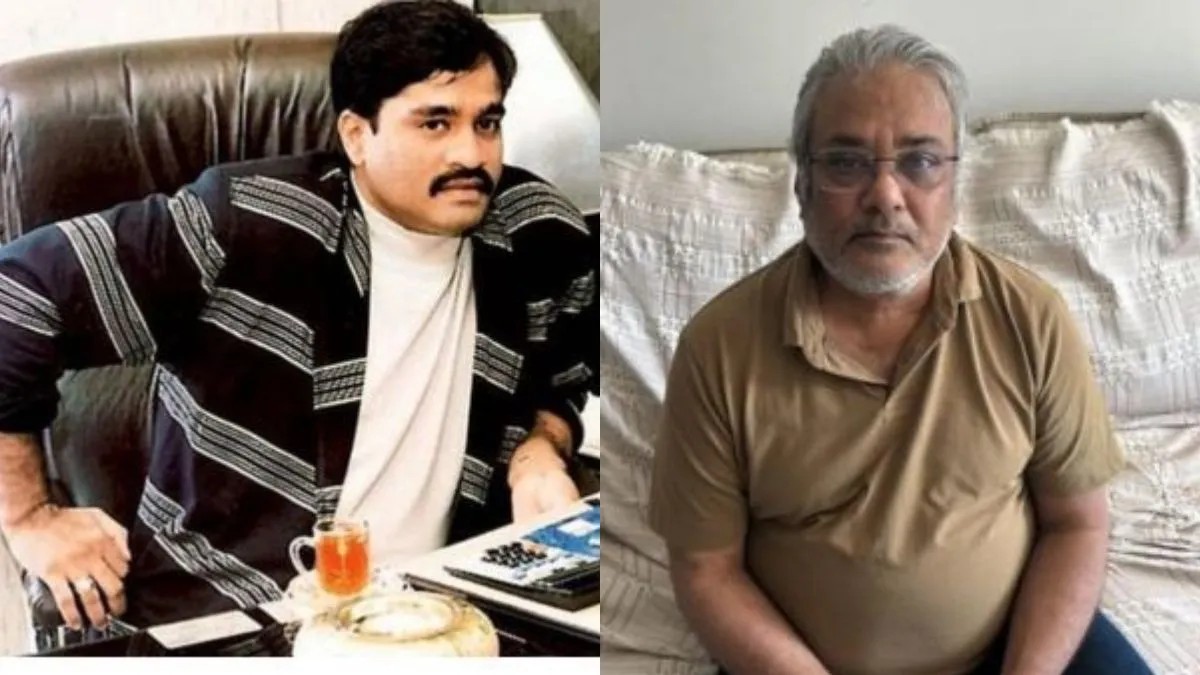
After Naxalism, the main target of Home Minister Amit Shah is the narcotics network in India. A major success in demolishing that has been achieved by India.
In a significant development that signals a shift in India’s internal security priorities, authorities have successfully deported Salim Dola, a close aide of fugitive underworld don Dawood Ibrahim, from Turkey. The move marks not just a major operational success, but also highlights how India’s focus is increasingly turning from insurgency threats like Naxalism to the growing menace of international drug networks.
Dola, a 59-year-old alleged drug kingpin, was brought to India after being arrested in Istanbul following a coordinated global operation involving Indian agencies, Interpol, and Turkish intelligence. His deportation concludes a long manhunt and represents one of the most high-profile crackdowns on the D-Company’s narcotics network in recent years.
For decades, India’s internal security discourse has been dominated by threats such as Left-Wing Extremism. However, as the state tightens its grip on Naxalite strongholds, the spotlight is now shifting toward transnational crime syndicates—particularly drug trafficking networks that have deep financial and terror linkages. Dola’s arrest is emblematic of this evolving challenge.
Investigators believe that Dola played a crucial role in managing a vast narcotics supply chain that spanned multiple continents, including the Middle East, Africa, and Europe. He is accused of being a major supplier of synthetic drugs like mephedrone and of providing raw materials for drug manufacturing units across several Indian states. His operations were not limited to smuggling; they involved complex financial networks that helped fund organized crime and potentially terror-linked activities.
The significance of Dola’s deportation lies not only in the individual capture but also in what it reveals about India’s enforcement capabilities. The operation demonstrates increasing global cooperation in tackling organized crime, with Indian agencies extending their reach beyond borders. It also reflects the government’s stated “zero tolerance” policy toward narcotics, which is now being treated as a national security issue rather than merely a law-and-order concern.
Moreover, dismantling such drug networks is crucial because of their intersection with other threats. Drug trafficking often finances terrorism, fuels urban crime, and destabilizes youth populations. As Naxalism recedes geographically, these networks are emerging as a more diffuse and harder-to-track challenge, particularly in urban and coastal regions.
Dola is now in the custody of the Narcotics Control Bureau and is expected to be interrogated extensively. Authorities aim to use his inputs to map the entire network, identify key operatives, and trace financial flows linked to D-Company’s global operations.
In essence, the deportation of Salim Dola marks a turning point. It underscores a strategic pivot in India’s internal security focus—from territorial insurgencies to sophisticated, borderless criminal enterprises. The message is clear: in the new security paradigm, drug cartels are the next big target.

