
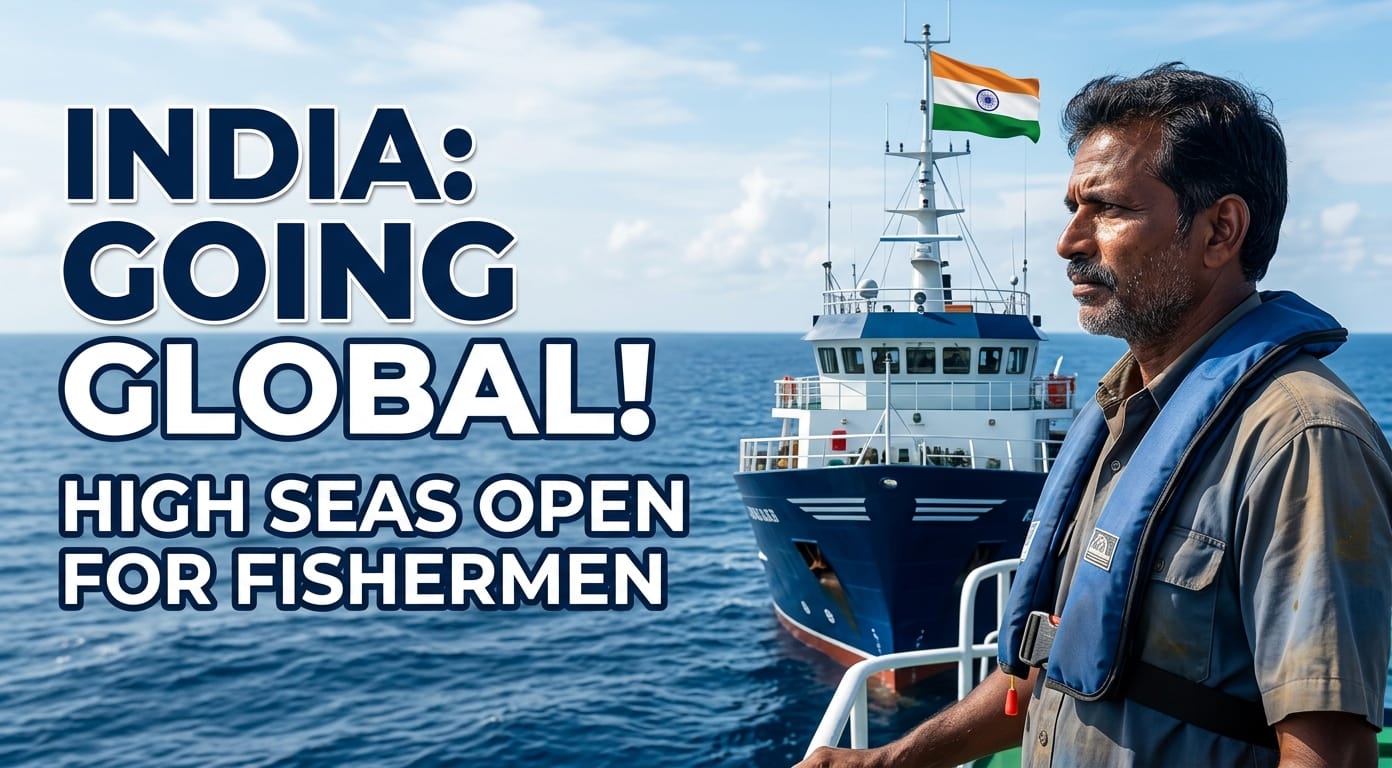
India is preparing for a major shift in its fishing policy, and this time, the focus is beyond its own waters. The government is set to introduce a “Letter of Authorisation” (LoA) system that will allow Indian companies and vessels to fish in international waters, also known as the high seas.
Simply put, Indian fishermen and firms will now get official permission to operate outside the country’s Exclusive Economic Zone (EEZ), opening doors to a much larger fishing area and potentially higher incomes.
So why is this move important right now? Because Indian fishermen are already in high demand globally. Countries like Iran and Oman have been hiring skilled fishermen from Tamil Nadu and Kerala for years. These fishermen are known for their ability to handle deep-sea conditions, long voyages, and advanced fishing techniques.
In fact, many of them work in challenging areas like the northern Arabian Sea and even as far as Diego Garcia. The problem is that while Indian talent is being used globally, India itself has not been fully tapping into this high-sea potential.
The new policy aims to change that. By allowing Indian vessels to operate internationally under a formal system, the government wants to create opportunities at home so fishermen don’t have to migrate for better earnings.
Think of it like this: instead of working on foreign ships, Indian fishermen can now work for Indian companies, earn similar incomes, and still stay connected to the domestic economy.
Another key reason behind this move is global competition. European and Chinese vessels are already actively fishing in international waters, including parts of the Indian Ocean. India, despite being the world’s second-largest fish producer with around 8 percent share in global output, has largely stayed within its own boundaries. This policy is an attempt to level the playing field and ensure India does not miss out on valuable marine resources.
The government has already started laying the groundwork. New rules notified in November tightened control within India’s EEZ by banning foreign vessels and introducing access passes for mechanised fishing boats. Around 64,000 such vessels will now need permits for deep-sea operations. At the same time, small fishermen, who form the backbone of the sector, are kept exempt to protect their livelihoods.
But the policy changes go beyond just permits. The government is also making it easier to do business in this sector. For example, fish caught in international waters will not be treated as imports when brought into India. This reduces tax and compliance burden. Similarly, if the catch is sold directly to another country from the high seas, it will be treated as exports, making the process more flexible and profitable. Even visa rules have been relaxed to allow foreign experts to train Indian crews in advanced fishing techniques.
All of this points to a bigger goal: turning fishing into a more organised and globally competitive industry. However, there is also a balance to maintain. Around 4 million small-scale fishermen in India depend on near-shore fishing, and they already face challenges like overfishing, climate change, and unstable prices. The government has acknowledged this and continues to emphasize inclusive policies so that small fishermen are not left behind as the industry modernises.
In a way, this new high-seas policy is both an economic and strategic move. It is about creating jobs, boosting exports, and reducing dependence on foreign opportunities. At the same time, it signals India’s intent to become a stronger player in global marine resources.
So, the fish on your plate might soon come not just from Indian waters, but from Indian ships operating across the world. And for thousands of fishermen, this could mean better income, safer working conditions, and the chance to build a future without leaving home.

