
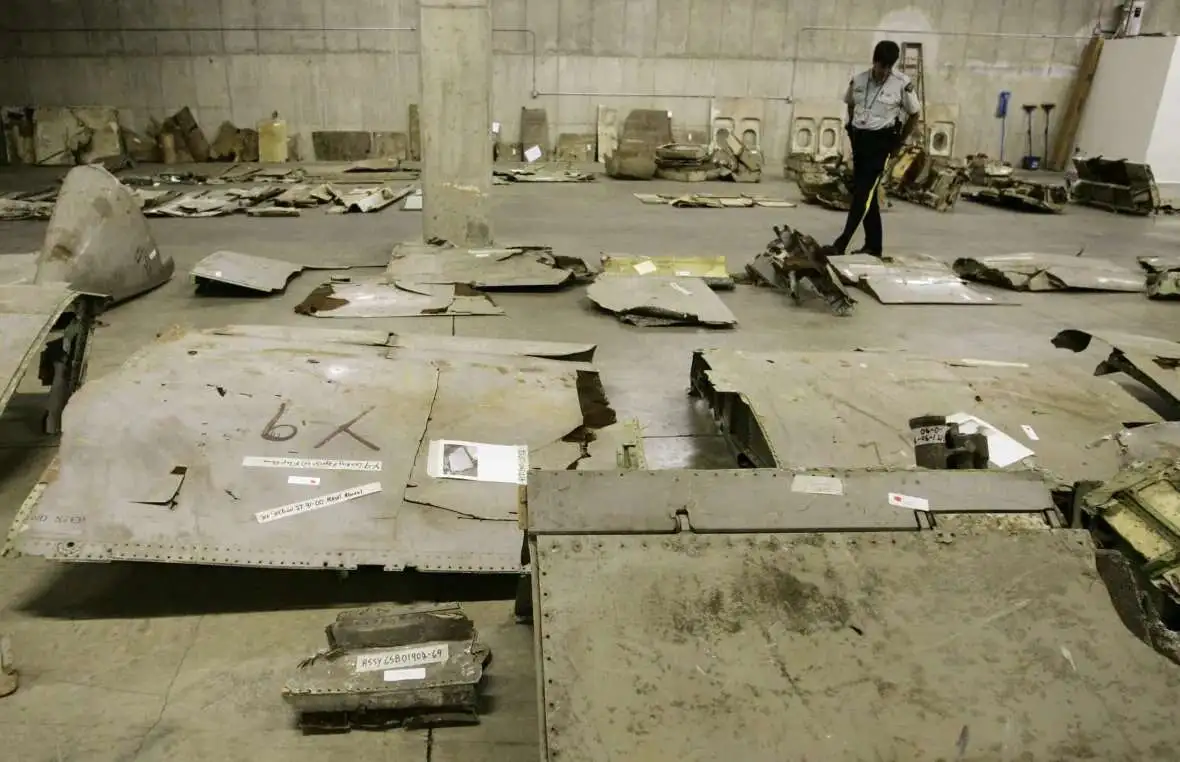
After over 4 decades of obfuscation, lying, and attempts to hide the truth behind Air India 182 bombing that killed 329, mostly Canadian citizens, Canada has accepted that it was a Khalistani terror plot. June 23 marked the 41st anniversary of the terror attack, and this admission from Canadian intelligence came shortly after that.
The Canadian Security Intelligence Service (CSIS) posted on Facebook, “On June 23, 1985, a bomb planted by Canada-based Khalistani extremists destroyed the aircraft, killing everyone on board, most of them Canadians. It remains the deadliest terrorist attack in Canada’s history and a defining moment for our national security community.”
This admission by Canadian authorities vindicates Indian stand that Khalistani terrorists, who lived with impunity in Canada, were behind the terror attack.
The agency further wrote, “CSIS was less than a year old at the time, and the tragedy shaped our evolution. Over the past four decades, we have remained committed to protecting Canadians from political, religious, and ideologically motivated violence.”
Notably, on June 23, 1985, The aircraft, a Boeing 747, which was known as Emperor Kanishka, was on the way from Toronto to Mumbai when the explosion took place. A bomb was placed in the aircraft’s luggage compartment by a member of the banned Khalistani group Babbar Khalsa, who did not board the flight. The explosive blew up mid-air over the Atlantic Ocean, and took place 45 minutes before the aircraft was supposed to land at Heathrow Airport.
329 people on board the plane were killed in the terror attack. Though only 131 bodies could be recovered from the ocean.
Canadian agencies botched investigation
What followed after the biggest terrorist attack in the air before 9/11 attacks, was a tale of ineptitude. Only one person, Inderjit Singh Reyat, was convicted for the terror attack and was sentenced to 15 years in prison. The botched investigation, and a series of errors meant that only the bomb maker got punished, while the masterminds and plotters walked away free.
Canada’s handling of the Air India Flight 182 bombing investigation has long been regarded as one of the country’s biggest law enforcement and intelligence failures. The investigation that followed the terror attack was marred by missed warnings, poor coordination, and critical investigative lapses.
The turning point came in 2010 when the Commission of Inquiry led by former Supreme Court Justice John Major released its landmark report, Air India Flight 182: A Canadian Tragedy. The report concluded that the attack could likely have been prevented had Canadian agencies acted more effectively on available intelligence and coordinated their efforts better.
The inquiry found that the Canadian Security Intelligence Service (CSIS) and the Royal Canadian Mounted Police (RCMP) failed to share crucial intelligence despite mounting evidence of an extremist threat. CSIS had monitored several suspects before the bombing but destroyed key wiretap recordings shortly after the attack under its routine policy, eliminating potentially vital evidence that could have aided investigators and prosecutors. The report described the relationship between intelligence and law enforcement agencies as fragmented and hampered by a “need-to-know” culture rather than a “need-to-share” approach.
Justice Major also highlighted serious failures in aviation security. Authorities ignored repeated warnings from the Indian government and Air India about possible attacks by Khalistanis. Passenger baggage screening procedures were inadequate, allowing an unaccompanied suitcase containing the bomb to be transferred onto Flight 182 without sufficient checks. The inquiry concluded that stronger security measures and better intelligence coordination could have prevented the tragedy.
The 2010 report made numerous recommendations, including improved intelligence sharing, stronger national security oversight, enhanced aviation security, and better support for victims’ families. It remains a landmark examination of how institutional failures within Canadian agencies contributed to one of the worst acts of aviation terrorism in history and continues to influence Canada’s counter-terrorism policies.
Canada. however, still keeps ignoring Indian warnings about the activities of Khalistanis operating from Canadian soil.

