
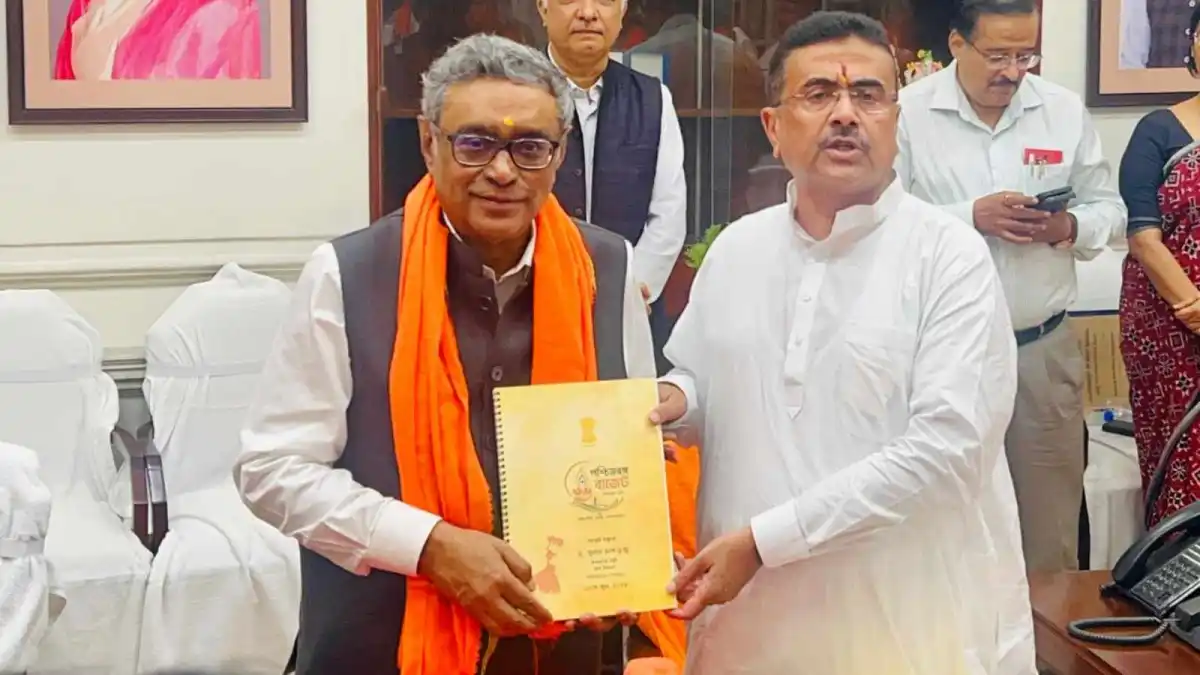
On May 4, West Bengal politics saw a seismic event, Mamata Banerjee’s Trinamool Congress was removed from power after 15 years, and Bharatiya Janta Party (BJP) came to power for the first time in the state. Now, BJP has presented its first budget for the state after coming to power, and has shown its clear intent to develop infrastructure in the state and bring industries back to West Bengal.
The decades of rule by Communists and Trinamool Congress had hampered the growth of industries in the state, forcing people to move elsewhere to look for economic opportunities, but looks like that is set to change under the BJP government.
The West Bengal Budget 2026 has signalled a clear shift towards infrastructure-led growth and industrial expansion, placing economic development at the heart of the state’s agenda. Presented by the newly elected BJP government, the budget seeks to create jobs, attract investments, and improve the business environment through a combination of public spending, policy reforms, and industrial support measures.
One of the most notable features of the budget is the emphasis on development expenditure. The government has announced a development push worth nearly ₹40,000 crore, aimed at strengthening the state’s economic foundations and generating employment opportunities. Alongside this, the budget has promised the creation of one lakh new jobs, reflecting the administration’s belief that infrastructure and industrial growth can become key drivers of employment.
Infrastructure spending has emerged as a major pillar of the budget. Significant allocations have been made for public works, urban development, transport, power, irrigation, and public health engineering. The Public Works Department alone has received an allocation exceeding ₹7,100 crore, while urban development has been allotted nearly ₹13,600 crore. Investments in roads, bridges, urban infrastructure, water supply systems, and logistics networks are expected to improve connectivity and reduce bottlenecks for businesses across the state.
Industry has also received special attention. The government has indicated that industrial revival and investor confidence are among its top priorities. The budget outlines measures to improve the ease of doing business and proposes legislation aimed at protecting lawful enterprises from extortion and coercive practices commonly referred to as “syndicate charges.” Such reforms are intended to create a more transparent and predictable business environment, a key requirement for attracting domestic and foreign investment.
The state’s Industry, Commerce and Enterprises Department has received substantial funding, while sectors such as MSMEs, textiles, information technology, electronics, tourism, and food processing are expected to benefit from targeted support. The government has also highlighted infrastructure development in North Bengal, recognising the region’s potential in tourism, logistics, agriculture, and manufacturing.
The budget’s broader vision appears to be centred on creating a virtuous cycle where better infrastructure attracts investment, investment creates jobs, and job creation boosts economic activity. Industry bodies had earlier called for stronger infrastructure, faster approvals, and business-friendly reforms, and many of these concerns have found reflection in the budget proposals.
While welfare measures continue to occupy an important place in the budget, the strong focus on infrastructure and industry marks a significant economic priority for West Bengal in 2026. If implemented effectively, these initiatives could strengthen the state’s competitiveness, improve investor sentiment, and lay the foundation for sustained industrial growth over the coming years.

