
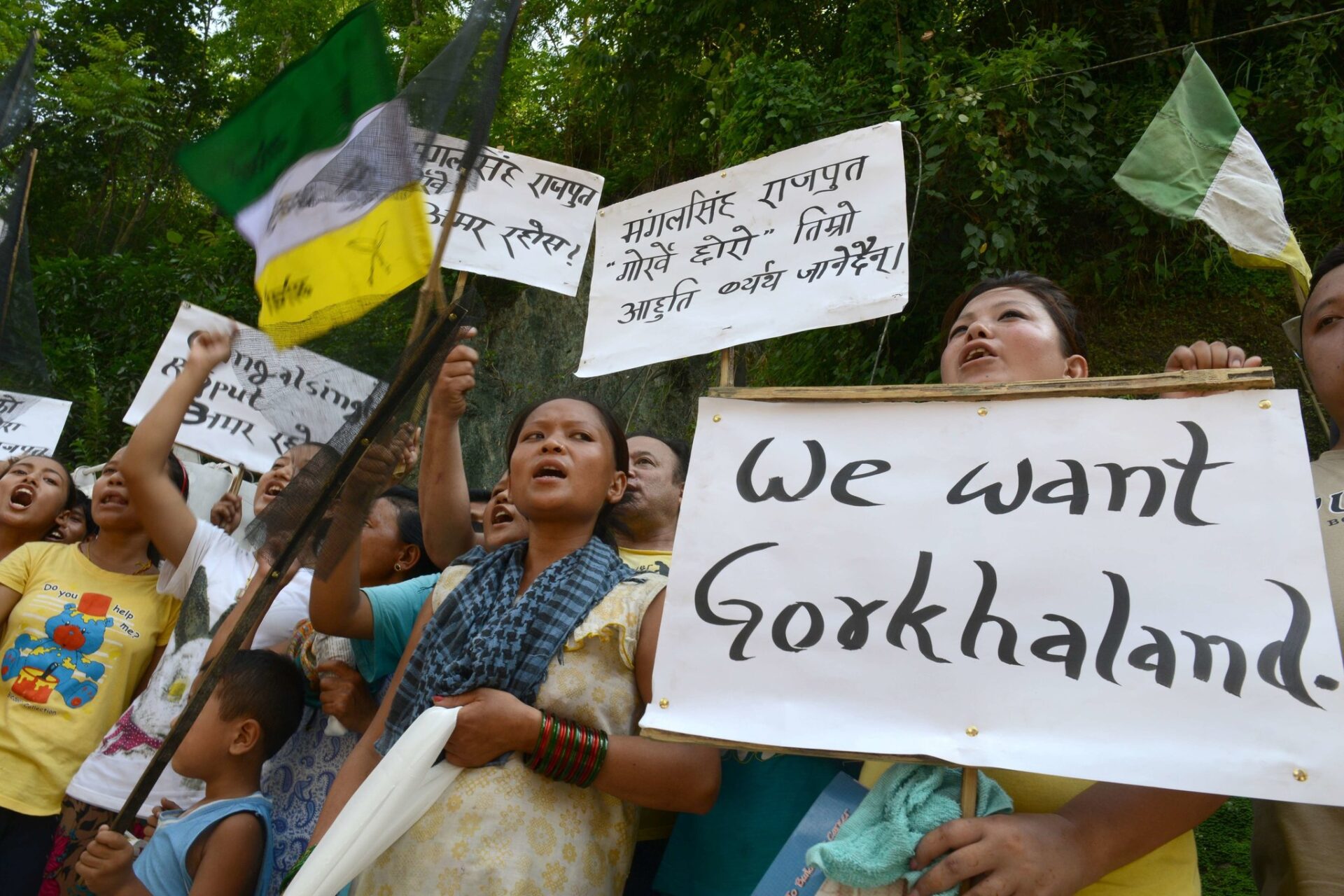
Recently, West Bengal Chief Minister Suvendu Adhikari addressed a public meeting in Kurseong, during his first visit to the Darjeeling Hills. He said that his government has prepared a comprehensive roadmap for the development of the state’s northern region and assured people in the hills that the benefits of all Central schemes would reach them smoothly.
The CM’s speech received widespread coverage, less for the individual promises made, but more for the hope it generated for the people of the Darjeeling Hills, or as most of them like to call it, Gorkhaland. A century old demand, collectively put on the backburner by the people raising it, as they seek to give the new government a fair chance.
And that got us thinking.
Demands for new states have been a recurring feature of India’s federal politics, often emerging from regions that are or perceive themselves to be economically marginalised, administratively neglected, or politically underrepresented within larger state structures. While the Constitution of India allows the creation of new states under Article 3,[the persistence of such demands raises an important question: whether regional grievances can be addressed through developmental governance rather than territorial reorganisation.
In other words, can sustained economic development, infrastructure expansion, and improved governance reduce the political appeal of statehood movements?
Across India, several regional movements, from Telangana to Gorkhaland and Vidarbha, have articulated grievances rooted in neglect by state governments. However, the trajectories of such movements vary significantly depending on governance responses. In some regions, developmental interventions have gradually reduced the political intensity of mobilisation for statehood, while in others, persistent economic distress has continued to sustain such demands for political autonomy.
The contrasting experiences of Vidarbha in eastern Maharashtra and the Gorkhaland region in Northern West Bengal provide a useful framework for examining this dynamic. Vidarbha historically witnessed strong mobilisation for a separate state, particularly during the late twentieth and early twenty-first centuries. However, over the past decade, the demand has largely receded from mainstream political discourse as the region experienced accelerated development through infrastructure investments, industrial expansion and agricultural support policies.
In contrast, the Darjeeling Hills, where the Gorkhaland movement originated, continue to experience periodic political mobilisation around the demand for statehood. Despite the creation of administrative arrangements such as the Darjeeling Gorkha Hill Council (DGHC) and the Gorkhaland Territorial Administration (GTA), structural economic challenges persist. As recently as April 2026, Union Home Minister Amit Shah, while campaigning against the then TMC Government, had promised that if the BJP came to power in the state, it would resolve the decades-old Gorkha issue within six months. The BJP is now in power and the CM has outlined a grand vision for the region.
The contrasting trajectories of Vidarbha and the Gorkhaland region raise a broader analytical question regarding the relationship between development and regional politics. If economic stagnation can intensify demands for autonomy, can sustained development reduce them? By comparing the experiences of Vidarbha and Gorkhaland regions, this essay seeks to examine whether development-led governance can function as a political stabilisation mechanism.
Case selection rationale: Vidarbha and Gorkhaland
Vidarbha and the Gorkhaland region are selected as comparative case studies because both represent historically significant demands for separate statehood within India’s federal system. Each region has articulated grievances related to economic neglect, uneven development, and perceived political marginalisation within their respective states, Maharashtra and West Bengal. Their peripheral geographic location, distance from their respective state capitals, distinct social identity rooted in varying factors, and longstanding claims of imbalanced resource allocation and administrative neglect make them analytically suitable for examining the relationship between development and statehood mobilisation. Despite structural similarities, Vidarbha’s statehood demand waned with economic integration while Gorkhaland’s persisted due to perceived governance neglect. This sharp divergence over the last decade makes the two regions uniquely valuable for comparative analysis.
By examining Vidarbha and Gorkhaland, the study evaluates whether developmental governance can function as an alternative mechanism for addressing regional grievances without resorting to state reorganisation within India’s federal framework.
| Parameter | Vidarbha | Gorkhaland |
| Area | 97,400 sq km (31.6% of Maharashtra) | 7,500 sq km (3 hill districts) |
| Population | 2.3 crore (Census 2011) | 40 lakh (estimated) |
| First Demand | 1938 (Mahavidarbha resolution) | 1907 (Hillmen’s Association) |
| Linguistic Identity | Marathi (Varhadi dialect) | Nepali-speaking minority in Bengali state |
| Key Grievance | Economic neglect, irrigation backlog, serious lack of development | Cultural marginalisation, economic stagnation |
| Sub-state Accommodation | Nagpur Pact 1953; Kelkar Committee 2013 | DGHC 1988; GTA 2012 – both seen as failures |
| Current Status | Demand largely dormant | Fresh interlocutor appointed Oct 2025 |
Overview and Current Status of Statehood Demands
Overview of Demand for Vidarbha
Vidarbha is a geographical region of Maharashtra, forming its eastern part. It comprises the Amravati and Nagpur divisions. In terms of size, Vidarbha – which has 11 districts spread across two revenue divisions of Nagpur and Amravati – is bigger than several Indian states. The demand for an independent Vidarbha state dates back to 1856, when the Kingdom of Nagpur (Vidarbha) was annexed and merged into British India. Recognising these regional sentiments, the British Commissioner of the region recommended the creation of a separate Vidarbha province in 1888. Later, in 1903, the British reorganised the territory and created the Central Provinces and Berar, making Nagpur the capital.
The Montagu-Chelmsford Reforms of 1918 also acknowledged regional linguistic and administrative aspirations. During this period, the demand for a separate Vidarbha province received formal support, with proposals suggesting that the Marathi-speaking districts of the Central Provinces and Berar should form a distinct administrative unit known as Vidarbha.
The Indian National Congress acknowledged Vidarbha’s aspirations during its Nagpur Session (1920) and Madras Session (1927). A major milestone in the movement came on 1st October 1938, when the Central Provinces Legislature unanimously passed a resolution demanding the creation of a separate state called ‘Vidarbha.’[ It proposed Nagpur as the capital of the new state.
Dr. B.R. Ambedkar also contributed significantly to the debate on state reorganisation. He specifically supported the creation of a separate Vidarbha state with Nagpur as its capital, arguing that a large unified Maharashtra would be too difficult to govern efficiently. The Fazal Ali State Reorganisation Commission (SRC) also recommended the creation of a separate Vidarbha state with Nagpur as its capital.
However, despite this recommendation, the government ultimately decided otherwise and Vidarbha was made a part of the Bombay state in 1956. In 1960, Vidarbha was retained into the newly created state of Maharashtra, largely on the basis of the ‘one language – one state’ principle, which sought to consolidate all Marathi-speaking regions into a single state.
Before Maharashtra was formally created, a compromise agreement known as the Nagpur Pact of 1953 was negotiated. One of the most important provisions of the Pact was that Nagpur would host a session of the Maharashtra Legislative Assembly every year.
The demand for a separate Vidarbha state gained significant momentum after the central government announced the formation of Telangana in December 2009. This announcement acted as a major political trigger, inspiring regional groups in Vidarbha to intensify their demand for statehood. More than 65 organisations across the region united under a common platform called the Vidarbha Rajya Sangram Samiti (VRSS). When Telangana was officially created as India’s 29th state on 2nd June 2014, the development once again revived the Vidarbha statehood debate.
Protests for Separate Vidharbha
Current status (2024-Present)
Going into the 2014 Maharashtra Assembly elections, the demand for a separate Vidarbha state was arguably at its most energised in decades. The statehood demand was a key poll issue in the 2014 Lok Sabha elections, and Devendra Fadnavis, the then State President of BJP Maharashtra was openly and vocally committed to the cause. The BJP swept Vidarbha in the Assembly elections that year, winning 44 of 62 seats in the region.
In November 2021, the central government made its position unambiguous in Parliament. Replying to a question in Lok Sabha, Union Minister of State for Home Nityanand Rai stated plainly: “No such proposal is under consideration with the government.”
By the time the 2024 Maharashtra Assembly elections were announced, the demand for Vidarbha statehood had largely disappeared from mainstream political discourse in the region. Importantly, this shift occurred not through suppression or political prohibition, but organically, as the region’s core concerns were increasingly addressed through developmental governance and welfare policies. The 2024 election campaign in Vidarbha therefore centred overwhelmingly on development of Vidarbha rather than the promise of statehood. The BJP’s campaign strategy in Vidarbha focused heavily on infrastructure development and welfare schemes. The electoral verdict in Vidarbha was overwhelmingly in favour of the BJP. The BJP-led Mahayuti alliance won 48 out of the 62 Assembly seats in the region. Within that tally, the BJP alone secured 37 seats.
Overview of demand for Gorkhaland
The demand for Gorkhaland refers to the proposed creation of a separate state for the Indian Gorkha (Nepali-speaking) population residing primarily in the Darjeeling Hills of northern West Bengal. The proposed Gorkhaland state demand includes Darjeeling and Kalimpong districts, along with parts of the Terai and Dooars regions of North Bengal. In this configuration, the proposed state would cover roughly 7,000-7,500 sq km and a population estimated at 30-40 lakh people, comparable to several smaller Indian states, particularly from the North-East.
The origins of the movement date back to 1907, when the Hillmen’s Association submitted a memorandum to the British administration requesting a separate administrative arrangement for the hills. Similar representations were made in 1917, 1929 and 1930. During the colonial period, the demographic profile of Darjeeling changed significantly as Nepali-speaking migrants were encouraged to settle in the region to work in tea plantations, infrastructure projects and military recruitment. Over time, these populations consolidated into a distinct socio-political identity known as the Indian Gorkhas, whose political mobilisation increasingly centred on recognition, representation and autonomy.
After Indian independence in 1947, the Darjeeling Hills were incorporated into the state of West Bengal without any special constitutional status recognising the region’s linguistic or cultural distinctiveness. During the 1950s-1970s, the demand for autonomy remained largely moderate and was expressed through memoranda by regional organisations such as the All India Gorkha League.
However, economic stagnation in the tea plantation sector, limited infrastructure development and administrative centralisation in Kolkata generated perceptions of neglect among hill communities. These grievances, combined with identity anxieties, particularly when Nepali-speaking populations elsewhere in India were sometimes labelled “foreigners,” strengthened calls for political recognition and territorial autonomy.
The movement entered a decisive phase in 1980 with the formation of the Gorkha National Liberation Front (GNLF) under the leadership of Subash Ghising, who transformed earlier constitutional appeals into a mass movement.
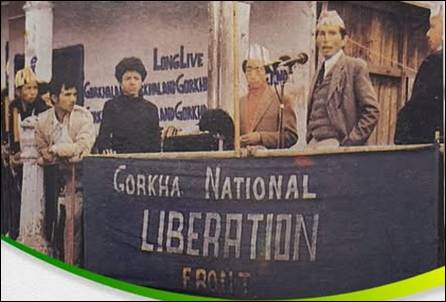
Between 1986 and 1988, the Darjeeling hills experienced intense protests, strikes and violent clashes that led to significant casualties and economic disruption. The agitation ended with the 1988 Darjeeling Accord, a tripartite agreement between the Government of India, the Government of West Bengal and the GNLF, which created the Darjeeling Gorkha Hill Council (DGHC) to provide limited administrative autonomy in the hills.
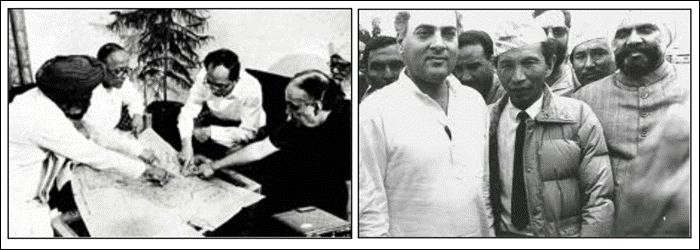
However, the council lacked substantial legislative or financial authority and was widely seen as an interim compromise rather than a permanent solution to the statehood demand. Dissatisfaction with the DGHC eventually led to the emergence of a new political force, the Gorkha Janmukti Morcha (GJM) in 2007, which revived the demand for statehood. Negotiations between the Centre, the West Bengal government and hill leaders resulted in the establishment of the Gorkhaland Territorial Administration (GTA) in 2011, replacing the DGHC.
Despite this institutional framework, many political organisations in the hills argue that the GTA lacks meaningful fiscal and legislative autonomy, leaving the fundamental demand for a separate state unresolved.
Current status of demand for Gorkhaland
Today, the Gorkhaland demand remains politically active and operates through electoral politics, constitutional negotiations and sustained agitation. A key factor sustaining the demand has been the long-term governance neglect from successive state governments, particularly under the Left Front (1977-2011) led by the Communist Party of India (Marxist) and later the Trinamool Congress (2011-2026). Both administrations opposed the creation of Gorkhaland and instead relied on limited autonomy arrangements such as the DGHC and GTA.
Political representation has also remained a persistent grievance. Although hill parties dominate local institutions, the region has historically had limited influence within the state’s political and administrative structures. Many Gorkha civil society organisations argue that the lack of proportional representation in state decision-making bodies has contributed to policy neglect and delayed development.
Additionally, the creation of separate Development Boards for smaller ethnic communities in the hills is read more as divide-and-rule politics. This was evident when former CM Mamata Banerjee announced the formation of the development board of scheduled castes – Kami, Damai and Sarki. Prior to this, she had formed similar development boards for Bhutia, Limbu, Khumbu, Sherpa, Rai, Tamang, Lepcha and Magar ethnic groups.
By doing so, TMC tried to secure tactical alliances with select regional actors and sustained political support without addressing the broader identity and representation issues at the heart of the Gorkhaland movement. Consequently, the Gorkhaland question remains a continuing negotiation within India’s federal structure, subdued, yet not silent.
Development as a political stabilisation tool
The comparative politics literature is unambiguous: regional grievances that are met with credible developmental commitment tend to dissipate over time. Grievances that are met with symbolic gestures, institutional half-measures, or outright repression tend to harden into permanent political mobilisation. The distinction between Maharashtra’s and West Bengal’s approach to their respective peripheral regions maps neatly onto this theoretical framework.
Maharashtra’s approach to regional balancing
Maharashtra’s governance approach to Vidarbha has evolved significantly, particularly since 2014. Maharashtra’s governance approach toward Vidarbha demonstrates how developmental policy can function as a political stabilisation tool in regions with historical statehood demands.
Over the last decade, the Maharashtra government has adopted a strategy centred on regional balancing through targeted infrastructure investment, industrial expansion, agricultural reforms, and institutional representation, integrating the region more deeply into the state’s economic growth trajectory. The following major steps – without providing a comprehensive list – define the direction of the state Government’s developmental plan for Vidarbha.
- MIHAN and Industrial Corridor: The Multi-modal International Cargo Hub and Airport at Nagpur (MIHAN) – India’s largest development project at the time of conception, with a ₹10,000 crore SEZ for IT companies represents the single largest infrastructure commitment to the region.
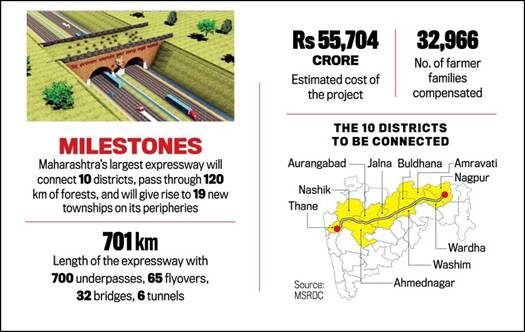
- Nagpur-Mumbai Samruddhi Mahamarg Expressway: The Samruddhi Mahamarg completed in phases from 2022, reduced travel time between Nagpur and Mumbai to under 8 hours – a transformative connectivity improvement that opened up Vidarbha’s hinterland to the state’s economic core.
- Gadchiroli Development Push: Gadchiroli, Vidarbha’s most Naxal-affected district, has seen targeted investment in mining, road connectivity (under PM Gram Sadak Yojana), and security infrastructure. The approach mirrors the classic ‘development as counter-insurgency’ framework, combining security operations with visible welfare delivery.
- 2025-26 Budget: Maharashtra’s ₹7 lakh crore budget for 2025–26 included a ₹19,300 crore irrigation project for the saline belt of North Maharashtra and West Vidarbha, ₹30,000 crore for rural roads, water supply, and healthcare, and a new industrial policy targeting ₹40 lakh crore in investments across the state over five years.

West Bengal’s approach to the Darjeeling Hills
Since the integration of the Darjeeling Hills into West Bengal after India’s independence in 1947, the region has been governed through a framework that combined administrative control from Kolkata with periodic autonomy arrangements designed to manage political unrest rather than fundamentally restructure governance or development priorities.
Successive state governments, first the Congress administration (until 1977), then the Left Front led by the CPI (M) from 1977 to 2011, and subsequently the TMC government between 2011 and 2026, consistently opposed the creation of a separate Gorkhaland state, without taking sufficient remedial steps to allay the problems of the residents of the area.
Instead, they adopted a strategy centred on limited administrative decentralisation through autonomous councils, such as the Darjeeling Gorkha Hill Council (DGHC) in 1988 and the Gorkhaland Territorial Administration (GTA) in 2011. While these institutions were intended to provide local self-governance and reduce political tensions, they did not fundamentally alter the structural economic and political marginalisation perceived by many in the hills.
The Darjeeling Hills remain a relatively narrow and fragile regional economy dominated by tea plantations, timber, and tourism, with limited diversification into manufacturing or large-scale services. These sectors form the backbone of the local economy and provide employment to a large proportion of the population.
However, reliance on a few traditional sectors has also made the region vulnerable to global price fluctuations in tea, seasonal tourism cycles, and climatic pressures affecting hill agriculture. Studies on the regional economy highlight that this overdependence has contributed to low wages, slow economic growth, and persistent structural constraints, leaving the region with limited opportunities for industrialisation or higher-value employment.
The demand for Gorkhaland is driven by a deep-seated desire for a separate Gorkha identity, coupled with a limited linguistic, cultural, and emotional affinity with the rest of West Bengal. This sense of alienation has been fueled by seven decades of perceived neglect by successive state governments.
Beyond the cultural divide, the region suffers from a severe lack of basic physical infrastructure and chronic underinvestment in vital sectors – including healthcare, education, sanitation, livelihoods, tourism, and agriculture. Even the region’s crown jewel, the Darjeeling Himalayan Railway (DHR) – a UNESCO World Heritage site since 1999 – has been allowed to wallow in utter neglect, serving as a symbol of the area’s total abandonment.
Development indicators illustrate the uneven trajectory of economic growth in the hills compared to other parts of West Bengal. The district economy remains primarily agricultural. The district’s literacy rate stands at about 79.56%, below the national average of 80.9%. Labour force participation is roughly 59%, reflecting a workforce largely concentrated in low-value sectors rather than diversified industrial employment. At the same time, the hill region’s infrastructure challenges, particularly road connectivity, water supply, healthcare facilities, and educational access in remote areas, have frequently been cited as symptoms of a development model that has not kept pace with the region’s demographic growth and strategic importance.
Tourism, which remains one of the region’s primary economic drivers, also highlights both the potential and the limitations of state policy in the hills. About 5 to 6 lakh tourists visit the Darjeeling hills every year, but despite this steady inflow of visitors, infrastructure supporting tourism, such as roads, sanitation, waste management, and urban planning, has often struggled to keep up with demand, leading to problems such as congestion, water shortages, and environmental stress in the hill towns.
Political governance in the hills has also been shaped by an approach that prioritised conflict management over structural transformation. The recently ousted TMC government continued the Left’s approach after coming to power in West Bengal in 2011. While the GTA expanded administrative responsibilities to include a wider geographic area and greater fiscal allocation compared to DGHC, the body still functioned within the administrative control of the state government. This governance model has prevented the emergence of a stable regional development strategy capable of addressing structural issues such as declining tea productivity, limited industrial investment, and outmigration of educated youth.
Another major grievance in the hills has been the perception of unequal distribution of state resources and political underrepresentation.Decision-making power in West Bengal has historically remained concentrated in the plains, particularly in and around Kolkata, where the bulk of administrative institutions, industrial investment, and political leadership are located.
This imbalance has contributed to a persistent perception that the hills function as a peripheral region within the state’s political economy, despite their strategic importance near the Siliguri Corridor.
Case Studies: Comparative Analysis
The case studies that follow examine seven dimensions of the divergence in demand for a separate state between Vidarbha and Gorkhaland. They begin with the primary sector – the collapsing tea economy of North Bengal set against Vidarbha’s recovering cotton belt, before turning to migration, asking what it means when a region’s most educated youth have no reason to stay. Energy development reveals a paradox unique to Gorkhaland, a region sitting atop enormous hydropower potential that has never been converted into reliable supply. Political representation then frames why some regions can negotiate their way into development budgets while others cannot. Infrastructure and industrial development examine the structural divergence that results from these accumulated governance choices. The section closes with perhaps the most telling comparison of all: Gadchiroli, once synonymous with Maoist insurgency, now entering an era of steel and industrial employment – set against Alipurduar, still waiting for a motorable road under the last TMC rule.
Darjeeling tea vs Vidharbha cotton
Once known for its strength, North Bengal’s tea sector has been undergoing a serious downturn, whereas Vidarbha’s cotton economy has experienced notable growth in recent years. The contrast reveals how governance, policy execution, and institutional support influence outcomes within agricultural industries.
North Bengal currently has 449 tea gardens, which earlier produced around 433 million kilograms of tea annually. However, the sector now faces a deep crisis, with many estates becoming economically unviable and production witnessing a nearly 60% drop in 2025. Workers in several tea estates face severe hardships. Reports highlight hunger deaths and 38% undernutrition among workers who earn approximately ₹250 per day.
In contrast, Vidarbha’s cotton sector has recorded measurable gains. In 2024–25, farmers in Maharashtra received ₹3,653 crore through PMFBY claims, with farmers in Vidarbha benefiting greatly from it. Simultaneously, textile hubs linked with industrial development created around 12,500 jobs in the districts of Vidarbha, illustrating the synergy between policy initiatives and local industry development.
Central assistance also reflects a contrast in implementation with respect to the tea plantation. Projects such as the Panitanki Integrated Check Post (ICP) have remained stalled in West Bengal due to land‑related refusals. Meanwhile, Maharashtra’s Integrated and Sustainable Textile Policy 2023-28 has facilitated the smooth execution of textile projects and attracted investments.
In the 2026 elections, these differing outcomes drew public attention. Tea workers in North Bengal have increasingly protested the deterioration of their working and living conditions. Several structural and environmental pressures have intensified the crisis within North Bengal’s tea industry. In the Doars region, CTC tea prices declined by 9.5%, further affecting profitability. Natural disasters have also inflicted losses. Floods damaged approximately 300 hectares of plantations at Chengmari, one of the largest tea estates in Asia, causing financial losses estimated at ₹5-6 crore. In the areas of Darjeeling, Dooars, and Terai, torrential rains and landslides have resulted in additional losses estimated at ₹11-12 crore.
The humanitarian consequences of the crisis have been significant. A fact-finding report highlighted one starvation death (Gunjan Naik, June 2025, Garganda) amid unpaid wages for 4 months, with 38% of 108 surveyed Garganda workers undernourished (24% severely thin, BMI <17).
Vidarbha’s Cotton Sector Transformation
Vidarbha’s cotton sector had faced its own challenges in the early 2010s, including low yields and farmer distress. However, policy changes introduced after 2014 contributed to significant improvements. The Maharashtra government, in coordination with central schemes, began expanding industrial and agricultural support systems. One major initiative was the establishment of textile hubs. At Nandgaon Peth, the Raymond Group announced a project, which was aimed at generating 12,500 jobs. These kinds of industrial initiatives have strengthened the region’s textile value chain and provided employment opportunities.
The Integrated and Sustainable Textile Policy 2023-28 further accelerated growth by supporting 14 textile parks in districts such as Amravati and Akola. The policy offers 30% capital subsidies, reduced electricity tariffs, and expedited clearances through single‑window mechanisms. These measures have collectively attracted around ₹25,000 crore in investments.
Farmers have also benefited from financial protections. Under the Pradhan Mantri Fasal Bima Yojana (PMFBY), cotton farmers collectively received ₹3,653 crore in insurance claims, while the Cotton Corporation of India (CCI) procured 144.55 lakh quintals, helping maintain stable market prices.
Agricultural productivity has also improved through High Density Planting (HDP) methods. In Nagpur and Wardha districts, more than 550 farmers in Nagpur and Wardha adopted this approach and recorded a three-fold increase in cotton yields. Farmers reported yields of 15-19 quintals per acre, compared to the earlier 6–10 quintals per acre under conventional practices, demonstrating how targeted technical interventions can substantially enhance farm productivity and incomes.
Successive State Governments’ Failures in managing the Tea Gardens
The situation in North Bengal’s tea belt has increasingly drawn attention due to the persistent challenges faced by plantation workers and the limited improvement in their economic conditions. Despite years of demands and negotiations, daily wages for tea workers have remained at ₹250 per day. The stagnation of wages has become one of the most frequently cited concerns within the tea garden workforce.
Healthcare access has also been a subject of debate. The state government opted out of the Ayushman Bharat scheme and introduced the Swasthya Sathi program as an alternative. While the program aims to provide health coverage, reports suggest that plantation workers in remote tea gardens often encounter operational difficulties.
Market pressures have further complicated the condition of the tea industry. A significant influx of imported tea from Nepal has affected pricing dynamics in the region. In 2024, approximately 14-15 million kilograms of Nepali tea reportedly entered Indian markets, much of it being sold in Darjeeling itself. The increased supply has contributed to downward pressure on auction prices, and concerns have been raised regarding the absence of detailed supply chain audits to track and regulate these inflows.
Land management practices have also emerged as a controversial issue. Under certain Short Term Settlement (STS) arrangements, portions of tea estate land have reportedly been made available for alternative uses. These developments have coincided with the closure of multiple tea estates across the region. As of March 2025, 14 tea gardens had closed in the North Bengal belt. The cumulative effect of estate shutdowns, declining profitability, and labour distress has led some observers to describe parts of the tea belt as resembling a ‘graveyard of tea gardens’.
Migration and demographic outcomes
Outmigration from the Gorkhaland region has become structural and permanent. What was once temporary labour migration has now evolved into long-term demographic and economic exit, particularly among educated youth.
Students in the area typically complete their schooling in the region’s prestigious missionary and boarding institutions, long regarded as among the finest centres of English-medium education in South Asia. However, this strong school-level foundation is followed by a near-total absence of comparable higher education infrastructure within the Hills. As a result, young graduates are structurally compelled to leave the region in order to pursue university education, relocating to major metropolitan centres such as Bengaluru, Delhi, Pune, and Mumbai. What begins as an educational move increasingly becomes a permanent migration pathway.
Outmigration now follows two distinct but parallel streams, both of which result in long-term or permanent departure from the region. The first stream involves the educated middle class, who leave after school to pursue higher education and professional careers. Their migration is driven by the absence of universities, professional institutes, and knowledge-sector employment within the Hills. The second stream consists of lower-income youth, who migrate directly to metropolitan centres to take up work in call centres, beauty and wellness services, hospitality, and domestic labour. For many, migration is less about career advancement and more about escaping limited local livelihoods.
How Vidarbha Fares: One of the most significant transformations underway in Vidarbha is halting migration. For decades, young people from the region viewed migration to metropolitan centres as the only path to employment. That perception is now beginning to change. A key driver of Vidarbha’s emerging economic transformation is the creation of a local technology and services ecosystem centred in Nagpur. The arrival of major IT and corporate service firms has begun to anchor white-collar employment opportunities within the region itself. Large companies such as Tata Consultancy Services (around 7,500 employees), HCLTech (approximately 2,500 employees), and Air India (about 4,500 employees in operational and service roles) have established significant operational bases in the city. They are complemented by the presence and expansion of firms such as Tech Mahindra, Infosys, and Hexaware Technologies.
A major component of Vidarbha’s emerging employment ecosystem is large-scale skill development linked directly to industry demand. In Nagpur, the Nagpur Municipal Corporation (NMC) has partnered with Tata STRIVE, the skill development initiative of the Tata Group, to establish the Nagpur Skill Centre. The programme is designed to train approximately 5,000 youth in each assembly constituency, creating a large pipeline of locally skilled workers. Training is industry-specific and employment-linked, combining classroom instruction with on-the-job placement opportunities.
The Multi-modal International Cargo Hub and Airport at Nagpur (MIHAN) represents the most ambitious infrastructure project in central India. Spread across 4,354 hectares, It is one of India’s largest multi-product Special Economic Zone (SEZ) and is designed as an integrated logistics and industrial hub at the geographic centre of the country.
In February 2026, the Adani Group announced a ₹70,000 crore long-term investment roadmap for Vidarbha. The investment plan spans clean energy projects, logistics infrastructure, aviation MRO facilities, and community development initiatives. The group described Vidarbha as ‘ready to lead’, signalling growing confidence among major corporate investors in the region’s infrastructure base, geographic advantages, and policy environment.
Chandrapur district forms the mineral backbone of Maharashtra, producing a large part of the state’s coal and manganese output. Combined with Nagpur’s role as one of India’s most important rail–road transport junctions, these assets provide Vidarbha with strong logistical and resource advantages.
Outmigration and Change in the Religious Demography in Gorkhaland
West Bengal shares 2,216 km (more than 54%) of the Indo-Bangladesh border. The border districts most affected include Darjeeling, Cooch Behar, and Jalpaiguri. The outmigration has affected the religious demography, with Hindu migration streams replaced by Muslim migrants. Bangladeshi migration has significantly changed the demographic scenario.
A comparison of population figures by religion in Jalpaiguri district shows that the Hindu population went down from 87.50% in 1981 to 84.81% in 1991 to 82.30%, registering a decrease of approximately 2% per decade, whereas the Muslim population increased from 8.75% to 10.04% to 12.39%, registering a steady rise. The illegal Bangladeshi Muslim migrants, aided and abetted by the previous communist and TMC administrations, have settled along the porous Indo-Bangladesh border, with some of the most favoured areas lying in the Siliguri Corridor, including the districts of Cooch Behar, Jalpaiguri, Darjeeling, North Dinajpur, and South Dinajpur. Only recently, since the BJP came to power in Bengal, did the outward migration of Bangladeshis begin, as the Union and State government’s combined efforts left little scope for illegals to stay back.
However, in the preceding decades, the resettlement of Bangladeshi refugees and massive informal migration in the strategically located Darjeeling-Dooars region has seriously compromised the security of the nation and the well-being of indigenous people. GJM leader Bimal Gurung had warned against informal Bangladeshi settlements in Darjeeling foothills and the Dooars region, alleging that the TMC led state government is secretly measuring land to settle illegal Bangladeshis.
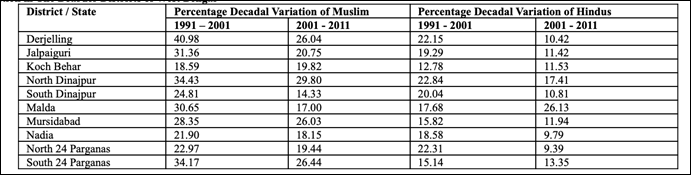
Percentage Decadal Variable of Muslim and Hindus
Energy development and regional transformation
Energy infrastructure plays a crucial role in regional economic transformation by enabling industrial growth, supporting manufacturing ecosystems, and generating long-term revenue streams for state economies. For historically underdeveloped regions, targeted investment in energy sectors, whether renewable energy manufacturing or power generation, can become a catalyst for broader industrial development and employment creation. The contrasting trajectories of Vidarbha in eastern Maharashtra and the Gorkhaland region in North Bengal illustrate how governance approaches and policy prioritisation determine whether natural resource advantages translate into economic development.
The difference here is sharp. In Vidarbha, power and energy initiatives are being tied to new livelihoods: biomass enterprises, lower-cost farming, rural confidence, and youth-led recovery. In the Gorkhaland region, poor power reliability still mirrors a larger development deficit, where disruption in electricity quickly spills into distress in homes, tourism, communication, and local survival systems. One region is using energy to expand human possibility; the other is still reminded, every blackout and every storm, how neglected infrastructure can trap people in uncertainty.
Gorkhaland Region: The hydel paradox
The Gorkhaland region possesses significant hydropower potential that remains largely underutilised. The region’s energy infrastructure historically dates back to the colonial period, when Asia’s first hydroelectric power station was established at Sidrapong near Darjeeling in 1897. Despite this early start in hydropower development, the region today continues to experience frequent electricity shortages and unreliable supply, highlighting the paradox between natural resource availability and infrastructure development.
The Gorkhaland region is traversed by several major Himalayan river systems, including the Teesta, Mechi, Rangeet, Balasun, Relli, and Sankosh, which collectively offer substantial potential for hydropower generation. Energy assessments suggest that eco-sensitive mini and micro-hydel projects in the region could generate up to 7,500 megawatts of electricity, an amount sufficient not only to meet local demand but also to produce a substantial surplus for transmission to the national grid. If effectively harnessed, this surplus could generate estimated revenues of approximately ₹100 crore per month, or nearly ₹1,200 crore annually, potentially transforming the regional economy.
The ecological characteristics of the region also make micro-hydel technology particularly suitable. The Darjeeling hills lie within one of the world’s recognised biodiversity hotspots, meaning that large-scale dams may not always be feasible. However, run-of-the-river micro-hydel systems, which minimise ecological disruption while generating continuous baseload power, provide a viable alternative that aligns with environmental sustainability goals.
Successive West Bengal governments have prioritised energy infrastructure in other parts of the state, particularly in the southern industrial belt, leaving the hills without a dedicated hydropower policy framework. Consequently, the region lacks a coordinated investment pipeline, clear regulatory incentives for private sector participation, and large-scale public investment in energy infrastructure.
Vidarbha: Solar and Clean Energy Expansion
Vidarbha had historically lagged behind western Maharashtra in industrial development, but recent policy initiatives have positioned the region as a major emerging hub for renewable energy manufacturing.
In February 2026, the Maharashtra government signed Memoranda of Understanding (MoUs) worth over ₹10,880 crore for projects in solar energy, healthcare, and manufacturing sectors, signalling a renewed push to accelerate industrialisation in Vidarbha. A major portion of this investment, ₹10,080 crore, will be deployed by Galaxy Solar Energy to establish an integrated solar and battery energy storage system (BESS) manufacturing plant in Nagpur, to be implemented in phases through 2036. The facility will manufacture solar components and large-scale energy storage systems, strengthening India’s domestic renewable energy supply chain and reducing dependence on imported photovoltaic equipment.
These renewable energy investments are being complemented by broader policy and infrastructure initiatives aimed at transforming Nagpur and the wider Vidarbha region into a major economic growth centre. The state government has proposed the development of “New Nagpur” as a trade and financial district, alongside expanded industrial corridors and transport infrastructure linking Nagpur with surrounding districts such as Gondia, Bhandara, Gadchiroli, and Chandrapur, improving regional logistics and connectivity.
In addition to solar manufacturing plants, projects include the development of grid-scale battery energy storage systems (BESS) designed to support Maharashtra’s renewable energy transition and strengthen power grid stability. The broader industrial push is expected to generate thousands of jobs across manufacturing, engineering, logistics, and support services, while also attracting further investments through upcoming state policies in electronics, aerospace, defence, pharmaceuticals, and circular economy sectors.
Vidarbha contributes around 53% of Maharashtra’s monitored capacity of 30,985 MW, equating to about 16,556 MW, primarily from coal-based thermal plants. Key facilities include Adani’s 3,300 MW supercritical plant at Tiroda, a recently acquired 600 MW unit at Butibori (Vidarbha Industries Power Ltd, and expansions by Mahagenco at sites like Chandrapur and Koradi. Private players like Adani Power, who have secured the bid to supply 6,600 MW to Maharashtra via long-term agreements, supplied 500MW of its generation to the state by blending thermal and solar sources.
Vidarbha leads Maharashtra with 40% of Pradhan Mantri Suryaghar Muft Bijli Yojana beneficiaries, installing rooftop solar in 114,978 households for 442.7 MW capacity by late 2025. The strategic rationale for locating renewable energy manufacturing in Vidarbha is rooted in both geography and infrastructure. The region possesses extensive flat terrain and high solar irradiance, making it particularly suitable for large-scale solar installations and energy manufacturing facilities. The Maharashtra government has attempted to leverage these geographic advantages to create a new industrial growth sector.
The divergence between Vidarbha and the Gorkhaland region highlights the importance of governance choices in shaping regional development outcomes. From a purely geographic perspective, the Gorkhaland region arguably possesses stronger natural advantages in energy generation due to the presence of perennial Himalayan rivers capable of producing continuous baseload power. However, Vidarbha’s recent progress demonstrates how policy-driven investment mobilisation can transform geographic potential into economic reality.
Representation in political and administrative institutions
Political representation within state and national institutions plays a critical role in shaping regional development outcomes and influencing the trajectory of statehood movements. Regions that possess substantial legislative presence and executive influence are better positioned to articulate their interests, negotiate resource allocation, and shape public policy through constitutional mechanisms. Conversely, regions with limited representation often experience structural disadvantages in policy prioritisation, which can reinforce perceptions of marginalisation and sustain demands for political autonomy.
Vidarbha: Representation within Maharashtra’s Political System
Vidarbha’s political representation within Maharashtra is relatively strong and broadly proportional to its demographic and geographic significance. The region holds 62 seats in the 288-member Maharashtra Legislative Assembly, accounting for approximately 21.5% of the total assembly seats. At the national level, Vidarbha sends 10 Members of Parliament to the Lok Sabha out of Maharashtra’s 48 seats. This legislative presence ensures that Vidarbha-origin political leaders remain influential actors in the state’s coalition dynamics and policy discussions.
The region typically holds seven ministerial positions in the Maharashtra cabinet, representing roughly 18% of the cabinet strength, and these portfolios have occasionally included significant departments such as finance, revenue, or public works. This level of cabinet participation enables regional leaders to advocate directly for development initiatives and resource allocation benefiting the region. Vidarbha also benefits from a degree of institutional recognition through the Vidarbha Statutory Development Board, established under Article 371(2) of the Constitution. The board is tasked with monitoring equitable development and ensuring balanced allocation of funds across different regions of Maharashtra.
Gorkhaland Region: Limited Representation in West Bengal
The Gorkhaland region, comprising the districts of Darjeeling(6 assembly seats), Kalimpong(1 assembly seat), Jalpaiguri(7 assembly seats), and Alipurduar(5 assembly seats) along with areas such as Kurseong and the Dooars Terai belt, has significantly weaker political representation within West Bengal’s state institutions. Collectively, these districts account for 19 seats in the 294-member West Bengal Legislative Assembly, representing approximately 6.5% of the assembly’s total strength.
Within this group, the core hill constituencies dominated by the Gorkha population account for only about six assembly seats, representing roughly 2% of the state legislature. At the national level, the region is represented by three Lok Sabha constituencies, Darjeeling, Jalpaiguri, and Alipurduar, out of West Bengal’s total of 42 parliamentary seats. While this representation provides some presence in national politics, it remains limited relative to the broader political influence of the plains districts of southern and central West Bengal.
Gorkha thinkers claim that bureaucratic representation further highlights this imbalance. Officers originating from the Darjeeling, Kalimpong, Jalpaiguri, and Alipurduar districts constitute a marginal representation means that policies affecting the hills are frequently designed and implemented by administrators with limited familiarity with the region’s distinctive socio-economic conditions, including its plantation labour system, mountain ecology, and Nepali-language educational needs. This limited representation is a result of decades of the state bureaucracy being picked from regions outside of the Gorkhaland region.
Institutional Framework: GTA versus Constitutional Mechanisms
The principal institutional concession granted to the Gorkhaland region is the Gorkhaland Territorial Administration (GTA), created under the Gorkhaland Territorial Administration Act of 2011. The GTA administers several departments in the Darjeeling hills and provides a limited form of local governance. However, unlike state legislatures or constitutionally recognised regional boards, the GTA lacks legislative authority and has no independent taxation powers. Based on the way it was framed, it remains financially dependent on grants from the West Bengal government, making it an administrative arrangement rather than a fully empowered political institution.
By contrast, the Vidarbha Statutory Development Board derives its authority from a constitutional provision, giving it greater legitimacy within the federal framework even though its powers remain limited. This distinction illustrates the broader structural difference between the two regions: Vidarbha operates within Maharashtra’s political system with significant legislative representation and executive participation, whereas the Gorkhaland region relies on a semi-autonomous administrative body with restricted institutional authority.
The comparison therefore highlights an important dimension of regional governance: political inclusion within state institutions can serve as a stabilising mechanism by allowing regions to negotiate development outcomes through constitutional channels rather than regional mobilisation.
Infrastructure and Industrial Development
Connectivity Transformation
In the previous decade, Vidarbha has witnessed a structural transformation in transport infrastructure, with road development acting as the primary catalyst for economic integration. The centrepiece of this transformation is the Mumbai-Nagpur Samruddhi Mahamarg, a 701-kilometre expressway linking Nagpur with Mumbai.
Constructed at an investment of roughly ₹45,000 crore, the corridor has dramatically reshaped the region’s connectivity. Travel time between the two cities has been cut from nearly sixteen hours to around eight, while freight costs on major logistics routes have reportedly fallen by as much as sixty percent. The expressway links ten districts and nearly four hundred villages, effectively integrating Vidarbha’s agricultural and industrial production with western India’s export gateways.
Another major development is the Samruddhi Mahamarg, which has enabled deeper integration with national logistics systems. By connecting Nagpur to Jawaharlal Nehru Port and the Western Dedicated Freight Corridor, the expressway has created a direct link between inland manufacturing centres and global trade routes. Complementary infrastructure such as rail overbridges, flyovers, and highway capacity expansions across the NH-44 and NH-53 corridors have further reduced logistical bottlenecks.
The proposed Eastern Vidarbha Expressway corridor, the Nagpur-Gondia industrial link, and capacity expansions on the Nagpur-Bhandara and Nagpur-Katol highways collectively represent tens of thousands of crores in investment. These projects aim to connect the region’s mining belts – particularly in Gadchiroli to emerging industrial clusters around Nagpur.
North Bengal and the GTA hills: Incremental road development
The road infrastructure story in the Darjeeling hills and the GTA-administered region is markedly different. The mountainous terrain of the eastern Himalayas presents genuine engineering challenges, but the scale and ambition of infrastructure investment have remained limited compared with other hilly regions.
Most road projects implemented in recent years have focused on small-scale rural connectivity improvements rather than major corridor development. These include village link roads, concrete hill roads funded through Finance Commission grants, and modest upgrades to tourist access. The GTA administration has undertaken bridge construction projects across mountain streams to improve local mobility. While such initiatives are important for rural access, they represent incremental improvements rather than transformative infrastructure.
Under the previous TMC administration, proposals such as a Darjeeling circular road and multi-level parking infrastructure for Darjeeling and Kurseong were discussed as part of tourism congestion management plans, but large-scale implementation remained pending. Consequently, the region still lacks a major highway or expressway corridor comparable to the connectivity infrastructure emerging in Vidarbha.
Divergent development pathways of the most backward districts
The contrast is striking. Gadchiroli, once synonymous with insurgency, is entering an era of mining, steel, and industrial employment. Alipurduar, despite its natural resources and strategic location, remains locked in a cycle where economic stability depends on reviving old plantations rather than building new engines of growth. One district is writing a story of transformation; the other is still waiting for development to fully arrive.
Gadchiroli’s Movement: Rifle Bore Then, Iron Ore Now
For decades, Gadchiroli district represented one of the most underdeveloped regions not only in Vidarbha but in Maharashtra as a whole. Characterised by dense forests, a predominantly tribal population, weak infrastructure, and long-standing Left-Wing Extremism (LWE) influence. Over the past decade, however, a combination of improved security, targeted infrastructure investment, and industrial policy initiatives has begun to transform the district’s trajectory. The governance model adopted by the Maharashtra government illustrates how development-led state presence can stabilise historically fragile regions while unlocking their economic potential.
A crucial precondition for development in Gadchiroli was the gradual improvement in the district’s security environment. Since 2015, the Maharashtra government has implemented a series of police modernisation and counter-insurgency initiatives aimed at reducing the operational space available to Naxal groups.
New police stations were established in previously underserved areas such as Gardevada and Aheri, while security forces were equipped with improved weaponry, communication systems, and mobility infrastructure. Enhanced coordination between central and state security agencies strengthened joint operations in the region, increasing the number of Naxalites surrendering and local youth choosing education and employment opportunities over insurgency.
Major industrial projects are currently underway that aim to transform Gadchiroli into one of India’s largest steel production clusters. Among the most significant is the ₹10,000 crore Surjagad Steel project, whose foundation was laid in 2024. In addition, Lloyds Metals and Energy is developing a 4.5 million tonnes per annum integrated steel plant.
These projects form part of a broader industrial vision in which Gadchiroli could emerge as a major steel manufacturing hub, with potential investments reportedly reaching ₹2.6 lakh crore over the coming years. Industrial development in Gadchiroli has been supported by rapid improvements in physical infrastructure, particularly in transport connectivity. The district has seen the implementation of 44 major road projects covering approximately 541 kilometres, involving investments of around ₹1,740 crore.
Parallel to industrial and infrastructure investments, the government has also focused on expanding social infrastructure and public services in the district. New facilities include a 100-bed hospital at Konsari, modern CBSE-affiliated schools, skill development centres, and improved residential infrastructure such as police housing and public service quarters. The broader development objective articulated by state leadership is to raise Gadchiroli’s per capita income sufficiently for the district to rank among the top ten districts of Maharashtra within the coming decade, marking a dramatic reversal from its earlier position at the lower end of the state’s development indicators.
Contrasting development outcomes: Alipurduar (North Bengal)
A useful contrast can be drawn with Alipurduar district in North Bengal, which despite being administratively reorganised to improve governance, has largely experienced incremental welfare-oriented development rather than structural economic transformation. Alipurduar was carved out of Jalpaiguri district on 25 June 2014, becoming West Bengal’s 20th district. The new administrative unit was intended to improve governance access in the region by decentralising district-level administration.
The district currently comprises two municipalities, Alipurduar and Falakata, and six community development blocks: Madarihat-Birpara, Alipurduar-I, Alipurduar-II, Falakata, Kalchini, and Kumargram. The creation of the district improved some degree of bureaucratic access to government services and administrative coordination.
Much of the district’s development initiatives have been directed toward housing, social welfare, and rural livelihoods. For example, programmes such as Banglar Bari Gramin Phase-II have provided housing assistance to economically weaker households across blocks like Alipurduar-I, with beneficiary lists being published in 2025-2026. While such initiatives play an important role in improving basic living standards and rural welfare, they do not fundamentally alter the district’s economic structure or generate large-scale employment ecosystems comparable to the industrial clusters emerging in Vidarbha.
Infrastructure development in Alipurduar has also largely taken the form of small-scale rural connectivity improvements. Projects implemented through the West Bengal State Rural Development Agency (WBSRDA) have included rural road upgrades, bridge construction, and irrigation works.
Government projects such as model schools, Sabuj Sathi bicycle distribution for students, rural electrification under the “Sabar Ghare Alo” programme, and healthcare facilities including a multi-super specialty hospital in Falakata have contributed to improvements in human development indicators. Despite these welfare-oriented initiatives, basic connectivity challenges continue to persist in remote parts of the district, particularly in forested areas such as the Buxa region. Visual evidence circulating in public discourse has shown villagers physically carrying a vehicle through forest terrain after it became impossible to proceed due to the absence of motorable roads beyond a certain point.
Such scenes highlight a larger developmental challenge: While administrative reorganisation and welfare schemes may improve service delivery, structural infrastructure gaps can continue to constrain mobility, economic activity, and access to markets in remote regions.
The self-reinforcing trap
The contrast is analytically sharp and politically unsettling: statehood movements do not endure on identity alone. They persist when identity is repeatedly reinforced by material neglect. In the Gorkhaland region, this has produced a self-reinforcing cycle in which political unrest discourages investment, low investment sustains unemployment, unemployment drives youth outmigration, and the departure of the most mobile sections weakens local civic pressure for accountability. The result is the consolidation of neglect as a governing condition.
Under such circumstances, the demand for statehood does not fade; it renews itself. The hills thus remain caught in a political economy where deprivation reproduces grievance, and grievance, in turn, invites containment instead of transformation.
Vidarbha illustrates the inverse dynamic. Its statehood demand receded not because regional identity lost salience, but because development changed the structure of discontent. Electoral demography sharpened this divergence: a region with significant political weight commanded sustained attention, while a smaller hill population remained easier to manage than to structurally uplift. The larger lesson is stark. Autonomy demands weaken when the state makes inclusion materially visible. Where development arrived, the demand declined. Where it stalled, the demand endured as a continuing political indictment.
The stagnation of North Bengal and hilly regions’ economy was not merely a consequence of administrative neglect or socio-political inertia. Rather, successive state governments’ inaction, lack of intent to cater to the developmental needs of the residents of the Darjeeling hills, denying them their rights of representation and basic dignified life, policy failures and industrial stagnation highlighted in the above sections suggest that it was a calculated strategy of governance deprivation, designed to consolidate political power at the expense of economic development.
In 2026, Bengal has turned a new chapter. The BJP has been given a sweeping mandate by the state, more so, by the Darjeeling Hills. The party’s record in turning the fortunes of Vidarbha is indicative of what good governance is capable of, provided the state works with intent and has a sufficient period of political stability. Gorkhaland awaits what Vidarbha got.

