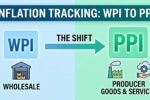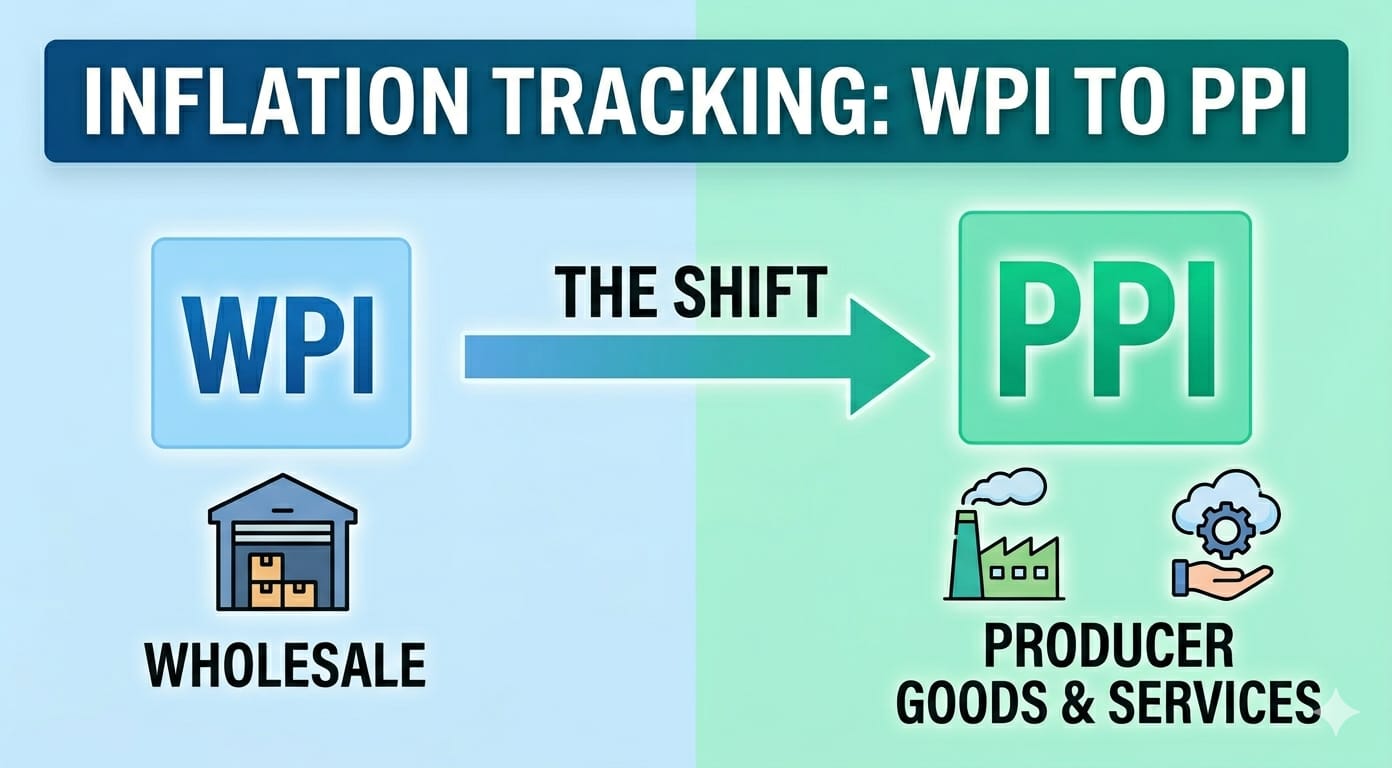
A major change is underway in the way price movement is measured. A new Producer Price Index, or PPI, has been introduced for goods and services, and this marks the beginning of a gradual shift away from the older Wholesale Price Index, or WPI. The move is meant to give a clearer and broader picture of inflation from the producer’s side, so that price changes can be understood in a more complete way.
For many years, WPI has been used as one of the main tools to track price changes at the wholesale level. It mainly covered goods and did not fully reflect the service sector, even though services now play a very large role in the economy.
The new PPI tries to fill that gap by tracking prices received by producers of both goods and services, which makes the data more relevant to the current structure of the economy.
This shift is important because the economy has changed a lot over time. More industries have grown, the services sector has become much larger, and energy sources have also changed. The revised framework is designed to reflect these changes better by widening coverage and improving the way prices are recorded.
The new system also follows global practice more closely, since many major economies already use producer-based price measures instead of relying mainly on wholesale prices.
The change will not happen overnight. The older WPI will continue to be published for five years alongside the new PPI so that businesses, institutions, and policymakers have time to adjust.
This is important because WPI is still widely used in contracts and price escalation clauses, and a sudden replacement could create confusion. During this transition period, both numbers will remain available, which should make the shift smoother for daily economic use.
The updated system is also broader in scope. The revised WPI series uses 2022-23 as the base year and expands the number of commodities covered to 957 from 697. It also includes renewable energy items like solar and wind power, along with nuclear electricity, which shows that the index is being updated to match the changing energy mix. Crude petroleum and natural gas have also been moved into a more suitable category so that energy price tracking becomes more consistent.
Another important feature is the service-side coverage under the new PPI. The first set will include seven services: banking, securities transactions, insurance, pension fund management, railways, air passenger services, and telecom.
This is a significant step because services form a major part of the economy, yet they have not been fully captured in the older framework. Over time, more services are expected to be added as the system develops further.
This change matters for everyday economic understanding as well. A better price index can help in reading inflation more accurately, improve policy decisions, and support more reliable economic analysis.
In simple terms, the shift is about using a smarter and wider lens to see how prices are moving across the economy. That makes the data more useful not only for experts, but also for businesses and ordinary households trying to understand cost changes.