
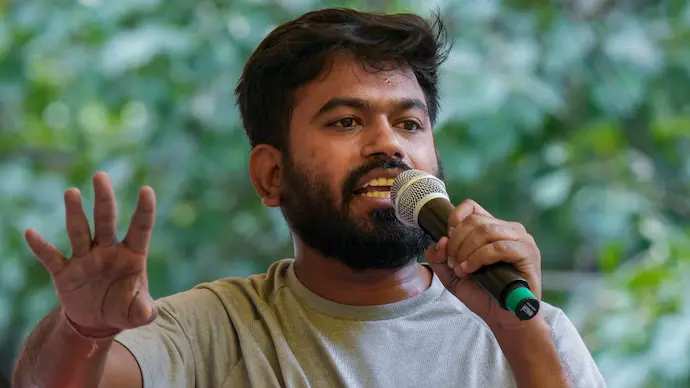
If the latest political demands are taken to their logical extreme, perhaps India needs to create one more constitutional office, the “Supreme Approval Authority”, headed by Abhijeet Dipke of the Cockroach Janata Party (CJP).
Why stop at protests and demands when, apparently, every major decision can be routed through Dipke ji?
So here is a modest suggestion, after a Bill is passed by the Lok Sabha and Rajya Sabha, why not send it directly to the CJP headquarters? Once Abhijeet Dipke ji gives his approval, it can be sent to the President for assent. And if Dipke ji says no, well, perhaps Parliament can simply meet again and ask him what went wrong.
After all, this would save Dipke ji and his supporters the trouble of repeatedly threatening protests at Jantar Mantar every time they disagree with a government decision.
The latest demands surrounding the appointment of Election Commissioners, the Chief Election Commissioner and the Special Intensive Revision (SIR) have once again brought this style of politics into focus. The demands being raised include changing the law governing the appointment of Election Commissioners, seeking the resignation of the CEC and opposing SIR.
There is, of course, nothing unusual about political organisations protesting, opposing legislation or demanding institutional changes. That is part of democratic politics. But the satire writes itself when every disagreement appears to come with the threat of another protest.
Perhaps the next logical step is to simply eliminate the need for protests and give CJP a permanent veto.
Why stop there? Maybe the Supreme Court should also call Dipke ji before delivering every judgment. Parliament could consult him before introducing every Bill. And the President could perhaps ask him whether a Bill deserves a signature in the first place.
After all, if Dipke ji has already said “OK”, what additional significance could Parliament, the courts or the President possibly have?
And then comes the most dramatic possibility, if CJP’s call is for political parties to stop contesting elections, what happens to the elections themselves? If nobody contests, Parliament would obviously cease to function as a competitive democratic institution.
At that point, perhaps CJP could propose the Bills, pass the Bills, approve the Bills and finally celebrate the Bills.
Welcome to the imagined world of CJP rule, where Parliament may exist, elections may exist, constitutional offices may exist, but apparently everything still needs one final approval, Abhijeet Dipke ji’s.

