
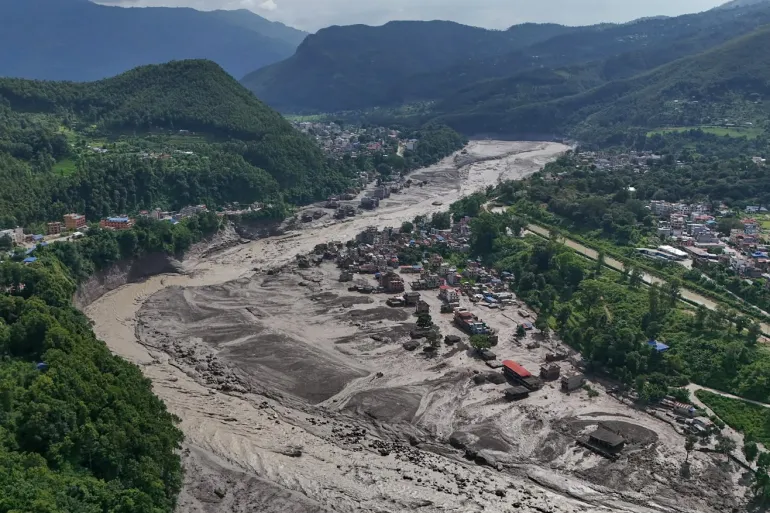
India has stepped up its humanitarian assistance to Nepal as the neighbouring country battles the devastating aftermath of catastrophic flash floods along its border with Tibet. On Thursday, India dispatched a second tranche of 37.5 tonnes of Humanitarian Assistance and Disaster Relief (HADR) material, medicines and food packets to Nepal aboard a military transport aircraft.
The latest consignment follows the dispatch of 10 tonnes of relief material on Wednesday, meaning India has now sent nearly 50 tonnes of emergency assistance in two consignments. The first tranche included temporary shelters, blankets, hygiene kits, solar lamps, medicines and other essential supplies needed by people affected by the disaster.
External Affairs Minister S. Jaishankar said India remains in close and continuous contact with Nepalese authorities and will continue to strongly support the ongoing relief operations. The rapid mobilisation reflects New Delhi’s decision to use its military logistics capabilities to get urgently needed supplies to its neighbour while large parts of the affected region remain difficult to access.
Prime Minister Narendra Modi spoke with Nepalese Prime Minister Balendra Shah shortly after the disaster and conveyed condolences over the loss of lives. Modi reaffirmed that India was ready to provide all possible humanitarian assistance and that Indian teams were coordinating with Nepalese authorities on rescue and relief efforts.
The assistance comes as Nepal confronts an enormous humanitarian emergency. The flash floods and debris flows have destroyed homes, roads, bridges and other infrastructure, while hundreds of people remain missing. The disaster has also affected foreign tourists and pilgrims, including Indian nationals travelling towards Kailash Mansarovar.
India’s response is particularly significant because of the close geographical, cultural and people-to-people ties between the two countries. Thousands of Nepalis live and work in India, while Nepal remains one of India’s closest neighbours.
The crisis also demonstrates the practical side of India’s “Neighbourhood First” approach. Rather than limiting its response to diplomatic expressions of solidarity, New Delhi has quickly deployed aircraft, emergency supplies and medicines while simultaneously working to trace Indian nationals affected by the disaster.
With rescue operations still underway and the situation changing rapidly, India has indicated that more relief consignments could follow in the coming days.
For Nepal, the immediate priority remains saving lives, reaching isolated communities and rebuilding critical infrastructure. For India, the message is clear, when a close neighbour faces a catastrophe, humanitarian assistance must reach the ground quickly.

