Basant Panchami is the day for the worship of Saraswati – the goddess of knowledge. The deity guides the practice, creative reflection and meditation for the musicians, scholars and artistes of India. Basant, the season of new beginnings, the celebration of art and yellow, is meant for exploring and inspiring creation. In the Bharatiya tradition, classical music is considered a facet of art and knowledge – “vidya”. The pursuit is of perfection, beauty, bliss, and rasa. The journey is set in devotion and joy – through the challenges in creation. During one Basant, I learned why the pursuit of knowledge in music makes the tallest of maestros expect standards and skills from journalists who come to interview them.
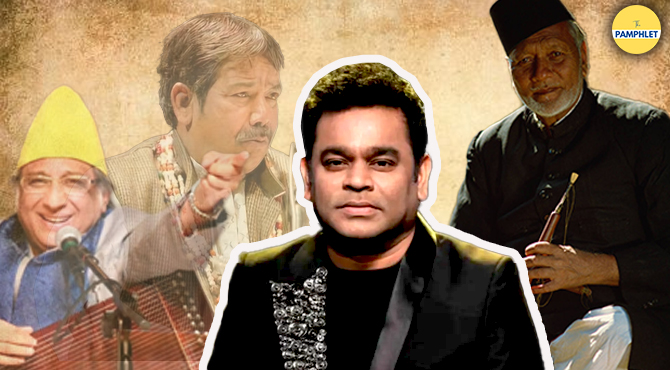
The recent controversy surrounding AR Rahman’s interview by journalist Haroon Rashid, where bait and bias took space and made headlines, made me put certain aspects about some of the tallest musicians I have met, heard and interviewed, in perspective.
‘Sing Raag Basant, then interview‘
The narrow gallery outside the nondescript hotel room in Pahadganj was spacious enough for a quick walking-riyaz. Having a fair idea of how long the namaz would last, helped. It gave me the time to prepare a mind map for the “audition”. I was instructed to deliver Raag Basant. “Sing raag Basant, then interview.” This wasn’t going to be my first test in music, but the examiner’s profile was monumental and enormous. He wasn’t from the ordinary universe in music. He came from a realm where people who questioned that one life choice that defined him, his music, where given answers about that choice – not in words – but in Raag Bhairavi.
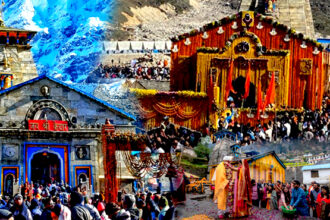
His name was Ustad Bismillah Khan, the legendary shehnai maestro, whose spot for riyaz happened to be the abode of Balaji, and of Baba Vishwanath, the deity at the Kashi Vishwanath Mandir, Varanasi.
If I failed this test, I’d have to return without an interview. The latter would be 10 times worse than failing the test before one of the greatest living maestros. Khan sahab said while chuckling between his sunken cheeks: “Hum namaz padh lein, fir aap aayeiga, fir aapka imtihaan lenge aur tab dekhte hain ki baat hogi ki nahin hogi.”
The condition the mighty examiner handed out, recoded my approach to my own work pretty early. The unsaid message I received was that I had to earn the words from a devoted-keeper of a tradition. To the truest musician, only music mattered, my sincerity in understanding music and his mattered. And this became the source of courage to walk in with Raag Basant.
His prayers over, my test began. As I sang, the alaap first, he closed his eyes, smiling now and then, and saying “haan” (yes). He then joined the singing, throwing in clues of what he expected, I followed, the taans (improvisations in notes) followed, he improvised a bit more, patting his left palm with his right palm, in approval, perhaps. At times he took over in parts but did not allow me to fade down.
His sons who would always accompany him to Delhi from Benaras, and his secretary Javed, watched the joyous duet in sheer bewilderment. Javed in particular was relieved when Khan sahab declared “beti pass ho gayi (the daughter has passed the test).” Then came the interview. Khan sahab was generous with answers to my questions on Kashi, on Benaras, on his journey, his uncle and father, his lessons under their “taleem“, on the 50 years of the Sangeet Natak Akademi – the reason for this visit to Delhi, the shehnai, its history, and raag Basant.
While travelling in the autorickshaw to my office, I realised that Khan sahab made me calibrate a raag while he prayed. And this had nothing to do with his religion or mine. This was about the language he was the master of. The language of ragas and swaras. There was a lot that Khan sahab could complain about – in life, about the audience, about what he doesn’t have, about organisers. I was coming from a national daily. I had the power to cough up headlines through him. He did not. Serious musicians, the greatest musicians, creation-aligned and devotion-aligned musicians, do not talk about politics to journalists who are serious about art.
The same year (2003), Khan saheb fell ill, and I visited his house in Benaras. It was absolutely scorching in June that year — making it worse for ailing him. In power at the Centre was NDA-I. PM Atal Bihari Vajpayee, who had recommended Khan sahab‘s name for the Bharat Ratna in 2001, granted Rs 2 lakh from the National Relief Fund towards Khan sahab‘s treatment.
In 2005, when he was feeling better, Khan sahab performed at an educational institution in Delhi. The breath going into the shehnai was weaker but the raga and courage were of steel. At the greenroom, during the interview, he mischievously asked me to fetch the plate of fruit cake which was kept near his son Nannhe’s tabla. He nibbled on the fruit cake like a squirrel while discussing a raga. Once again, he did not give himself the chance to complain before a journalist. Reasons he had many, though.
He was the anchor of the ensemble represented by him and his sons. Uncertainty was looming hard on the prospects of his large family. Organisers would look at the affordability factor for concerts. And they most likely would ignore his sons after him. Unfortunately all these possibilities took shape as reality for Khan sahab’s family members. His house in Benaras was not spared by destiny. No wealthy Mozart or an opulent Salieri sitting on heaps of riches, popularity and music-engineering machines, had any idea or opportunity for the musician sons of Khan sahab.
That one interview – where I was tested by Khan sahab – initiated a journey into understanding that politics in music and art gets space where the pursuit of music ceases to be the pursuit of knowledge.
Grandsons of the grandest, selfless and humble
There is absolutely no other way to be the grandsons of Ustad Bade Ghulam Ali Khan than to prove you are through singing, music and the ragas. Ustad Jawaad Ali Khan and Ustad Mazhar Ali Khan, as brothers performing together, were also representing the living legacy of the Patiala Gharana. In 2004, I went to cover the Kapurthala music and heritage festival, held in Kapurthala, Punjab. The Hindustani classical music scene was beginning to become inflicted by the “Aman ki Asha” rigmarole in Delhi, but far away from the capital, in Kapurthala, the Khan brothers were approaching the festival with complete focus on the legacy of the Patiala Gharana under Ustad Bade Ghulam Ali Khan without getting swayed by the media-created undertones for “Pakistani influence on Patiala gayaki (style and exploration of singing)”. At a makeshift greenroom at the venue, after tuning their accompanying musical instruments, they began warming up to a raga.
Noticing that I was thrilled by their choice for their evening, they said that the idea was to maximise the canvas for the gayaki and embellishments they could present as representatives of the gharana. The raga they wanted to pick was Hameer.
Right then, we mutually decided that I would follow up with the interview, later, maybe in Delhi, knowing the weight of the spiritual and music-bound responsibility they were dealing with, sitting in the heart of Punjab. At their house in Delhi, whenever I visited them for interviews, Ustad Jawad and Mazhar Ali Khan would express their aspirations to encourage children to pursue music without the lure of entering singing reality shows. According to them, music was a seamless journey. They disliked the trend of children and youth at reality shows being given inflated reactions from the “judges” and how their confidence was shattered every time their real musical skills were overlooked for facets of low musical value.
Their families lived together to keep the brothers’ musical bond secure and strong. Challenges they faced as musicians pursuing Hindustani music were visible in their lives and home even, yet they welcomed opportunities and questions with stellar grace and generosity. Ustad Jawad and Mazhar Ali Khan were devout Muslims who received immense respect from vocalists and musicians living in the city, at concerts they performed and attended. If at all they complained, it was about the dwindling awareness of classical music. As doyens of an art and gayaki that was synonymous with their grandfather, they often spoke about how there was not a trace of arrogance in their grandfather after having sung before Mahatma Gandhi, Pandit Jawaharlal Nehru and the nobles of the era.
Tyranny of distance between Delhi-6 and Dilli
One of the celebrated and iconic compositions sung by Ustad Bade Ghulam Ali Khan is “Bhor Bhaye” — a bandish in raag Gujari Todi. If going to the original is too much trouble, one can go to Delhi-6, the album of the Bollywood movie. Ironically, “Bhor Bhaye” from the Bollywood movie ‘Delhi-6’ is a blend of the original sung by Ustad Bade Ghulam Ali Khan and a take by playback singer Shreya Ghosal, and features the leading female actor participating in a reality show audition (funnily, she is shown even dancing during this audition – kathak being the visible inspiration).
In any other creatively-driven arrangement, Ustad Jawaad and Mazhar Ali Khan would be given a chance to participate in the singing of the bandish for a commercial opportunity attached or unattached to the film during the year this album was released or during later years. They were not alone in contributing to the music-identity of Dilli.
The thematic backdrop of this film is Old Delhi – Shahjahanabad – which happens to be the home of late Ustad Iqbal Ahmad Khan — the stalwart of Dilli Gharana. AR Rahman composed the music of Delhi-6, but we did not see any concert organised by the composer nor an album featuring Ustad Jawaad Ali Khan-Ustad Mazhar Ali Khan, to sing the iconic bandish of their own grandfather, or Ustad Iqbal Ahmed Khan sahab, to celebrate the most authentic school of singing whose identity had been Delhi-6 — for centuries. “The Dilli Gharana was full of the real ustads. All devout Muslims, they taught us to read the Gita,” Ustad Iqbal Ahmed Khan told me during an interview – years ago.
Ustad Iqbal Ahmed Khan’s approach to music was scholarly, besides being prolific in the presentation of khayal, thumri, ghazal, and Sufiana gayaki. Ustad Iqbal Ahmed Khan was the guiding force for scholars and practitioners of Hindustani music in Delhi. Years ago, when I visited his then 200-year old house in Old Delhi, he told me: “The Dilli Gharana is known to have 22 khwajas—the spiritual scholars who were masters of music and followed the mix of khayal and Sufi tradition propagated by Sawant and Kalawant during Iltutmish’s rule. The gharana flourished during the 13th and 14th centuries. When Delhi was attacked by Ahmad Shah Durrani (Abdali) in the 18th Century, many artistes fled to places like Ballabhgarh fearing for their lives. In 1960, I gave my first performance outside Delhi at the age of five. The elders bestowed on me the honour of ‘Khalifa’.”
Isn’t it bewildering that this known ‘Khalifa’ of Dilli gharana gayaki wasn’t given a single chance for a commercially attractive but meaningful project by the glamourous music directors who claim to be promoting Sufi music via the film industry? Ustad Iqbal Khan was preserving the tradition of Mian Achpal Khan who, according to Khan saheb, was the guru of Bahadur Shah Zafar and Ustad Chand Khan. The latter, as per Khan saheb, performed at the Delhi’s Coronation Durbar in 1911.
There are others who could have complained but were busy being creative. Ustad Mahmood Dhaulpuri – the maestro of harmonium in Hindustani music and his Fakruddin Dhaulpuri, who played the sarangi, performed with the Pandits and Ustads of music. Both died of ailments. They could have contributed greatly to music in education through a programme funded by any composer’s commercial success in Bollywood during their performance years. Only SPICMACAY (Society for Promotion of Indian Classical Music and Culture Amongst Youth) featured them outside conventional organisers of music concerts in the Delhi-circuit. The opportunities for accompaniment came through personal bonding between musicians — many of whom were the Pandits and their children in performance.
What delusion about identity as musicians and Indians dissuades the wealthiest musicians of the Indian film industry from promoting maestros from their own community, their own identity, their own roots? It’s a question of importance today.
The patron, the power and possibilities
The closest that AR Rahman has come to Sufi music in his work is when he has involved the Sufi qawwals to record tracks – as in Fiza, Jodha Akbar, Rockstar, Delhi-6, Mangal Pandey, etc. The Nizami brothers, who live in a house within the premises of the Nizamuddin Dargah, once spoke to me about their experiences of recording “Kun Faya” (Rockstar) and the magnanimity of AR Rahman in showing his reverence for their music and expression. The insertion of his voice in Sufi compositions has conveyed his ardent desire to “represent” and “participate”. To be fair, the result comes across as authentic. In these tracks you can feel Rahman’s presence as the true patron of a genre because he has opened up the space for artistes who are steeped in the faith. Their voice-presence and their art helps in ferrying his own outpourings. However, the same musical-authenticity is hard to find in the so-called ‘bhajans‘, for which many of his fans seem to accumulate a whole lot of praise on him for, with a sense of gratefulness or gratitude.
To me, such tracks, that sections of the media overbearingly address as ‘bhajans’, sound more like situational responses made of forgettable lyrics and musicality over-weighing devotion. Lyricism and music arranged together, profundity of bhakti and voice, the sound of Sanatan, is feeble in tracks such as O Palanhaare (Lagaan) and Manmohana (Jodha Akbar). They seem to be chasing abstraction and wanting something and that something is everything they require to qualify as ‘bhajans’ — despite the line up of musical instruments and instrumentation poured into them. The Land of Shiva (Raanjhanaa) is a musical jigsaw set in the mightiest seat of music – Benaras. Yet the vocal depth of Benaras is missing. MM Keeravani broke that trend with emboldened and definite creative courage in celebrating deities. The public ear shifted swiftly. Now that was a powershift.
One wonders why none of the Pandits or Ustads practising Hindustani music feature as vocalists for compositions dedicated to the deities in such albums. For example, late Ustad Rahim Fahimuddin Dagar sahab would have provided ample treasure in Dhrupad on Shiva. Or Ustad Wasifuddin Dagar sahab — the doyen of Dagarwani — would have in Raag Adaana for Shiva — in Dhrupad itself. “Shiva, Shiva, Shiva, Shankar Aadi deva, Shambhu Bholanath, Yogi Mahadeva, Shiva….” — the composition that struck people like lightning only when they heard “Veera Raja Veera”, and the controversy surrounding it.
There is little to discuss about the lack in the depth of creation, limitations in thought, and creative rigour in using compositions as “inspirations” instead of using a raga as a creative canvas, for a period film. For centuries the Pandits and Ustads practising Dhrupad have held a musical offering to Shiva high in esteem, in their performance and practice.
For me, accompanying Pandit Uday Bhawalkar on the tanpura, the Gundecha Bandhu on the tanpura, established the first introduction to Mahadev’s description in Raag Adaana. The experience was sacred. The composition is unthinkable outside Dhrupad and the beat cycle echoing from the pakhawaj. Even the greatest of khayalias (maestroes who sing the khayal – a form in Hindustani classical music) do not pick it for singing at their concerts. Ustad Rahim Fahimuddin Dagar and Ustad Wasifuddin Dagar in their different concerts and in their different personal creative spaces at home have opened up about what offering “Shiva Shiva Shiva” – by performing it. With them, the exploration was approached never from the point of view of “being Muslim” but from the perspective of being Dhrupadiyas from the Dagar gharana.
Powershifts are the bedrock of the Indian music film industry. The 1960s and 197Os were the living laboratories of shifts in power resonating in the Indian film music industry. Kishore Kumar sang through it and how. Mohammad Rafi performed through powershifts dedicating to the nation a collection of patriotic songs for eternity. Manna Dey and RD Burman embellished the powershift, giving the finest in the human mind and throat through rapidly evolving influences in music. AR Rahman rode high on powershifts– with Dil Se, Raavanan, Rang De Basanti, and Yuva. He told me during an interview that he was looking for Rafi and not a “roughy”. I don’t know if he managed to fine another Rafi, because there will not be another.
The shift in energies that made film music powerful
Then there are powershifts that help make music for “swayambodh” — the realisation of self or of what belongs to us. A powershift made us discover the genius in B Ajaneesh Loknath (the Kantara series) and MM Keeravani (the Baahhubali series and RRR), who have moved the universe of music from merely memorable to brilliantly everlasting, cracking open the true reserves of Indic vocals, penetrating the wealth of indigenous musical instruments, and incisively creating the synthesis of Indian rawness and mighty storytelling through background scores in the challenging genre of period cinema.
It took a powershift in creation to make us discover Shashwat Sachdev, who is capable of portraying the coarseness of Indian characters and situations “on” music. Music itself becomes the projection. With him, film music becomes the sandpaper-like surface that doesn’t bounce off characterisation and portrayal, but grates them, leaving behind dust at times, and pure juice at other times. With Sachdev, Indian film music learned the art of creating totally a new language with the existing, the old, “that song of a different era” – as in Dhurandhar.
The political powershift gave Uri and Uri gave the musical powershift from Sachdev, a hero in thinking music for the battles and wars of our times. Thanks to the powershift within just these “eight years”, yes, the eight years, music buffs experienced the transition of music dedicated to battles that are placed several centuries apart. Examine the prolific musical canvas of B Ajaneesh Loknath and MM Keeravani on one hand against Sachdev’s in Uri. You find yourself springing from the surface of the blood soaked mud in one and being para-dropped into the enemy’s zone in another.
Let’s talk about love during the powershift. Right when Indian Gen-Z finds itself stunningly drawn to “Gehra hua” – the lone love song and the only spot of musical tenderness in Dhurandhar – the film set in the violence-torn script and backdrop in Pakistan’s Lyaari, BBC Entertainment reporter Haroon Rashid says while interviewing AR Rahman and fidgeting on his chair: “..because audiences today do not have the patience to allow music to breathe.”
If Rashid looked up “Gehra Hua” — a song credited to Arijit Singh, Shashwat Sachdev, Irshad Kamil, Armaan Khan, he would realise that he is not quite into his own beat. A simple search on Youtube not only speaks of the popularity of the song that’s characteristically Urdu in language and tone, but is 6 minutes long, and has listeners hooked. Is it because the audience has patience to allow music to breathe? It is. The composition allows even the simple theka (the playing of the beat cycle) of tabla to breathe.
Rashid doesn’t refer to any particular audience, but his ideas on Indian classical music seem all jumbled up just as his ideas on Bollywood or Maharashtra. For example he believes that Rahman used Karnatic music in Bombay. Rashid mentions “prejudice that exists in the Hindi film landscape or people who are not from Maharashtra”, about “still so much discrimination that exists” in reference with the “Tamil community within Bollywood as well.” Rashid managed to nudge the musician into speaking on the perceived discrimination without going into facts that prove otherwise – in both Mumbai film industry and film music industry, because that will reveal his own ignorance.
One was thrilled when Rahman featured Ustad Ghulam Mustafa Khan (and artistes from his family) and Ustad Rashid Khan in different projects, but unfortunately, an initiative for Bharat, creating a collective for Bharat, that he could have curated, initiated and afforded with his multi-faceted influence and power in his community, did not happen, has not happened. Rahman and his work has been welcomed by the different governments. He participated in the Waves Summit 2025 and contributed work towards it. These are aspects that Rashid would not have the bandwidth for.
And that’s the point exactly where the interview ceases to be relevant. At least, for the reason of music, art and creation. Rahman doesn’t talk politics when you talk about music. Talking about songs is not the same as talking about music, but Rashid doesn’t seem cut for understanding the difference. In 2006 when I interviewed AR Rahman for the Indian Express, I asked him questions on why he had reduced instrumentals, the male voice he was looking for, on the ragas he would want to explore, on whether he will dedicate more space to the accordion, among several other questions. He would answer all those questions with the patience of an artiste. Talking to him about politics would be wasting his time, insulting the musician in him, and diminishing the artiste in him. He was at the pinnacle of film music at that time as he would again, by creating new and brilliant.
For me, AR Rahman is the master in the art of arrangement, soundscapes, instruments and orchestration. His music uses its own nostalgia to create memories of emotions reflected in them. The emotion then gets locked in that soundscape. And then the ears realise that nothing else can define that emotion better. His music creates characterisation of the quest in love. This is why Rangeela, Taal and Dil Se carried the movie on the shoulders of his music. Rahman’s music is the boldest in exploring all moods in love, innocence, loss and vindication, and that is why there will not be another background music score like Ravanan. There will be another saga of strife and surrender in love like Rahman has expressed in Zubeida – which happens to be a rare film where his music is not carrying the storytelling and filmmaking as art, but both are in collaboration.
Rahman was the master of extra large projects – as in his work in Bombay Dreams, Lagaan and Netaji Subhash Chandra Bose: the forgotten hero. There would not have been a better treatment to the Left’s propaganda film Rang De Basanti than what Rahman tailored for it in composing and music direction. There will not be experiments bolder in instilling a sense of “dilemma” into music as seen in Water and Earth. Then there are the lone raga-offshoot wonders. Today, there is newer thought in music surrounding Rahman from those who are inspired by him and those who have been creating music for decades more than him.
Creating for Bharat, the first solution and the last
Rahman’s interviewer has the glibness to portray the recipient of the Academy Award, The Padma Shri and Padma Bhushan, the National Award, BAFTA Award, The Grammy Award, multiple times the Filmfare Award, several awards from the media industry from across Bharat, and the film industry in Mumbai and the south of India, like a victim of a powershift, precisely a year after Rahman himself reportedly launched the Bharat Maestro Award to honour Indian classical music and musicians. Rahman’s interviewer perhaps should have been reminded of the strength of the music conservatory run by the ace composer, or the love he has received from students at colleges of music abroad, concerts in India and the world over.
For decades, the Pandits and Ustads practising Indian classical music have worked selflessly to uphold their gharanas, training and disciples despite challenges that are outcomes of lack of education, funds, lack of performance opportunities, changing audience perspectives, recently the Pandemic and series of its negative impacts, unstable future prospects in music for disciples, uncertainties posed by changing concert trends and organiser demands. They have been the custodians of the ragas and compositions passed on through generations that trickle into film music as “inspiration” and have remained tragically short-changed by those who claim to have shown “India to the world.” They have created for India and Indians first. They have created for the Bharatiyata in their music irrespective of the religion they represent.
They have kept the cycle, system and clockwork of concert and fee economy, orchestration, musicians, and accompanists working and living — owing to their own consistency and the stubbornness to survive for classicism. They have performed for SPICMACAY (Society for the Promotion of Indian Classical Music and Culture Amongst Youth) for the cause of the propagation of music is the closest to the heart. It is because of their contribution and efforts that SPICMACAY is able to sustain the cycle of the audience and artiste connections. These greats in music short-changed by filmi commercialisation of the ragas keep creation real and human. They have always kept music first. They have always kept Bharat first.
It is because of them that the real creation and creativity in music survives against the mechanisation of sound in midnight studios and the threats of Artificial Intelligence gobbling everything human,swar, and sadhana. Business in music is business. It is not service. It is not virtue. Virtue is where the concept and bhava of music as “vidya” is. Music-driven prosperity is where a collective of musicians across India is created, promoted, helped and curated by the wealthiest in the community. It is where ragas fill the space between worship and creating for Bharat and Bharat first. AR Rahman can make a new beginning this Basant by looking into the version of Vande Mataram sung and released by Vidushi Ranjani and Vidushi Gayatri. It might give a new perspective of his own role in the industry. The role is enormous. The canvas is wide.