
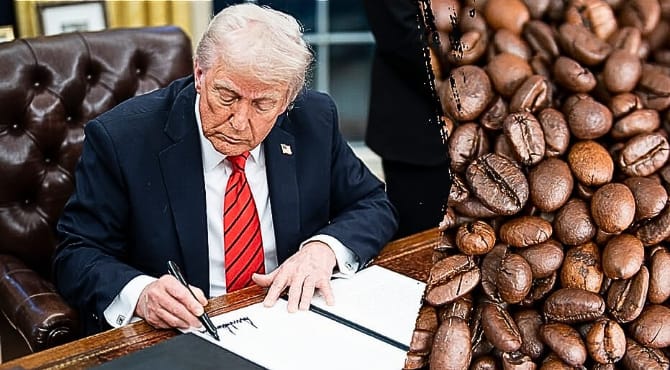
After spending months lecturing Americans about “winning on trade,” President Donald Trump has quietly rolled back a wave of tariffs that helped send grocery prices through the roof.
In a late-Friday executive order, Trump scrapped or slashed tariffs on imported coffee, beef, tea, tropical fruits, bananas, oranges, tomatoes, and several other food staples — all items that had become victims of his trade war bravado.
The twist? Many of the products Trump targeted originally — like bananas, coffee, and cocoa — aren’t even produced in the United States. The president had imposed sweeping duties earlier this year supposedly to “revive American agriculture,” only to realize later that there’s no banana industry in Ohio and no coffee farms in Nebraska.
That “America First” economics turned out to be a “Grocery Bills First” disaster. Prices of coffee, beef, and tomatoes surged, while households already battling high inflation felt the squeeze.
The damage finally caught up. Food inflation has become a national headache, and voters voiced their anger in recent state elections where Democrats scored surprise wins in Virginia and New Jersey. Exit polls showed that voters put the economy at the top of their concerns — and much of that frustration was directed at Trump’s trade policies.
Ordinary families say they’ve been paying the price of Trump’s tariff obsession. On social media, users mocked the White House’s move as “too little, too late,” blasting the president for playing with import taxes while Americans struggled to afford basic staples.
One viral post summed it up, “Trump slapped taxes on products the US doesn’t even make — and now we’re paying triple for tomatoes. Genius.”
Under the new executive order, a list of goods including tropical fruit, coffee, tea, and beef will now be exempt from the so-called “reciprocal” tariff rates that ranged from 10 to 50 percent. Tomatoes from Mexico, however, will still face a stiff 17 percent duty — one that has already sent prices skyrocketing since July.
Even Trump’s own Treasury Secretary, Scott Bessent, admitted earlier this week that the rollback affects goods “we don’t grow here.”
But the president still downplayed the damage, telling reporters aboard Air Force One that “to a large extent” the tariffs were “borne by other countries” — a claim economists have repeatedly debunked.
Critics say Trump’s sudden reversal has less to do with economic wisdom and more with political panic. With inflation still high and food costs biting deep, the administration is desperate to repair the fallout before the 2026 midterms.
Fresh agreements with Argentina, Ecuador, El Salvador, and Guatemala to cut levies on farm imports suggest the White House is now in full damage control mode.
But experts say reversing the damage will take far longer than undoing a signature. For millions of Americans still paying inflated prices at supermarkets, the sense of betrayal lingers.
After all, Trump created the mess himself — and now, he’s pretending to clean it up.

