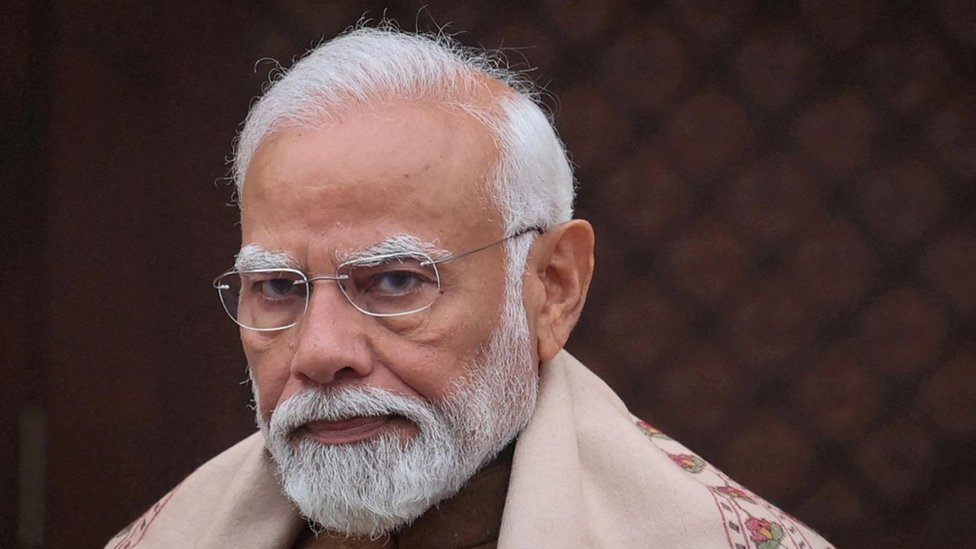
A recurring pattern in global political discourse these days is the tendency to label democratically elected and popular leaders as “fascist.” Terms like “controlled democracy” or “elected autocracy” are often thrown in as convenient shortcuts to discredit leaders who enjoy sustained public support. In India, this narrative has frequently been directed at Prime Minister Narendra Modi.
The question is, why? If a leader spends years delivering governance, implementing stated policies and improving service delivery, public approval and electoral success are natural outcomes. Repeated victories in a vibrant democratic system such as India, indicate voter endorsement, not necessarily democratic decline. Yet, such success is often reframed through a lens that questions legitimacy rather than engaging with performance. Does popularity itself become suspect when it cannot be effectively challenged by the carefully nurtured ecosystem?
This raises concerns about whether the criticism is rooted in consistent democratic principles or shaped by mere political convenience. When electoral outcomes repeatedly favour one leader or party, the response in some quarters is not introspection or recalibration, but the use of loaded labels that carry historical weight. The comparison to figures like German dictator Adolf Hitler is not just analytically weak in many cases but it also risks trivialising the historical context in which such figures operated.
Consider, then, a contrasting scenario. In India and beyond, expressions of support have been seen at times for figures like Ayatollah Khamenei, whose regime in Iran has faced longstanding accusations of severe human rights violations. Yet, the same rhetorical intensity, particularly the casual use of terms like “fascist”, is rarely directed in such contexts. This inconsistency is striking.
The pattern extends to historical figures as well. Leaders like Mao Zedong and Joseph Stalin, under whose rule millions died, are not routinely invoked in contemporary political comparisons with the same frequency or casualness. Why is one set of references normalised, while others remain selectively absent?
Even leaders such as Lee Kuan Yew, widely credited with transforming Singapore into a global economic hub, were often described through terms like “controlled democracy.” This suggests a broader discomfort with strong, effective leadership models that do not neatly align with certain ideological expectations.
At its core, this is less a debate about democracy and more about narrative. In India, repeated electoral mandates are sometimes dismissed as products of fear, manipulation or institutional erosion aka ‘vote chori’. Yet, in other parts of the world, where allegations of genuine repression and systemic abuse are far more pronounced, the discourse often becomes cautious or muted.
This selective application of moral language raises an important question: are we truly committed to opposing authoritarianism in all its forms, or are these labels being deployed selectively to serve political arguments? Because if moral standards shift depending on context, ideology, or convenience, they lose credibility.
Democracy thrives on scrutiny, debate, and dissent. But for that debate to remain meaningful, it must also be consistent. Otherwise, what is presented as principled critique risks becoming little more than selective outrage – loud where it is easy, and silent where it is not.