
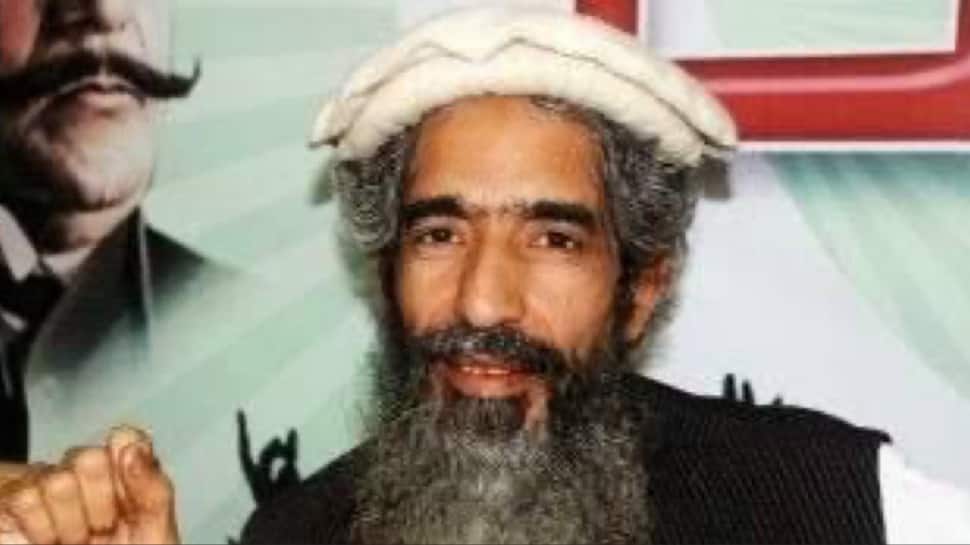
Following the movie Dhurandhar, the role of unknown gunmen in neutralising terrorists in Pakistan has been in the news. In the same vein, the shooting of Amir Hamza in Lahore has once again drawn attention to the shadowy world of militant networks operating out of Pakistan.
Hamza, a founding member of Lashkar-e-Taiba, was shot by unidentified gunmen in a brazen daylight attack, leaving him critically injured, and it once again highlights the role of ‘unknown gunmen’ in neutralising Pakistani terrorists.
According to reports, unidentified attackers opened fire on Hamza outside a news channel office in Lahore.
The attack on Amir Hamza
According to initial reports, Hamza was targeted outside a news channel office in Lahore when unknown assailants opened fire on him. He sustained severe injuries and was rushed to a hospital, where his condition has been described as critical.
Eyewitness accounts and early investigations suggest that the attackers arrived on a motorcycle, carried out the shooting, and fled the scene. The attack was right out of Dhurandhar movie, only in this case, Hamza was the one getting attacked, not the one orchestrating the attack.
Notably, this is not the first attempt on Hamza’s life. He had survived a similar shooting in May last year, indicating a sustained threat and possibly a deeper conspiracy against him.
Who is Amir Hamza
Born in 1959, Hamza is considered one of the key ideological architects of Lashkar-e-Taiba, a group designated as a terrorist organisation by multiple countries including the United States.
He co-founded the terror outfit along with Hafiz Saeed in the late 1980s and played a major role in shaping its propaganda and recruitment strategies.
Hamza has long been linked to extremist activities and is accused of involvement in multiple terror operations targeting India, including being associated with cases like the 2005 Indian Institute of Science (IISc) attack in Bengaluru.
Beyond operational roles, he has been described as a “top ideologue” within the organisation, responsible for publications, speeches, and ideological indoctrination.
A Pattern of targeted killings
Hamza’s shooting fits into a broader and increasingly visible pattern: several high-profile militants linked to Lashkar-e-Taiba and similar groups have been targeted in Pakistan in recent years. Analysts point to internal rivalries, factional splits, and even covert operations as possible reasons behind these attacks.
The fact that no group has claimed responsibility for the latest shooting adds to the intrigue. Pakistani authorities have launched search operations, but so far, there is little clarity on who orchestrated the attack or why.
Internal fault lines and strategic implications
Experts believe such attacks may reflect growing internal tensions within militant ecosystems. Over the years, Lashkar-e-Taiba has faced financial pressure, international scrutiny, and organizational fragmentation. Hamza himself was believed to have distanced from the core structure at times and experimented with parallel platforms, which may have created friction.
Additionally, Pakistan’s attempts—often under international pressure—to curb terror financing and militant activities have forced many such groups to reorganize, leading to turf wars and mistrust among operatives.
Regional security concerns
For India, Hamza’s name has long been associated with anti-India terror propaganda and operations. His targeting, therefore, is being closely watched by security agencies, not as an isolated incident but as part of a shifting dynamic within Pakistan-based militant networks.
If such figures are increasingly being eliminated or attacked within Pakistan itself, it could signal either a crackdown, internal purges, or the rise of competing factions. Each possibility carries implications for regional security, especially in Jammu and Kashmir.
The shooting of Amir Hamza is more than just an assassination attempt, it is a window into the volatile and opaque world of militant politics in Pakistan. With no clear perpetrators and a history of similar attacks, the incident underscores how even high-ranking figures within terror outfits are no longer insulated from violence.
As investigations continue, the episode raises a critical question, Is this the result of internal rivalries, state pressure, or something more covert?

