
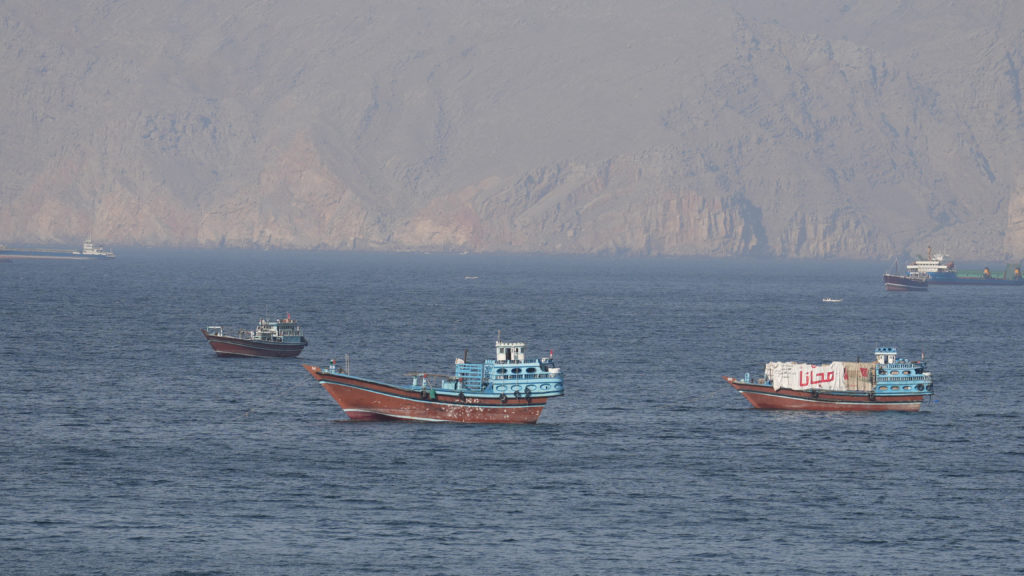
Fresh tensions are once again flaring between the United States and Iran in the strategically crucial Strait of Hormuz, raising fears of a broader military confrontation and renewed turmoil in global energy markets. The narrow waterway, through which nearly a fifth of the world’s oil supply passes, has become the focal point of the standoff between Washington and Tehran after weeks of fragile ceasefire.
The latest escalation began after reports emerged of missile and drone attacks targeting American naval vessels operating near the Strait. According to US officials, Iranian forces launched attacks on three US destroyers transiting the region, prompting retaliatory strikes by the United States against Iranian military positions and launch sites. Tehran, however, has accused Washington of provoking the confrontation and violating understandings reached during earlier ceasefire negotiations.
The Strait of Hormuz has long been one of the world’s most sensitive geopolitical chokepoints. Located between Iran and Oman, the narrow sea passage connects the Persian Gulf with the Arabian Sea and serves as the primary export route for oil producers such as Saudi Arabia, Iraq, Kuwait, the UAE, and Iran itself. Any disruption in the region immediately rattles global markets because millions of barrels of crude oil and liquefied natural gas pass through the strait every day.
In recent months, tensions had already been building after the United States and Israel launched strikes on Iran, and US increased naval deployments in the Gulf and launched what it called “Project Freedom,” an operation aimed at securing shipping routes and ensuring safe passage for commercial vessels. Iran strongly opposed the move, warning that foreign military activity in the region would be treated as a threat to its sovereignty.
The crisis deepened further after the US reportedly intercepted Iranian-linked vessels and tightened enforcement measures in the Gulf. Iran responded by threatening to disrupt maritime traffic and by increasing patrols involving fast attack boats, drones, and missile systems. Analysts say both sides are now operating in an atmosphere where even a minor miscalculation could trigger a larger conflict.
Adding to concerns, Iran recently seized a tanker accused of violating sanctions-related restrictions, while Washington has warned of harsher military retaliation if attacks on US assets continue. Former President Donald Trump also issued strong remarks, declaring that the US military would respond “harder” if Iran escalates further.
The renewed confrontation has already begun impacting international shipping and energy markets. Insurance costs for vessels moving through the Gulf have surged, while oil prices have witnessed sharp volatility amid fears of supply disruptions. Several shipping companies are reportedly reconsidering routes through the Strait due to security risks.
For now, the situation remains tense but contained. Yet with military forces from both sides operating in close proximity, the possibility of another direct clash cannot be ruled out. The Strait of Hormuz, once again, has become the epicenter of one of the world’s most dangerous geopolitical flashpoints.

