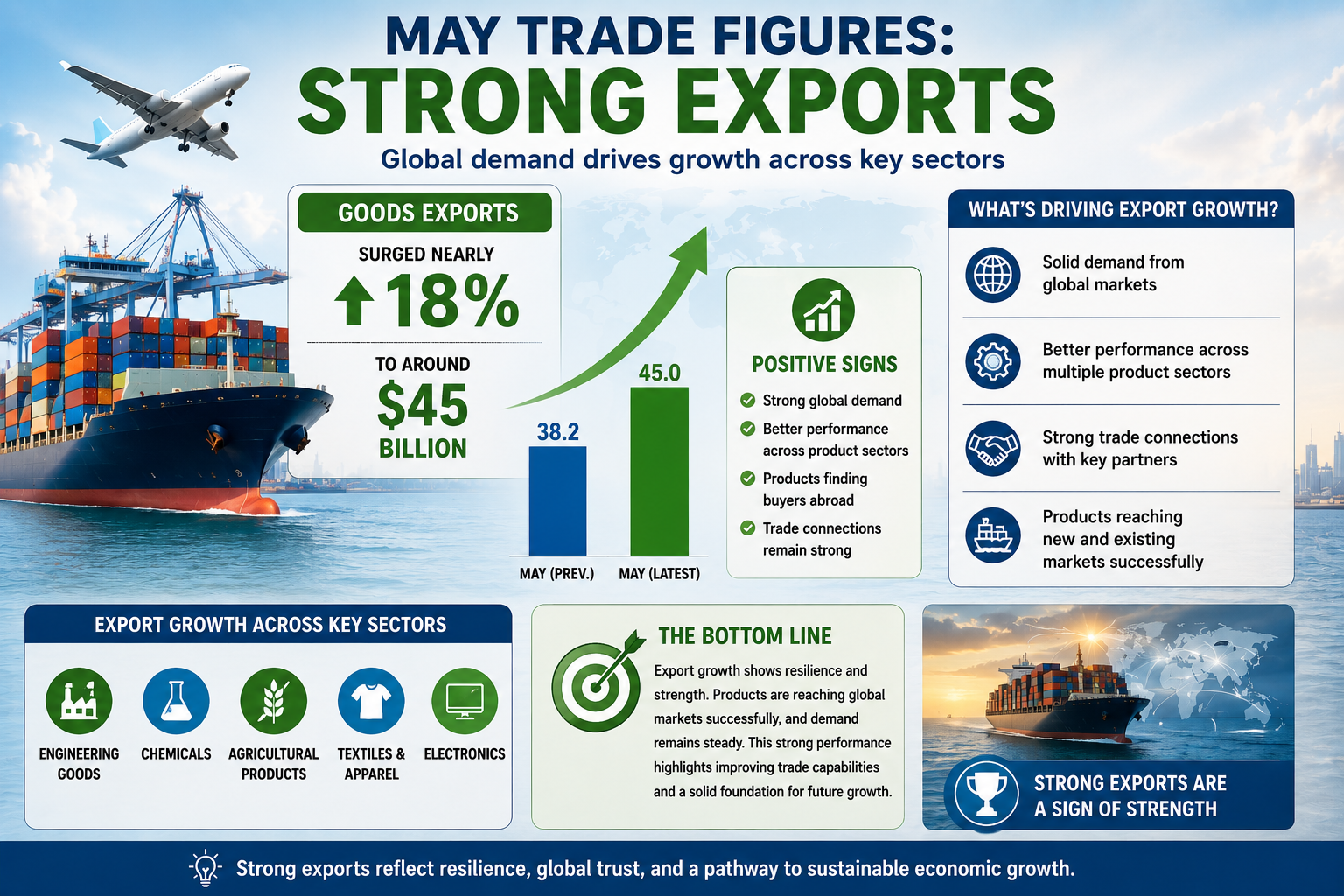
The latest trade figures for May present a mixed picture where strong progress on one side meets growing pressure on the other. Goods exports have surged nearly 18 percent, climbing to around 45 billion dollars.
This rise reflects solid demand from global markets and better performance across several product sectors. Such growth is generally seen as a positive sign, showing that products are finding buyers abroad and that trade connections remain strong.
Yet at the same time, the trade deficit has expanded to approximately 28 billion dollars. This means money spent on imports has grown faster than earnings from exports.
Even with higher export values, the gap between what is bought from abroad and what is sold overseas has widened. This imbalance is what creates the trade deficit.
A closer look reveals the main driver behind this widening gap. The cost of importing crude oil has risen sharply. Energy needs depend heavily on crude oil sourced from many countries around the world. When global prices for crude oil go up, the total cost of importing it increases significantly. Since crude oil is a major part of the import bill, higher prices directly push up overall import expenses.
Import costs include more than just the price of goods. Transportation, shipping, insurance, and supply chain expenses all add to the total. When crude oil prices rise, these logistics costs also tend to increase since fuel is essential for moving goods.
So even if the amount of imported material stays the same, the total value can still go up due to higher prices and added expenses. In this case, the dominant factor is the jump in crude oil prices, which accounts for most of the increase in import costs.
This situation helps explain why the current account deficit has also widened this month. The current account reflects the overall difference between money entering and leaving through trade and related activities.
When imports rise faster than exports, especially due to higher energy costs, the gap grows. That is exactly what happened in May. Strong export growth brought more income, but the surge in crude oil prices created a larger outflow, leading to a wider deficit.
The export rise shows resilience. Products are reaching global markets successfully, and demand remains steady. Many sectors have managed to increase their sales abroad despite challenging conditions.
This strength is important and shows that trade capabilities are improving. However, the benefits of this growth are being partly offset by rising import expenses, particularly in energy.
Think of it like a household budget. Even if income increases, if essential expenses like food or fuel go up sharply, the overall savings may still shrink. The same logic applies here. Higher export earnings are being outweighed by bigger spending on imported energy.
If crude oil prices stay high, the pressure on the trade and current account deficits may continue. Monitoring energy costs becomes important for understanding future trade trends. At the same time, the export performance shows that the foundation is strong and capable of growth.
The numbers tell a clear story. Export growth is encouraging, but rising import costs, especially from crude oil, are creating a larger gap. Understanding this link makes it easier to see how both positive and challenging trends can exist together. The situation highlights the importance of balancing export strength with managing essential import expenses.
In the end, May’s trade data shows progress alongside pressure. The export surge is a sign of strength, while the widening deficit reflects the impact of global energy price increases. Both sides of the story matter when looking at overall trade health.