
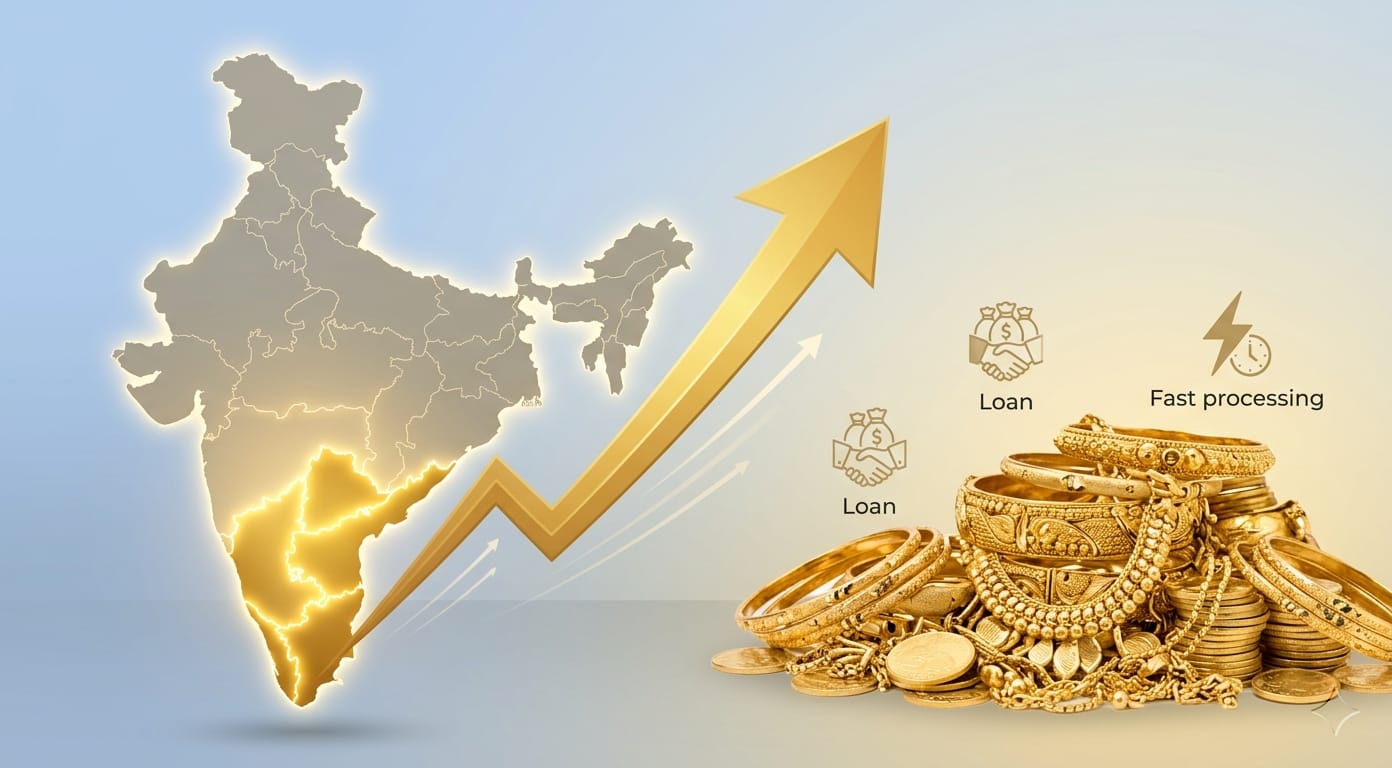
A 50% surge in gold loans reveals deep regional trends, changing borrower behavior, and the growing role of NBFCs in India’s credit landscape
The gold loan market is witnessing a powerful surge, growing over 50% year-on-year and reaching an outstanding of Rs 18.6 lakh crore by March 2026. What makes this growth even more striking is its strong regional concentration.
Five South Indian states alone account for nearly three-fourths of the total gold loan market, highlighting not just economic activity but also cultural and financial behavior patterns that set the region apart from the rest of the country.
Tamil Nadu clearly leads the market with Rs 5.96 lakh crore in gold loan outstanding, followed by Andhra Pradesh at Rs 3.08 lakh crore. Karnataka, Telangana, and Kerala also contribute significantly, with Rs 1.81 lakh crore, Rs 1.60 lakh crore, and Rs 1.45 lakh crore respectively.
Together, these states form the backbone of India’s gold loan ecosystem. This dominance is not accidental. In South India, gold is deeply embedded in culture, often seen as both a symbol of wealth and a practical financial asset. Families traditionally hold large amounts of gold, making it a readily available collateral during times of need.
In contrast, the numbers from other large states tell a very different story. Uttar Pradesh, despite being India’s most populous state, has a gold loan outstanding of just Rs 42,300 crore. West Bengal stands at Rs 35,000 crore, Rajasthan at Rs 41,700 crore, and Gujarat at Rs 57,100 crore. These figures clearly show that population size alone does not translate into gold loan usage. Instead, awareness, accessibility, cultural habits, and lending infrastructure play a far more important role.
One key reason behind the sharp growth in gold loans is the steady rise in gold prices. As gold becomes more valuable, borrowers are able to secure higher loan amounts against the same asset. This has made gold loans an attractive option for individuals who need quick liquidity without going through lengthy approval processes. Compared to unsecured loans, gold loans are easier to access, often cheaper, and come with lower risk for lenders due to strong collateral backing.
Interestingly, gold loans have now emerged as the second-largest segment in retail lending after home loans. This shift reflects a broader change in borrower behavior. People are no longer using gold loans only for emergencies or consumption needs; increasingly, these loans are being used for income-generating activities such as small businesses or agriculture-related expenses. This indicates growing financial awareness and confidence among borrowers.
Another important trend is the changing role of lenders. Public sector banks continue to dominate in terms of loan value, especially in higher ticket size loans. However, their share has declined from over 51% to around 44.6% in the past two years. At the same time, non-banking financial companies have emerged as the fastest-growing players. Their share in loan originations has increased significantly, and they now lead in terms of loan volumes. This suggests that NBFCs are reaching a wider customer base, particularly in smaller ticket loans, thanks to faster processing, better outreach, and flexible services.
Asset quality in the gold loan segment has also improved, which adds to its appeal. Delinquency rates have fallen across all loan sizes, especially in higher value loans. This improvement is largely due to rising gold prices, which strengthen the collateral value and reduce default risk. For lenders, this makes gold loans one of the safest and most reliable credit products in the market.
When compared with other lending categories, gold loans stand out clearly. Personal loans grew at a moderate pace of around 12.9%, while consumer durable loans saw growth of about 20.8%. Vehicle loans and home loans showed stable but slower expansion. In this context, the 50% growth in gold loans highlights just how strong the demand has become.
Overall, the gold loan boom in India is not just about rising prices or easy credit. It reflects deeper shifts in financial behavior, regional strengths, and the evolving role of lenders. While South India continues to lead due to its cultural and economic alignment with gold usage, the relatively low penetration in other states suggests there is still significant room for growth. The coming years could see this gap narrowing as awareness increases and lending networks expand across the country.

