
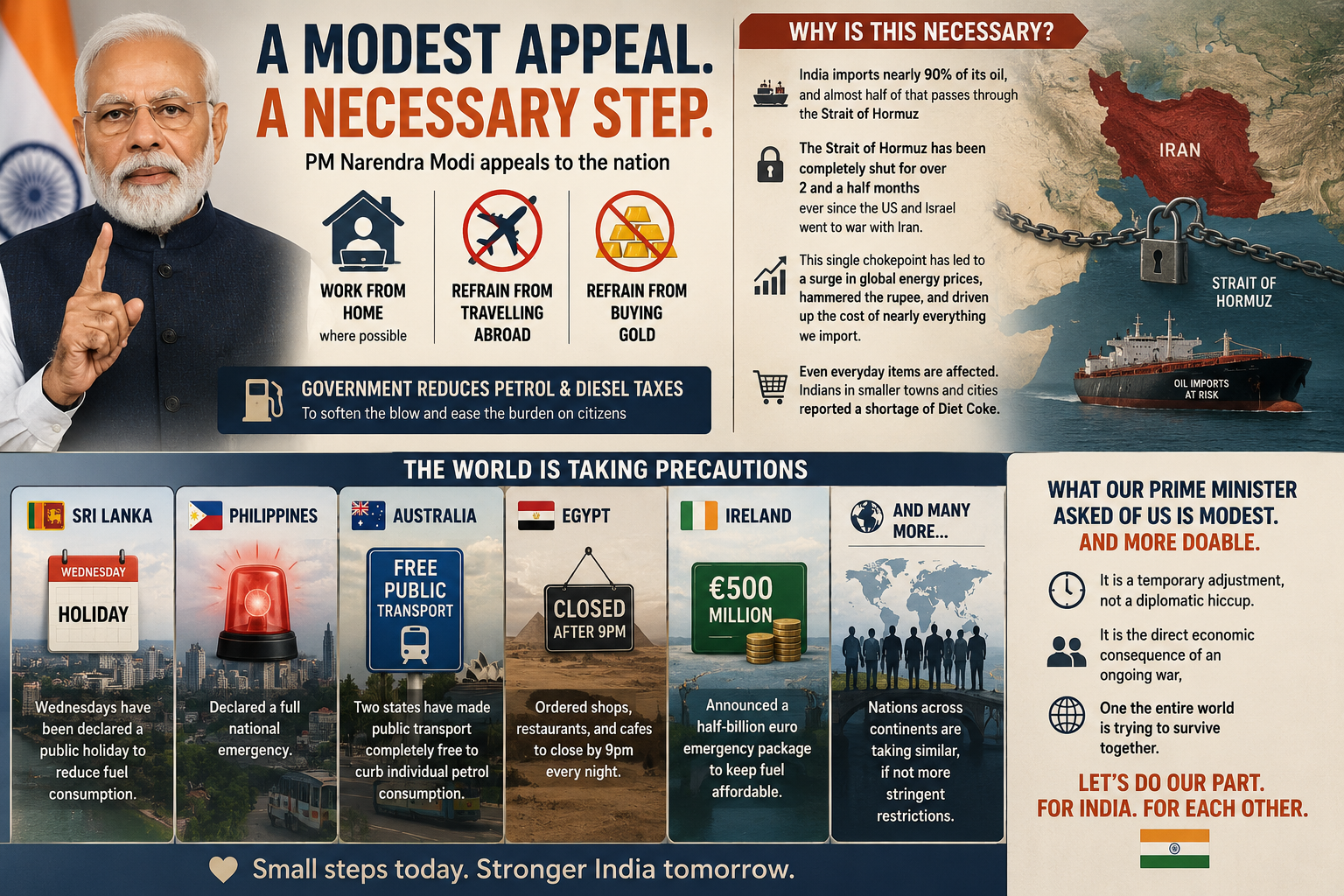
Prime Minister Narendra Modi made an appeal to the nation asking Indians to work from home where possible, refrain from travelling abroad and buying gold. The government has also reduced petrol and diesel taxes to soften the blow.
But before you worry, here some context you need.
India imports nearly 90% of its oil, and almost half of that passes through the Strait of Hormuz which has been completely shut for over two and a half months now, ever since the US and Israel went to war with Iran.
This single chokepoint has led to a surge in global energy prices, hammered the rupee, and driven up the cost of nearly everything we import. Funnily enough, the most prominent effect of the blockage was felt when Indians living in smaller towns and cities reported a shortage of diet coke.
But India isn’t the only country taking precautions amidst the ongoing conflict.
In Sri Lanka, Wednesdays have been declared a public holiday to reduce fuel consumption. The Philippines declared a full national emergency. the civil servants have been put on a four day work week. In Australia, two states have made public transport completely free to curb individual petrol consumption. Egypt has ordered its shops, restaurants, and cafes to close by 9pm every night. Ireland announced a half-billion euro emergency package to keep fuel affordable for its citizens. Numerous nations apart from the ones mentioned are taking similar, if not more stringent restrictions.
And these are not poor or mismanaged countries scrambling in isolation. These are governments across continents making desperate short term choices in response to the same crisis that is also affecting India.
What our prime minister asked of us this morning is modest, and more doable by comparison. It is a temporary adjustment, not a diplomatic hiccup. It is the direct economic consequence of an ongoing war, one the entire world is trying to survive together.

