
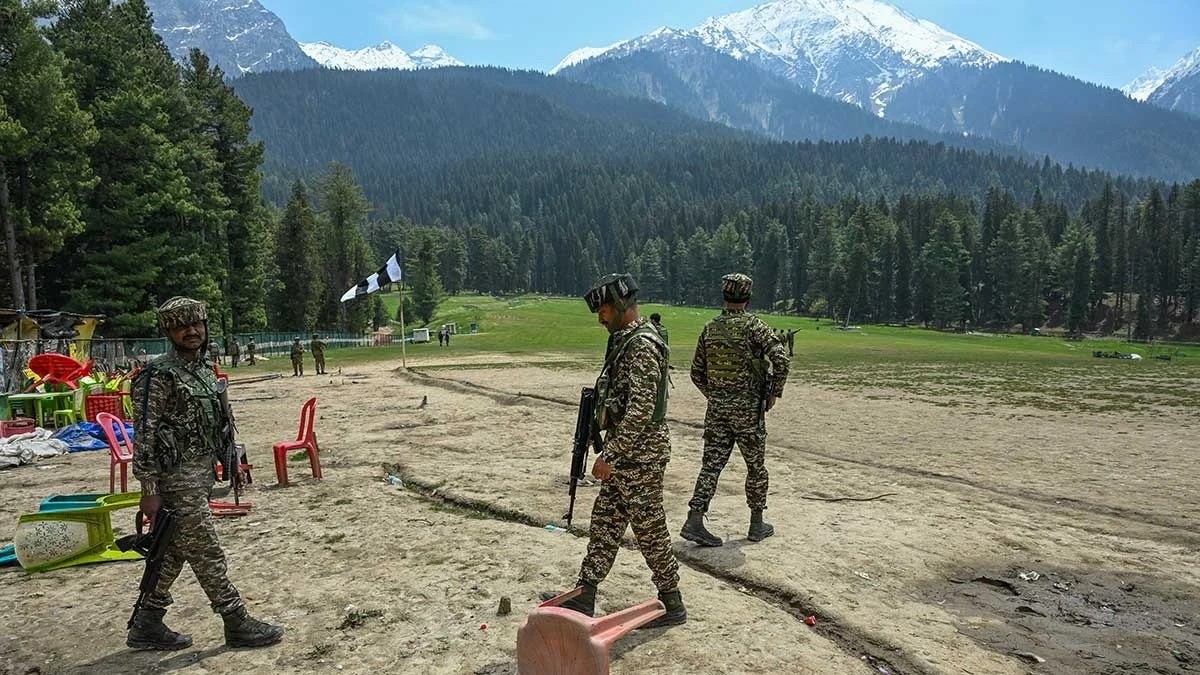
On the first anniversary of the Pahalgam terror attack 2025, India remembered the 26 civilians- majority Hindus, who were killed in deadly attacks that shook not just Jammu & Kashmir, but the national sense of security. India’s response was clear: Terrorism was met with resolve during Operation Sindoor, not retreat. The attack, which unfolded in the popular tourist spot- Baisaran meadow near Pahalgam, exposed the deliberate targeting of Hindus by Pakistan-backed terrorists in spaces that symbolized normalcy.
Investigations into the attack pointed towards The Resistance Front, widely understood to be a proxy of Lashkar-e-Taiba, reinforcing concerns about Pakistan-backed terror networks operating in the region. Further, the choice of target location was not incidental. Tourism in Jammu & Kashmir has long been both an economic lifeline and a barometer of peace. By striking at tourists, the attackers sought to instill fear, disrupt livelihoods and fracture the fragile but growing confidence among outside visitors and locals alike.
Over the months following the terror attack of 2025, India’s security posture in the region has undergone a visible transformation. What earlier was a confidence-driven narrative of returning normalcy has evolved into a more calibrated and security-first approach. Counter-terror operations have intensified, with forces adopting a more proactive strategy aimed at dismantling terror networks before they can strike. Tourist hubs, once relatively relaxed in terms of visible security, are now under tight surveillance, with increased patrols, checkpoints and intelligence coordination. Security and tourism are no longer treated as parallel tracks- they are now deeply intertwined.
The economic shock following the attack was immediate and severe. Panic cancellations, a sharp drop in tourists’ inflow and hotel occupancies falling to nearly 30 percent have underscored how deeply the region depends on visitors’ confidence, the confidence that was shattered after the attack.
Yet, over the past year, there has been a gradual and cautious recovery. Tourist numbers have begun to rise again; pilgrimage routes such as the Amarnath Yatra witnessed renewed participation, and phased reopening of other tourist destinations have indicated a return of business and economic activities’ revival in Jammu and Kashmir. While the recovery is uneven and still ongoing, it reflects a resilience that terror sought- but failed to extinguish.
On the ground, the region today feels different, more watchful and cautious. The scars of the attack have not fully faded, and a degree of caution continues to shape both administrative decisions and public sentiment. At the same time, there is a growing recognition that long-term stability depends not only on preventing attacks, but on sustaining economic normalcy and public confidence.
Recent data further underscores this dual reality of recovery and caution. According to official tourism and administrative estimates, Jammu and Kashmir recorded over 1.77 crore tourist visits in 2025 despite the post-attack disruption, including a steady rise in pilgrimage tourism driven by the Amarnath Yatra.
However, the distribution of this growth remains uneven, with Pahalgam and surrounding high-risk zones still understandably below pre-attack footfall levels. Security deployment in the valley has also increased significantly, with thousands of additional personnel assigned to tourist corridors, enhanced CCTV surveillance in key towns, and expanded intelligence coordination units working round-the-clock.
At the same time, the introduction of digital monitoring systems such as worker verification databases and QR-based tracking in sensitive zones reflects a shift toward technology-led security governance. While these measures have improved response capabilities and deterrence, officials acknowledge that restoring full investor and tourist confidence will require sustained stability over multiple seasons rather than a single year of recovery.
Ultimately, the Pahalgam attack was intended to target not just the Hindu tourists to the valley, but also to derail the region’s progress by weaponizing fear and targeting its economic backbone. Instead, it has led to a tightening of security, a recalibration of policy, and a renewed determination among both the state and its people to resist destabilization. One year on, Kashmir stands resilient and is moving forward with caution, clarity and a strengthened resolve to protect both its peace and its future.

