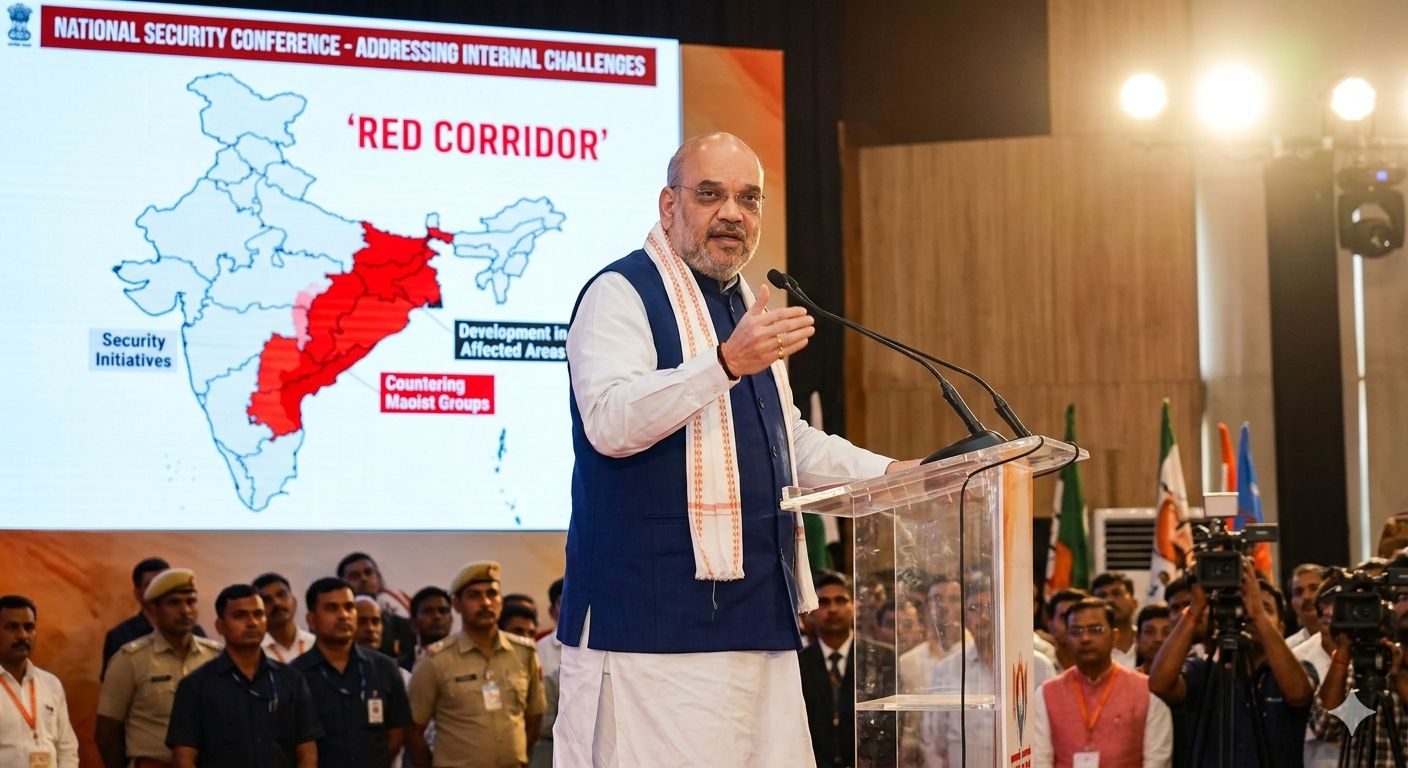
As March 31, 2026 approaches, the Government of India’s self-declared deadline for eliminating Left-Wing Extremism, the country stands on the cusp of closing a chapter that has cost over 15,000 lives and spanned nearly six decades.
The trajectory of Naxalism represents the doctrinal transposition of a mid-century Maoist agrarian template onto the heterogeneous landscape of a post-colonial democracy. The movement was, at its core, an ideological graft that exploited a genuine Indian grievance, promised liberation to the poor, and ultimately delivered them deeper misery.
A genuine grievance, an ideological graft
Naxalism was born in 1967 in the village of Naxalbari, West Bengal, where peasants revolted against feudal landlords who extracted the lion’s share of every harvest. The structural conditions were legitimate. Dalits and Adivasis had remained outside the welfare architecture of successive Five-Year Plans. Land reforms were legislated and systematically circumvented. Entrenched agrarian elites absorbed the political apparatus, while law enforcement functioned as their private instrument of coercion.
What followed was a doctrinal miscalculation of historic proportions. Communists applied Mao Zedong’s guerrilla framework wholesale to India’s democratic, federal, and mixed-economy reality. The movement, claiming to represent the Indian peasant, required external ideological validation. China declared the uprising “a peal of spring thunder,” providing political endorsement, funding, and training networks through Tibet and Nepal.
An ideological model calibrated for a centralised, single-party agrarian state was thus deployed against one of the world’s largest constitutional democracies—ironically, in the name of that democracy’s most marginalised citizens.
“A colonial wound demanded institutional healing. The response was an ideological graft forged in an entirely different political reality.”
This miscalculation was further entrenched by Charu Majumdar’s Historic Eight Documents, which codified a doctrine of “Class Annihilation.” The movement transitioned from a peasant uprising into a systematic campaign of targeted killings.
“To think of seizing power without arms is nothing but an idle dream.”
— Charu Majumdar
Capital and human attrition: The true cost of insurgency
The human toll peaked in 2010, with 1,936 recorded incidents and 1,005 deaths in a single year. The Chintalnar ambush of April 6, 2010, in Chhattisgarh resulted in 76 security personnel fatalities, marking the deadliest single incident in India’s internal security history.
The economic cost proved equally severe. While earlier projections estimated an $80 billion investment unlock upon clearing Maoist presence, a 2024 NITI Aayog assessment placed the cumulative opportunity cost at over $210 billion in foregone Gross State Domestic Product across two decades.
Chhattisgarh alone holds 36% of India’s tin reserves, 20% of its iron ore, and 18% of its coal. For decades, these resources remained inaccessible due to insurgent control.
The greatest irony lies in the distribution of harm. The very communities Naxalism claimed to protect bore its heaviest costs. Forced recruitment, executions of suspected informants, and deliberate suppression of infrastructure entrenched Adivasi underdevelopment. When mobile connectivity finally reached these regions, civilians were executed merely for possessing phones.
The movement had transformed into what it originally opposed: a coercive force extracting compliance from the poor through organised violence.
Policy paralysis: UPA’s institutional failure
Between 2004 and 2014, the counter-insurgency response was marked by doctrinal fragmentation. The administration oscillated between kinetic engagement and socio-economic appeasement without a unified command structure, resulting in strategic incoherence.
Three Home Ministers—Shivraj Patil, P. Chidambaram, and Sushilkumar Shinde—advanced divergent frameworks, undermining continuity and operational effectiveness.
The consequences were severe. Naxalite strength expanded significantly between 2004 and 2009 while the Centre maintained strategic ambivalence. State-level initiatives were often opposed at the federal level. Maoist sympathisers found space within advisory structures such as the National Advisory Council and Planning Commission. Intelligence networks remained underfunded, and unified command structures were absent.
Nine years of policy inconsistency resulted in thousands of preventable deaths and substantial capital flight.
“The administration suffered from a lack of strategic coherence, oscillating between kinetic engagement and socio-economic appeasement without a centralised command structure.”
How the tide finally turned: The security-development matrix
Kinetic Operations and Localisation of Force
The earlier reliance on civilian militias, such as Salwa Judum, was abandoned due to its human rights implications. Post-2014, the strategy pivoted toward technology-driven counter-insurgency.
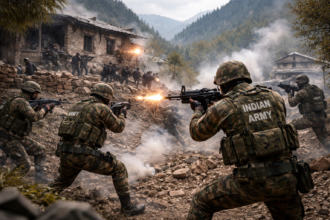
Thousands of mobile towers and UAVs were deployed, transforming the Red Corridor into a surveilled space where insurgent mobility became increasingly constrained. The Bastariya Battalion—a specialised tribal unit—combined local knowledge with professional military discipline.
A decisive turning point came in May 2025 with the neutralisation of top Maoist leader Nambala Keshava Rao, resulting in organisational fragmentation and loss of central command.
Development as the real weapon
Recognising that force alone was insufficient, the government addressed structural grievances through development.
Over 14,000 kilometers of roads were constructed, alongside the expansion of banking infrastructure via post offices. Education initiatives such as Eklavya Residential Schools created alternative pathways for tribal youth.
The “Mining Problem” was addressed through the District Mineral Foundation (DMF), ensuring that a portion of mining revenues directly benefits local communities. Enforcement of the PESA Act restored decision-making authority to Gram Sabhas.
This represented not merely development, but a statutory correction of the extractive systems that had originally fuelled unrest.
A structured Surrender and Rehabilitation Policy enabled over 8,000 cadres to reintegrate into society, supported by fast-track legal mechanisms.
The outcomes were measurable:
- 81% reduction in violence since 2010
- 85% reduction in fatalities
- Severely affected districts reduced from 35 to 6
In September 2025, the Maoist Capitulation Manifesto marked a symbolic endpoint, with leadership acknowledging “tactical errors” and calling for a ceasefire.
Development as the real weapon
March 31, 2026 marks not just the end of a security operation, but the conclusion of a doctrinal experiment that failed on its own terms.
The transition now lies in governance. The mineral-rich regions of the “Red Corridor”, as it was previously known, must generate equitable prosperity for local communities, rather than merely serving extractive state and industrial interests.
Frameworks such as DMF, PESA, and rehabilitative legal systems provide the institutional architecture. However, their implementation will determine whether this moment signifies genuine resolution—or merely the temporary suppression of conditions that could reignite future conflict.