
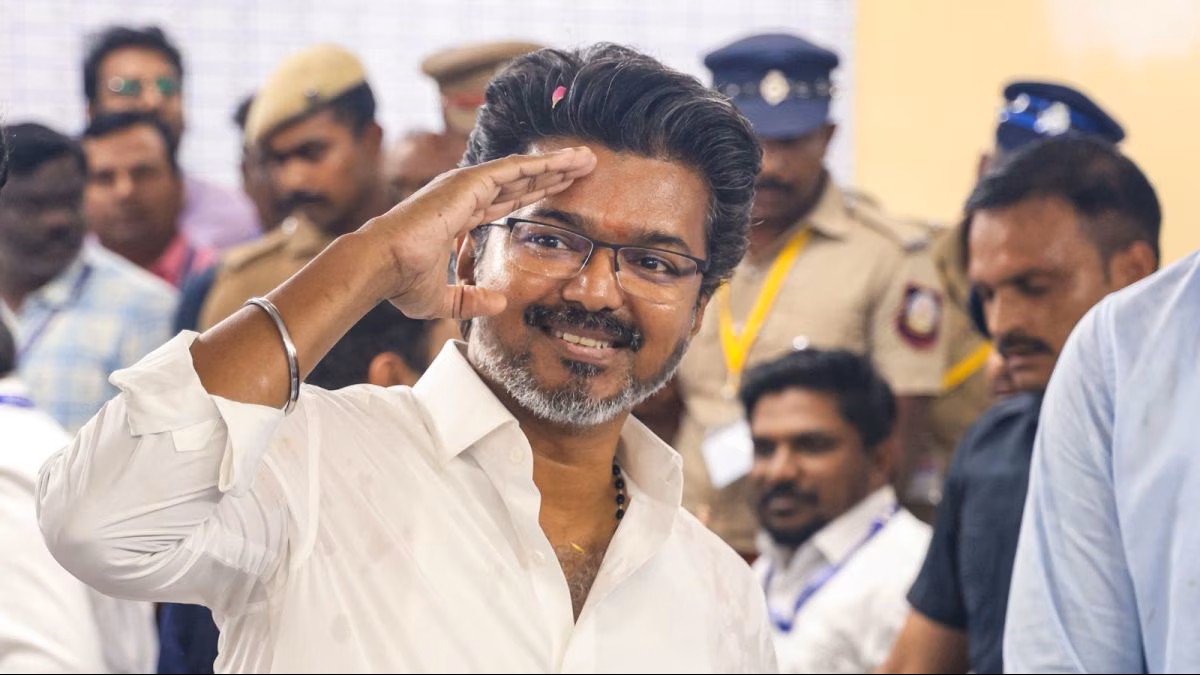
The 2026 Tamil Nadu Assembly election has delivered one of the most dramatic political verdicts in the state’s modern history. Actor-turned-politician Vijay and his party Tamilaga Vettri Kazhagam (TVK) have shattered the decades-old dominance of the DMK and AIADMK by emerging as the single largest party with 108 seats in the 234-member Assembly.
Nobody expected the 2 years old TVK Party formed by Vijay to have such a grand entrance to the political arena, yet, here we are.
Yet, despite this historic breakthrough, Vijay still faces the possibility of failing to form the government.
The reason is simple arithmetic.
To secure a majority in the Assembly, a party or coalition needs 118 MLAs. TVK remains 10 seats short on its own, turning what looked like a political coronation into a tense post-poll power struggle.
End of the DMK-AIADMK duopoly or is it
For nearly six decades, politics in Tamil Nadu revolved around two Dravidian giants — the DMK and the AIADMK. The 2026 verdict has disrupted that order completely.
TVK’s rise is not merely an electoral success; it is a structural political shift. The party’s campaign managed to combine Vijay’s enormous fan following with anti-incumbency sentiment, youth mobilization, and dissatisfaction with traditional political elites.
TVK fielded many young and first-time candidates, helping create what is expected to become the youngest Assembly in the state in nearly two decades.
But winning the narrative and winning power are two different things. As things stand, DMK and AIADMK may still come together in a historic alliance and deny Vijay the CM post.
Why Vijay still cannot relax
Despite becoming the single largest party, TVK lacks the numbers needed to comfortably govern.
Congress has extended support to Vijay, taking the tally close to the majority mark. However, even after adding Congress MLAs and support from smaller players, TVK reportedly remains short of the required number.
This has created several scenarios. Maybe TVK will lead a minority government, maybe they will look for support from AIADMK, and may be, just maybe, traditional rivals DMK and AIADMK will come together to deny TVK.
The Governor’s role has therefore become crucial in such a complicated scenario.
Tamil Nadu Governor has sought proof of majority backing for Vijay before moving ahead with the government formation, which Vijay hasn’t been able to provide till now.
Congress support may not be enough
The Congress appeared eager to support TVK primarily to prevent the BJP and AIADMK combine from gaining leverage in Tamil Nadu politics. In a move seen as a betrayal of its traditional ally DMK, Congress looked to extend support of its 5 MLAs to Vijay’s TVK.
Congress has historically been aligned with the DMK in Tamil Nadu. Any long-term alignment with Vijay could permanently damage its relationship with the DMK leadership. Already, tensions between Congress and DMK leaders have intensified after the post-poll developments. DMK believes (many will say rightly) that Congress won 5 seats in Tamil Nadu only because DMK was backing those candidates, and now they are looking to support a DMK rival.
Moreover, Congress itself has limited numbers, meaning TVK still needs additional backing from smaller regional parties or independents.
That creates the risk of political instability from day one.
Can Tamil Nadu see a minority government?
A minority government is constitutionally possible if Vijay is invited to form the government and later proves his majority on the Assembly floor.
However, minority governments in Indian states often remain vulnerable to defections, alliance breakdowns, and constant political bargaining.
This is especially significant because TVK is a brand-new political party without long administrative experience. Many of its winning candidates are first-time legislators.
Vijay’s biggest challenge begins now
The election campaign was about emotion, charisma, and disruption. Government formation, however, is about negotiation and numbers.
Vijay has undoubtedly achieved what many believed impossible — breaking the Dravidian monopoly in his very first major electoral battle. But unless TVK quickly secures stable support beyond its 108 seats, Tamil Nadu could witness prolonged political uncertainty, intense coalition bargaining, or even the possibility of another electoral contest in the future.
For now, Vijay has won the election battle, whether he wins the government formation war remains uncertain.

