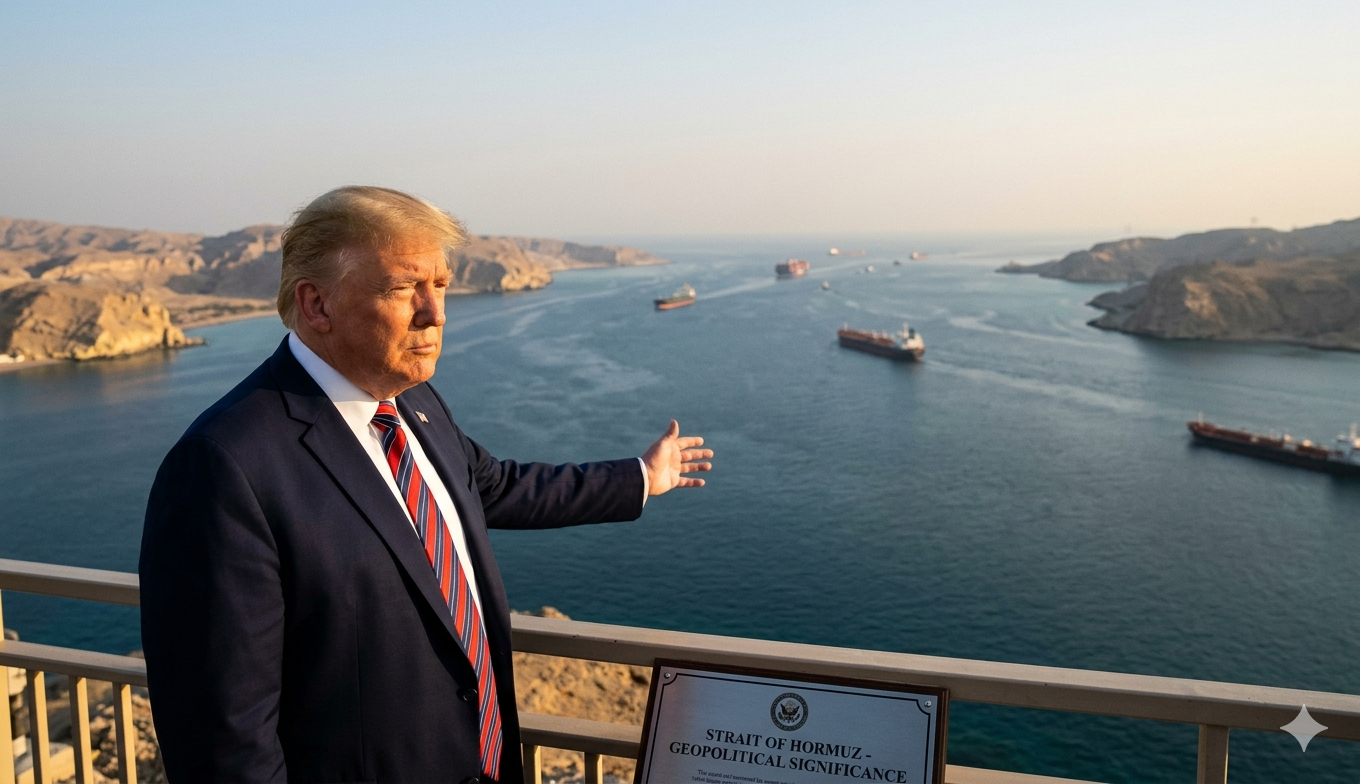
US President Donald Trump has been pushing for the immediate reopening of the Strait of Hormuz ahead of the peace talks with Iran in Islamabad. Notably, peace talks between the two warring sides are taking place on Saturday, April 11, in Islamabad.
Even though there has been a ceasefire announced, still, world’s most critical oil chokepoint—handling roughly 20% of global energy flows—the Strait of Hormuz remains closed. Trump has already said multiple times that Iran will have to open the strait for any ceasefire, but question is, can Iran immediately reopen it. Notably, the strait was open before US and Israel launched strikes on Iran on February 28 this year.
However, Iran can’t reopen the strait immediately even if it wants to, reason, the sea mines Iran dropped in the Strait of Hormuz during the conflict.
The mines Iran dropped in the narrow waterway through the Persian Gulf can’t even be located by Iran as they drifted with the currents of the sea. With those sea mines still around, in locations nobody knows, passing through the strait is perilous.
Washington’s position is clear, Trump has insisted that the strait must be reopened “immediately” and without conditions such as tolls or restrictions. However, Iran can’t open it immediately without removing all those sea mines, which now nobody knows where they are.
Trump has claimed that the United States and its allies could soon ensure safe passage through the waterway. However, can they?
These mines were deployed by Iran immediately after strikes by US and Israel. This move disrupted entire world’s supply chains, led to an oil crisis and more.
However, now, reopening this strait is now proving to be more difficult than anticipated because of the mines. The mines were deployed in a haphazard manner without documentation and then sea currents did the rest, so now Iran is not sure where all the mines are.
These sea mines can drift, sink, or reposition due to currents, making them extremely difficult to track once deployed without precise mapping. Clearing them requires specialized minesweeping vessels, sonar systems, and often divers or remotely operated vehicles. Even advanced navies take weeks or months to fully secure mined waters. In this case, both Iran and even the United States reportedly lack sufficient mine-clearing capacity to guarantee rapid reopening.
So, will Trump agree to a long term ceasefire as Iran searches for these mines or will he push through with his threat that he will destroy Iran if the critical strait isn’t reopened.