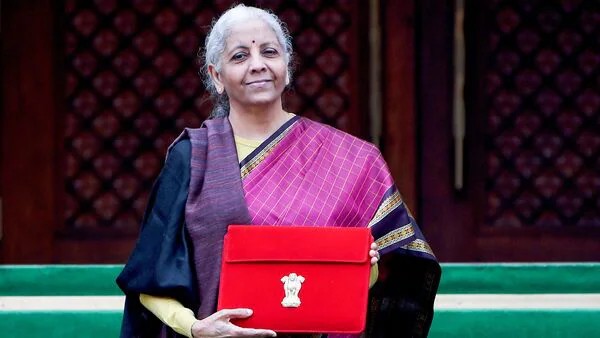
Since the Union Budget 2026–27 has been presented, there has been a great deal of beating around the bush. Predictable complaints, selective outrage, and familiar demands for instant gratification have dominated the public discourse. But strip away the noise, and the truth is far simpler and far more consequential. The truth is that there is no dramatic, banner-style mention of the “middle class” in Union Budget 2026–27. And there doesn’t need to be.
Because when a budget is genuinely designed for the middle class when it addresses income stability, cost-of-living pressures, healthcare anxiety, compliance stress, job security, and long-term aspirations, it does not require rhetorical signalling. The middle class does not need to be named to be represented. It is, in fact, the soul of budgetary representation.
Budgets that repeatedly invoke the middle class often do so to compensate for thin outcomes. This one does the opposite. It speaks through structure rather than slogans, through fiscal architecture rather than feel-good phrasing. And that is precisely why it has unsettled critics conditioned to judge budgets by announcements rather than outcomes.
The Union Budget 2026–27 is more of a continuation sheet. From Episodic Relief to Structural Confidence. For decades, India’s middle class was treated as a passive revenue source, taxed predictably, relieved episodically, and consulted rarely. Relief, when offered, came in the form of narrow exemptions, temporary sops, or election-timed giveaways that neither compounded nor endured.
The present government has decisively moved away from that model. What Budget 2026–27 reinforces is a framework where middle-class benefits deepen organically, through stability, scale, and structural reform, rather than being relaunched every year under a new label.
This architecture has been steadily built through FY 2025–26 and is now being carried forward with intent. Income tax rationalisation improves take-home pay without destabilising revenues. Next-generation GST reforms reduce cascading costs embedded in everyday consumption. Insurance, healthcare, and pension frameworks reduce future uncertainty. Skilling and digital infrastructure expand income potential rather than merely redistributing existing income.
The outcome is not merely higher disposable income. It is confidence, to consume, invest, travel, educate children, and plan long-term.
Aspirations normalised: Overseas education, healthcare, travel
Few measures capture this shift more clearly than the changes to Tax Collected at Source (TCS) under the Liberalised Remittance Scheme. TCS on overseas tour packages has been reduced to 2%. TCS for overseas education and medical expenses has been cut from 5% to 2%. On paper, these appear technical. In practice, they are transformative. Foreign education, overseas medical treatment, and even international family travel are no longer elite indulgences. For a growing segment of the Indian middle class, they are aspirational but realistic goals, often financed through savings, loans, or structured planning.
Earlier, higher TCS rates created unnecessary cash-flow stress and prolonged refund lock-ins. By reducing these rates, the government has directly eased liquidity pressure at critical decision points. This is not symbolism. It is a relief felt immediately by households making high-stakes choices.
Healthcare relief where it is needed
Healthcare inflation has long been the middle class’s silent fear, manageable until it suddenly isn’t. Insurance cushions help, but advanced treatments involving imported drugs or equipment often result in crushing out-of-pocket expenses. Customs duties have been removed on 17 critical cancer drugs and key life-saving medical equipment. Additionally, 7 more rare diseases have been brought under import duty exemptions for personal medical use.
For patients dependent on imported therapies, this translates into real reductions in treatment costs. During medical emergencies when savings erode fastest, this relief can mean access instead of abandonment. This is healthcare policy grounded in lived middle-class realities, not abstract welfare framing.
Compliance without anxiety: Quiet Governance reform
Some of the most meaningful middle-class relief rarely makes headlines. Budget 2026–27 contains one such reform cluster. The revised Income Tax Return filing deadline has been extended to 31st March from 31stDecember. Non-audit cases now have staggered timelines up to 31st August. TDS and TCS rules have been rationalised to reduce unnecessary deductions and refunds. The impact is subtle but substantial with Fewer penalties, Lower compliance stress, Reduced dependence on intermediaries and better alignment between income flows and tax obligations.
For salaried professionals, small investors, and self-employed taxpayers, this restores time, mental bandwidth, and financial clarity. Governance that treats compliance as cooperation rather than suspicion marks a decisive cultural shift.
Manufacturing, MSMEs, and the Middle-Class wallet
The Atmanirbhar Bharat push is often analysed through strategic or geopolitical lenses. Its middle-class implications are far more immediate. Stronger domestic manufacturing and MSMEs stabilise supply chains and reduce exposure to global price shocks. Over time, this moderates prices of electronics, mobile phones, appliances, and consumer durables, items that dominate middle-class expenditure due to policies like the Electronics Component Manufacturing Scheme. Just as crucially, manufacturing-led growth creates white-collar and skilled employment across urban and semi-urban India. More stable jobs and predictable wages translate directly into household purchasing power. This is how macroeconomic reform quietly reshapes everyday economics.
Capital expenditure and the real trickle-down
Infrastructure spending is often dismissed as abstract or elite-focused, but Union Budget 2026–27 demonstrates why that critique no longer holds. Capital expenditure has been pegged at ₹12.2 lakh crore, around 3.1% of GDP which is nearly six times the level in 2014–15. This is not a one-year spike meant to generate headlines, but part of a sustained, multi-year strategy aimed at long-term capacity creation. The emphasis is deliberately placed on infrastructure and logistics, high-speed rail, urban development, and the creation of advanced manufacturing ecosystems spanning semiconductors, electronics, biopharma, and rare earths.
For the middle class, the benefits of this approach are tangible and immediate. Large-scale capital investment translates into job creation across cities and emerging economic clusters, improves wage prospects and employment stability, and steadily upgrades everyday urban life through better commuting options, housing availability, and public services. This is trickle-down economics as it actually works, not through abstract promises, but through productivity gains, employment generation, and physical connectivity that reshapes how people live and work.
A continuation sheet budget and its strength
In college exams, when ideas exceeded the allotted space, you asked for continuation sheets. Union Budget 2026–27 feels exactly like that, a continuation of a longer answer rather than a flashy new question. It is a plumbing budget, focused on “oiling the wheels” rather than launching an express reform train. And that is precisely its strength.
Nations are not built by one-shot announcements. They are built by sustained execution, compounding year after year, until the gains become irreversible. This Budget carries forward a steady trajectory of capital investment, institutional reform, and middle-class empowerment. It may disappoint those addicted to annual theatrics. But it will quietly reshape behaviour, confidence, and aspiration. And that, ultimately, is how the foundations of Viksit Bharat 2047 are being laid, deliberately, cumulatively, and without noise.
Author: Rudraksh Aneja – Director, Geojuristoday Research Foundation