The killing of 15 cadres of the Communist Party of India-Maoist (CPI-Maoist), including ‘Central Committee Member (CCM)’ Patiram Manjhi aka Anal Da, marks a significant inflection point in the State’s campaign against Left-Wing Extremism (LWE).
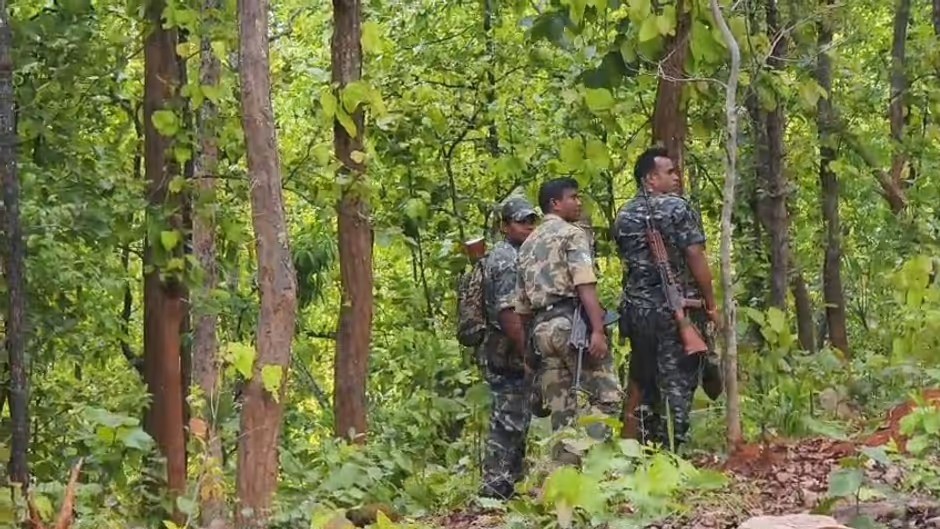
Patiram Manjhi was carrying a bounty of INR 10 million. He was neutralised in an intelligence-led operation by the Central Reserve Police Force (CRPF)’s Commando Battalion for Resolute Action (CoBRA), Jharkhand Jaguar and District Police, in the Saranda Forest area of Jharkhand on January 22, 2026.
Beyond its immediate tactical success, the encounter reflects the steady unravelling of the Maoist movement’s last operational depth in Jharkhand and underscores a broader national trend of organisational attrition, leadership decapitation, and territorial contraction.
Saranda and the wider Kolhan belt have long constituted the final enduring Maoist redoubt in the State. Sustained Security Force (SF) pressure over the past decade has dismantled Maoist presence across Budha Pahar, Chatra, Latehar, Gumla, Lohardaga, Ranchi and Parasnath, forcing the residual leadership to concentrate in dense forested pockets of West Singhbhum. The presence of a senior leader like Manjhi in Saranda was itself indicative of this spatial compression: what was once a widely dispersed insurgent theatre has now shrunk to a handful of vulnerable sanctuaries.
The operation highlights a decisive shift of balance. Maoist tactics historically relied on terrain dominance, local intelligence networks and ambush warfare. In Saranda, however, SFs demonstrated superiority in precisely these domains. Sustained area domination since November 2022, improved human intelligence penetration, and coordinated deployment of elite units enabled the forces to outmanoeuvre Maoists reportedly lying in wait. The prolonged firefight and recovery of multiple bodies and arms underline the erosion of Maoist battlefield advantage even in terrain once considered impregnable.
Manjhi’s elimination carries implications far beyond the immediate encounter. Active since the late 1980s, and serving as Secretary of the Bihar-Jharkhand Special Area Committee, he was central to maintaining inter-district operational coherence across Giridih, Bokaro, Hazaribagh, Khunti, Seraikela-Kharsawan and West Singhbhum. His role in sustaining logistics, extortion networks and IED-based attacks made him a critical node in the Maoist organisational architecture. His death compounds a series of leadership losses through killings, arrests and surrenders, including the neutralisation of senior commanders in Chhattisgarh and recent surrenders of key operatives in Telangana.
This pattern of leadership attrition is strategically consequential. With experienced commanders eliminated, Maoist units are increasingly fragmented, operating in small, defensive clusters with limited offensive capability. Arms recoveries now point more towards stockpiling for survival rather than preparation for expansion. Command vacuums, ageing cadres and declining recruitment have further weakened the CPI- Maoist’s ability to regenerate its fighting capacity.
Available data reinforces this trajectory. According to SATP, LWE-linked fatalities in Jharkhand have declined from a peak of 200 in 2009 to low double digits in 2022, driven by large-scale arrests, surrenders and sustained kinetic pressure. Nationally, the Maoist footprint has contracted from a peak of 223 Districts across 20 States, out of a total of 626 Districts and 28 States in the country, to 28 Districts across eight States. Moreover, the ‘highly affected’ districts came down from 62 in 2008 to just one ‘most affected’ in 2025, marking the near-collapse of the Red Corridor, with cadre strength sharply reduced. Kolhan now mirrors the terminal-stage dynamics witnessed earlier in Andhra Pradesh, Telangana and parts of Odisha.
Nonetheless, caution against premature triumphalism remains necessary. Residual Maoist groups retain the capacity for sporadic retaliatory violence, particularly against informers and infrastructure. Consolidating success in Kolhan will require relentless pursuit of remaining leaders, disruption of overground networks, and parallel administrative consolidation to deny the insurgency any space for revival.
The Saranda encounter is not an isolated tactical episode, but a manifestation of the Maoist movement’s strategic exhaustion. If current operational momentum is sustained and integrated with governance and development interventions, the neutralisation of Jharkhand’s last Maoist bastion may well signal the irreversible marginalisation of Naxalism in India.
Author: Deepak Kumar Nayak – Research Associate, Institute for Conflict Management