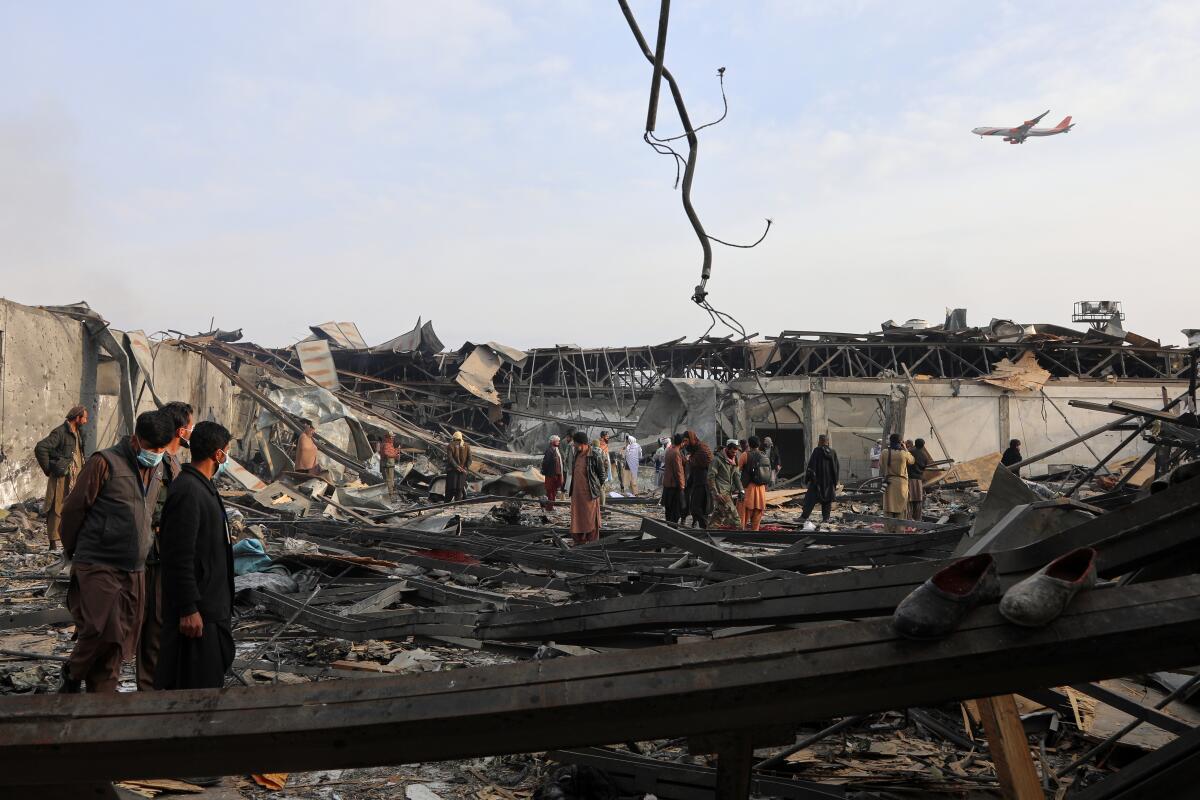
On March 16, alongside Pakistan’s bombing of Kabul, various reports emerged on media outlets speculating where the attack occurred. Hours after the strikes, Taliban government spokesperson Zabihullah Mujahid said, “A number of civilians, mostly addicts under treatment, have been killed and injured in Pakistani forces’ attack”.
Numerous buildings are seen side by side along the Kabul-Jalalabad highway, east of the capital Kabul. This location, with large halls resembling military barracks, was a logistics center called ‘Afsotar’ during the Soviet occupation of Afghanistan. After the September 11 attacks, it became a NATO base known as ‘Phoenix’, a key location for international coalition forces led by the US. The base was often used as a military training center.
In 2014, as part of the security transition, Phoenix Camp was handed over to the Afghan government. The former Afghan President Ashraf Ghani ordered the conversion of the site into a rehabilitation center for addicts, which officially opened in 2016.
The number of people undergoing treatment here varied at different times. After the Taliban’s return to power in 2021, their government placed a large number of addicts there from various places, especially Kabul city and districts.
In January 2023, the Taliban government said, “For the first time, they have completely cleared the Pul-e-Sokhta area in Kabul, a major hub for addicts, and will no longer allow addicts to use drugs there.” Pul-e-Sokhta was considered a safe haven for addicts in Kabul, not just a place where addicts lived, but also a hub for drug trafficking and sales.
The Taliban government transported hundreds of people to the addiction treatment center in Pul-e-Sokhta after police raids. The center, known as Omid (Hope), became a beacon of hope for many addicted youths to return to normal life. There’s also Ibn Sina Hospital nearby, where addicts are treated under the Ministry of Interior Affairs.
Nearby, there’s also a treatment center for female addicts. Journalists pass through strict security checkpoints to visit the center. Every day, a large number of people come to the center’s main gate to visit their loved ones.
This camp is very large, with addicts gathered in former military barracks. Many addicts have been brought here by authorities from various areas, but people told that they had brought their patient themselves.
When you talk to these people, a large group of young individuals undergoing treatment gather around, each with their own story of addiction. One says, “Life’s problems led me to this,” another says, “Hanging out with the wrong crowd got me hooked on drugs.”
This camp and hospital have people from all walks of life, from illiterate to educated. Some former Afghan army personnel were also seen there. A man from Ghazni province was telling his story, with his 14- or 15-year-old son standing beside him. He said, “Four of us from one family are here.” He tearfully added, “I used drugs, and I was with my kids and wife, so they’ve been affected too.” His daughter, 16 or 17, and wife were in the women’s addiction treatment center. He wished they could be together, which seemed impossible.
Many of these people became addicted to drugs while in exile. The doctors treating them at the center were all Afghans. The camp’s environment highlighted the lack of resources for treating such patients.
Doctors told, these patients are kept there for up to six months, but some said they’ve spent a long time there, possibly due to the lengthy treatment process or neglect by families of those still struggling with addiction.
The Hope Center had given many a chance to overcome addiction, but political turmoil had taken away hope for many others.
By- Laiba Yousafzai