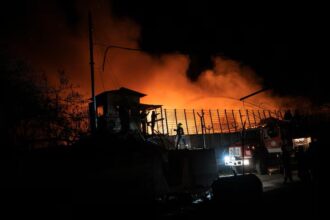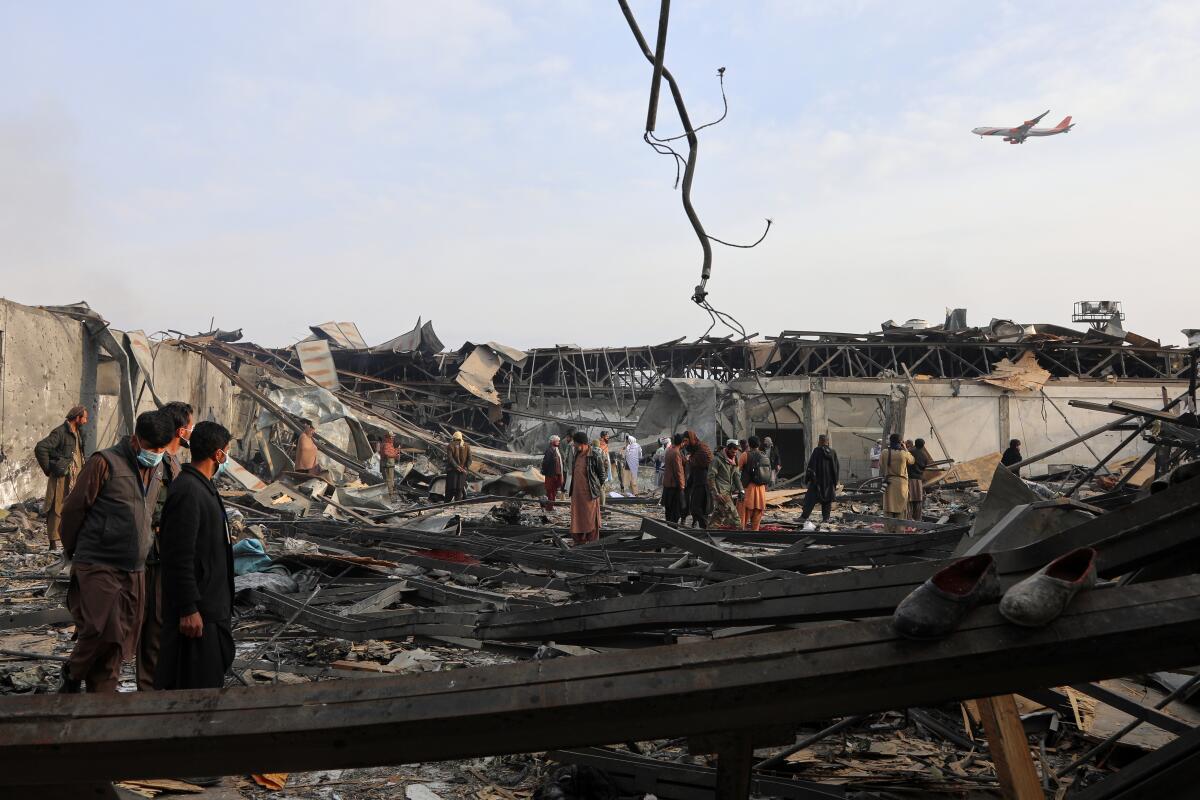
On March 16, the Taliban Government of Afghanistan accused the Pakistani military of conducting an airstrike that killed more than 400 people and injured 250 at the Omid Addiction Treatment Hospital in Kabul. The facility was primarily used for treating narcotics addictions, including those dependent on marijuana and amphetamines. Various reports and satellite imagery describe the flattening of residential buildings and major damage to hospital wings.
According to Hamdullah Fitrat, the deputy spokesman for Afghanistan’s Taliban government, the hospital is a 2,000-bed facility, and the airstrike destroyed large sections of the complex. “Unfortunately, the death toll has so far reached 400, while around 250 others have been reported injured. Rescue teams are currently at the scene, working to control the fire and recover the remaining bodies of the victims,” Hamdullah Fitrat wrote on X. Afghan Interior Ministry spokesperson Abdul Mateen Qanie added that 408 people were killed and 265 wounded.
Pakistan rejected the allegations as “false and misleading,” asserting instead that its military conducted “precision airstrikes” targeting military installations and terrorist infrastructure in Kabul and Nangarhar province. Pakistan’s Federal Information Minister, Attaullah Tarar, stated that the strikes were aimed at technical support facilities and ammunition storage sites.
The strike was part of the ongoing cycle of conflict between the two neighbouring countries, which began with Pakistani airstrikes on February 22 across eastern and south-eastern Afghanistan. Those strikes resulted in the death of at least 18 civilians, including women and children, and left several others injured. On February 26, 2026, Afghan forces reportedly retaliated with cross-border attacks targeting military positions in Pakistan under the OperationRadd-ul-Zulm (Repelling Oppression). Tensions escalated further when Pakistan initiated Operation Ghazab-lil-Haq (Righteous Fury) on the same day.
Since then, the Pakistani side has claimed that, in the ongoing Operation Ghazab-Lil-Haq, its forces have killed 684 Afghan Taliban combatants and injured 912, while destroying 252 check posts and 229 tanks, armoured vehicles, and artillery systems. On March 15, Federal Information Minister Attaullah Tarar stated that Pakistani Security Forces (SFs) had killed 684 Afghan Taliban fighters and destroyed 252 check posts in response to what he described as “unprovoked action” from across the Afghan border. He further claimed that 229 tanks, armoured vehicles, and artillery guns had been destroyed during the operation, and that more than 912 Afghan Taliban combatants had been injured. Providing a broader summary of the Afghan Taliban regime’s losses, the Minister claimed that 252 check posts had been destroyed and 44 others captured by Pakistani SFs. He also added that 70 terrorist and terror-support locations across Afghanistan had been effectively targeted through airstrikes.
Meanwhile, claims from the Afghan side regarding casualties inflicted on Pakistan have been irregular. By March 6, Afghanistan’s Ministry of National Defence asserted that at least 327 Pakistani soldiers were killed and 350 others wounded since the launch of the retaliatory Operation Radd-ul-Zulm. A Ministry statement revealed that Afghan forces had conducted large-scale strikes over the preceding 24 hours against Pakistani military positions along the Durand Line facing the provinces of Kandahar, Nangarhar, Kunar, Khost, Paktia and Paktika. 14 Pakistani posts and three military bases were captured and completely destroyed during this phase of the operation. The Defense Ministry stressed that since the start of Operation Radd-ul-Zulm, 64 Pakistani posts and seven military bases had been captured and destroyed.
Civilians on both sides of the border remain the primary victims in the ongoing attacks on each other’s security posts and installations,. Since the onset of operations, the conflict has resulted in extensive collateral damage, marked by significant civilian casualties, widespread destruction of critical infrastructure, and large-scale displacement. A day prior to the attack on Kabul’s Omid Hospital, five members of a family were killed when a mortar shell fired from Afghanistan struck a house in the Tarifshah area of Salarzai tehsil of Bajaur District in Khyber Pakhtunkhwa, on March 15.
The escalating violence has sparked large-scale displacement of civilians fleeing active conflict zones. According to a March 13 report by the Norwegian Refugee Council (NRC), an estimated 115,000 Afghan civilians have been displaced. On the Pakistani side, approximately 3,000 residents living near the border have been forced to abandon their homes, as reported by the UN Refugee Agency (UNHCR).
The attack on Omid Hospital is likely to further aggravate the Pakistan–Afghanistan conflict, as Zabihullah Mujahid, spokesperson for the Taliban, declared that there is no longer scope for diplomacy or dialogue with Islamabad, and signalled an intensification of retaliatory action.
Author: Tushar Ranjan Mohanty, Research Associate, Institute for Conflict Management