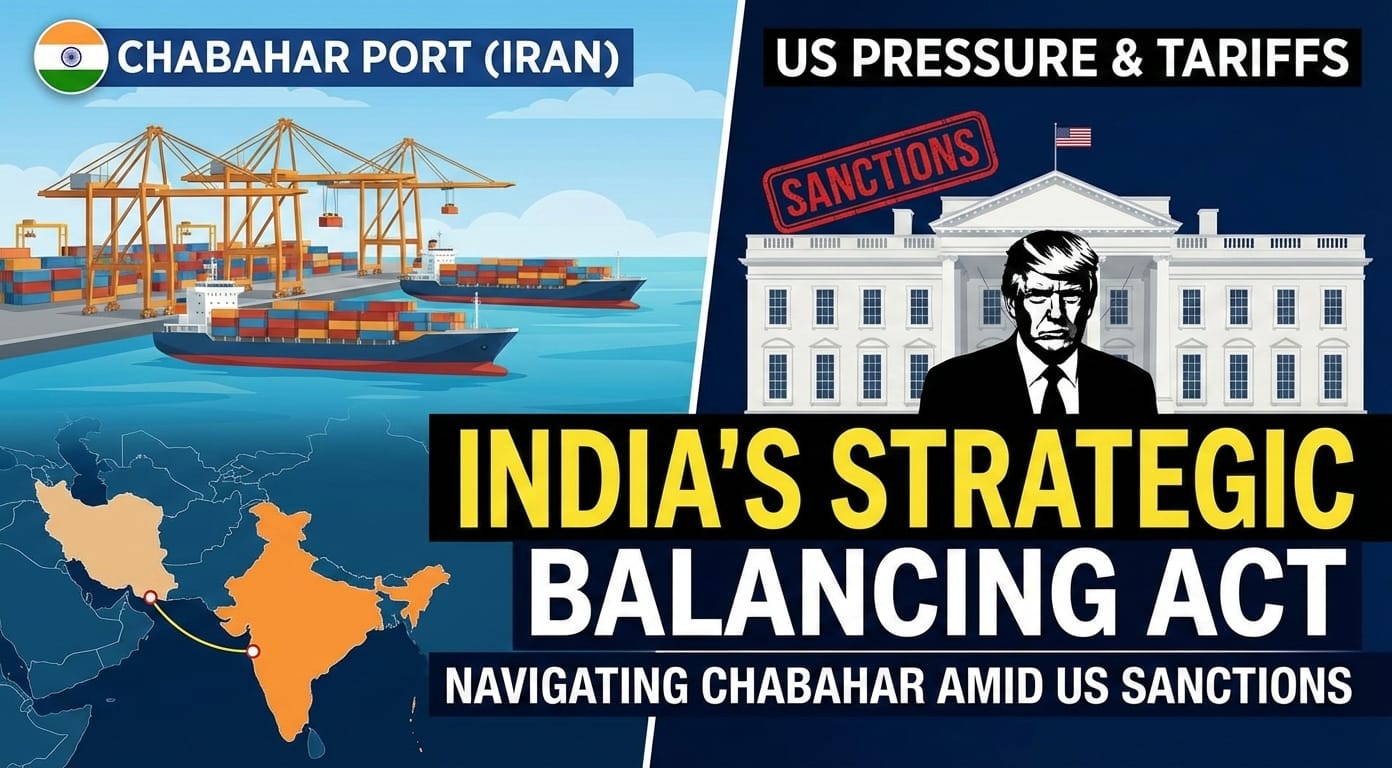
In Iran’s Chabahar Port, India has to carefully handle a tough situation. This port, which is very important, is only 170 kilometers away from Pakistan’s Gwadar Port, which China supports. Now, it’s in danger because India’s Ministry of External Affairs (MEA) is in serious talks with the United States for a sanctions waiver. A temporary pass is set to end on April 26, 2026. Randhir Jaiswal, a spokesperson, said the US Treasury’s letter from October 28, 2025, gives a small chance, but with President Donald Trump possibly returning, India has to be careful in dealing with both its allies and its own interests.
In 2024, the port became important again when India made a big deal with Iran for the Shahid Beheshti Terminal for 10 years. With $370 million involved ($120 million in direct investment and $250 million in credit), this was more than just building; it was a smart move to avoid being cut off. Chabahar was supposed to let India trade with Afghanistan and Central Asia through the International North-South Transport Corridor (INSTC), without having to go through Pakistan. This would cut travel times and connect Mumbai to Moscow, changing how business is done in Eurasia. Prime Minister Narendra Modi spoke about this at the SCO Summit in China last September, saying that connections were important for trust and growth. But now, those words face tough challenges.
Donald Trump recently put a 25% tariff on any country doing business with Iran. This makes economic diplomacy very difficult. In September 2025, the US Secretary of State stopped the 2018 sanctions exception under the Iran Freedom and Counter-Proliferation Act (IFCA), which was meant to help Afghanistan but also affected Chabahar’s operators. The US said this was because of Iran’s nuclear issues and a lack of progress on a trade deal with India. This is a setback for India, which has been working on these plans for years. The Obama and Biden governments had given several waivers, recognizing Chabahar’s importance in countering China. But Trump’s America First approach questions this, making India rethink its plans.
Iran’s problems also make things worse. There are protests across the country, with over 3,000 people arrested, showing serious issues inside the country. Harsh Pant from the Observer Research Foundation pointed out that Chabahar depends on what’s happening in Iran. The Iranian government is struggling to deal with the protests, so it’s hard for them to focus on big projects. The port isn’t seeing much business right now, so the immediate impact isn’t huge, but the lack of a plan is a concern. Without Pakistan’s help for transit—which is unlikely because of bad relations—Chabahar is India’s only way to easily reach Central Asia. A government official said it’s key for the INSTC and for sending wheat to Afghanistan and other countries.
India is in a tough spot, with $120 million already invested and plans for economic routes at risk. Past waivers gave them time, but Trump’s tariffs show a stricter approach, connecting US-Iran issues with Indo-US trade talks. Pant warns that for Chabahar to work, Iran needs to be accepted globally, which is hard with the nuclear disagreements. India’s efforts show its dedication to Chabahar, which is more important than Gwadar. Modi’s SCO speech wasn’t just talk; it’s a plan for India’s role in the area, challenging China’s Belt and Road plan.
Experts think there will be uncertainty going into 2026. Will Trump change his mind and see India as a way to balance China? Or will sanctions hurt the port before it can succeed? Diplomats are meeting, ships are waiting, and the sea is unaffected. Chabahar is more than just a port; it’s India’s bold move for connections in a divided world, where every waiver is a battle won against rivalry. This is part of a bigger story in Asia, where ports are used in power games, and countries like India have to be good at adapting.