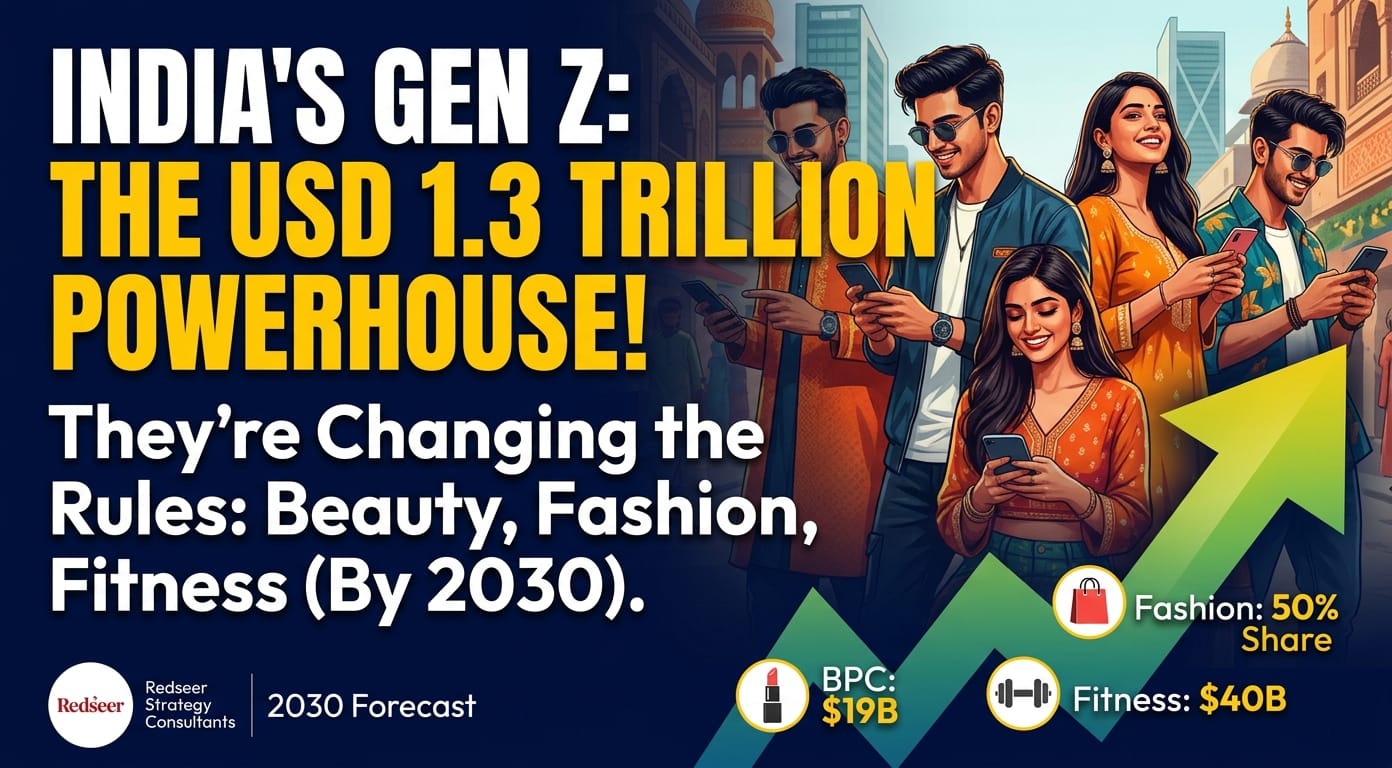
By 2030, India’s youngest adult consumers will control USD 1.3 trillion in spending and businesses that don’t understand them will be left behind.
Imagine a generation that won’t settle for anything that doesn’t feel real, inclusive, and worth their money. That’s Gen Z those born between 1997 and 2012 and they are quietly becoming the most powerful consumer force in India. A new report by Redseer Strategy Consultants reveals that by 2030, Gen Z will make up 27 per cent of India’s population and control a staggering USD 1.3 trillion in consumption. The numbers are jaw-dropping, but the story behind them is even more fascinating.
Unlike generations before them, Gen Z doesn’t just buy products, they buy identities. They want brands that speak their language, respect their values, and give them an experience worth talking about. They have grown up swiping through content, comparing prices in seconds, and making purchase decisions based on peer reviews rather than billboards.
This generation, as Redseer puts it, “shuns labels” and instead gravitates toward authenticity, self-expression, and inclusivity in everything they engage with including the brands they choose to spend on.
One of the clearest examples of Gen Z’s buying power is playing out in the beauty and personal care space. By 2030, Gen Z is expected to account for nearly USD 19 billion of India’s beauty market alone.
This isn’t just about lipstick and moisturiser, it’s a full-blown wellness revolution. One in two Gen Z women already spends more than 20 per cent of her disposable income on beauty and personal care products, and the number of products used per person has literally doubled. Separate routines for skin, hair, and body care are no longer luxuries; for this cohort, they are everyday essentials.
What’s equally striking is how beauty has gone genderless. Young men are openly embracing skincare, makeup, and cosmetic enhancements. Searches for “men’s skincare routine” have surged by 850 per cent over the past five years, a statistic that speaks volumes about how dramatically social norms are shifting.
Fashion is another arena where Gen Z is making serious waves on their own terms. They are projected to drive half of India’s entire fashion industry by 2030, covering apparel, footwear, and accessories. But here’s the twist: while they shop more frequently than any other generation and dominate major fashion e-commerce platforms in India, their average spend per purchase is roughly half that of millennials.
They are savvy, they hunt for value, and fast fashion items priced below Rs 1,000 sit comfortably in their sweet spot. They are not cheap, they are strategic. And that distinction is forcing brands to rethink their pricing, their messaging, and their very reason for existing.
If you walk into any gym in an Indian metro city today, the energy is noticeably younger. That’s no accident. A full one-third of Gen Z spends at least 20 per cent of their income on fitness and sports. Athleisure sales have doubled year-on-year, with affordable sportswear flooding online marketplaces. Six out of ten top-selling sports footwear brands are priced between just Rs 500 and Rs 1,000 proof that fitness is not just a rich person’s hobby anymore.
Redseer projects that by 2030, Gen Z will drive USD 40 billion in fitness and sports consumption. But the health obsession doesn’t stop at the gym door it extends straight into the kitchen. 40% of regularly exercising Gen Z individuals prefer alternative proteins, and protein supplement listings on quick commerce platforms grew a remarkable 230 per cent between 2024 and 2025. Eating well, moving well, and looking good are not separate goals for this generation; they are one integrated lifestyle.
What ties all of this together is a simple but profound truth: Gen Z is not tomorrow’s consumer they are today’s. Businesses that wait to “figure them out later” are already falling behind. This is a generation that rewards honesty, punishes inauthenticity, and moves on quickly if a brand doesn’t deliver. USD 1.3 trillion is not just a number in a report, it is a loud and clear signal to every company, startup, and marketer in India. The question is no longer whether to pay attention to Gen Z. The only question left is whether you’re ready.