The second quarter of FY26 dropped a number that nobody saw coming: 8.2% GDP growth. Not 7.3%, not 7.5%, but a full six-quarter high that left economists, analysts, and left even the Reserve Bank of India scrambling to recalibrate their models. If the RBI itself had projected 7% growth for Q2, and the street consensus was hovering around 7–7.5%, then how did the Indian economy suddenly jump to 8.2%? Was this a one-off statistical quirk, or has the engine genuinely found a higher gear?
The answer starts with manufacturing, which delivered a stunning 9.1% expansion in Q2 FY26, far ahead of expectations and signaling that capacity utilization is rising, input costs remain benign, and export competitiveness is holding despite global headwinds. Agriculture grew a modest 3.5%, but the real firepower came from the tertiary sector, which surged 9.2%, led by financial services and real estate clocking 10.2% growth. What’s driving this? Private final consumption expenditure jumped 7.9% in real terms, up from 6.4% in the same quarter last year, powered by retail inflation that averaged just 1.7% in Q2, rural wage growth around 6%, and Union Budget tax cuts that put extra cash into household wallets.
But here’s where the story gets interesting: if real GDP grew 8.2% and inflation stayed near 1.7%, then nominal GDP should have grown around 10%. Instead, nominal growth came in at just 8.7%, slightly above real growth but still far below the Budget’s full-year assumption of 10.1%. Why the disconnect? The key lies in net indirect taxes. In Q1 FY26, GDP grew 7.8% while GVA (Gross Value Added) grew 7.6%, because government net indirect taxes were adding positive support. In Q2, those tax collections slowed sharply—GST rate cuts effective from September 22 meant collections compressed year-on-year—so even though GVA grew 8.1%, the GDP number only climbed to 8.2% because the tax buffer was weaker. This is the technical nuance that explains why nominal growth looks soft even when real activity is booming.
Now let’s circle back to the core question raised in our earlier report, Q2 Turbocharged: When GDP Even Surprised the RBI](link-to-your-previous-article). We had asked: since 2018–2019, how often has India beaten projections, and what does the RBI vs IMF–World Bank gap tell us? The pattern has been remarkably consistent. Global institutions like the IMF and World Bank tend to start with conservative estimates, actual prints exceed them, then revisions follow—while the RBI’s projections land closer to reality. For FY26, the IMF initially projected India’s growth around 6.4–6.5%, later upgrading to 6.6%. The World Bank stayed around 6.5%. The RBI, in its October policy, raised its forecast to 6.8%. Street estimates climbed to 7–7.3%. And the actual Q2 number? A jaw-dropping 8.2%.
This isn’t the first time. If you track the trajectory from FY19 onward, India has repeatedly delivered upside surprises—sometimes by 50–100 basis points—especially in quarters where domestic demand accelerates, inflation stays low, and fiscal spending picks up. The Q2 FY26 beat follows exactly this script: central government capital expenditure surged 31% year-on-year to nearly ₹3.06 lakh crore, private sector investment intent jumped (71% of total fresh investments in H1 FY26 came from private firms vs 61% last year), corporate profits grew 13% even as sales rose only 6% due to zero wholesale inflation keeping input costs tame, and consumption got a double boost from tax cuts and GST rate reductions.
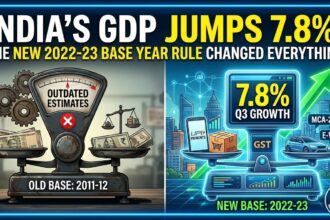
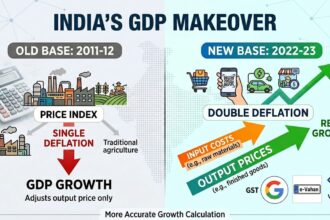
But there’s a counterargument brewing, and it’s one that deserves serious attention. Some critics, including voices within multilateral institutions, have raised concerns about India’s GDP methodology, specifically pointing out that the base year for many economic indices remains 2011-12 or thereabouts. The argument is that this outdated base may distort growth estimates, either by overstating or understating the true size and dynamism of the economy. As we have discussed before and have said earlier. This criticism has merit—base years do need periodic updating to reflect structural shifts in the economy. However, here’s the twist that the usual critics may not be prepared for: an updated base year will likely show that the Indian economy is somewhat larger than currently estimated. This isn’t unusual for a rapidly evolving economy where high-growth sectors like services, digital infrastructure, and financial technology are gaining weight. The level of GDP may rise, even if quarterly growth rates don’t necessarily change. So when the government does revise base years—hopefully soon—the same critics will hopefully support the new methodology rather than questioning it once again.
Prime Minister Narendra Modi welcomed the Q2 data, calling it “very encouraging” and attributing it to “pro-growth policies and reforms” that reflect “the hard work and enterprise of our people.” The political messaging is clear: India is back on track to deliver the 8% average growth needed over the next two decades to achieve the Viksit Bharat vision of a developed nation by 2047. The Economic Survey 2024-25 had set this target explicitly, while the World Bank earlier this year said India would need to grow at 7.8% on average over the next 22 years to reach that goal—and that getting there would require reforms as ambitious as the target itself.
So where does this leave us? The fiscal side remains a pressure point. Government Final Consumption Expenditure (GFCE) fell 2.7% in nominal terms during Q2, signaling that the Centre is holding back on current spending even as it ramps up capex. Gross Fixed Capital Formation (GFCF) grew 7.3%, slightly above Q1’s 6.7%, but the real test will come in H2 FY26 when tax collections need to pick up to fund both capex and social spending without breaching the fiscal deficit target of 4.9% of GDP.
From an investor’s lens, the Q2 surprise is a double-edged sword. On one hand, 8.2% growth with 1.7% inflation is a goldilocks scenario—neither too hot nor too cold. On the other hand, if nominal GDP stays below 9% for the full year, corporate revenue growth, tax buoyancy, and debt sustainability metrics all come under stress. The secondary sector grew 8.1% and the tertiary sector 9.2%, but agriculture at 3.5% and electricity/utilities at 4.4% show that not all cylinders are firing equally.
Looking ahead, the million-dollar question is this: can India sustain 8%+ growth through H2 FY26 and into FY27, especially as global uncertainties intensify and domestic consumption faces the risk of slowing once festive-season tailwinds fade? The RBI’s next monetary policy decision in early February will be critical—if inflation stays benign and growth stays strong, rate cuts could come sooner than expected, giving credit growth and private investment another leg up. But if global commodity prices spike or geopolitical tensions escalate, the calculus changes fast.
For now, though, India has done what it does best: under-promise and over-deliver. The Q2 FY26 print isn’t just a number—it’s a statement that the economy has structural momentum, policy support is working, and the gap between global pessimism and domestic reality remains as wide as ever. Whether the IMF upgrades its forecast again, or the World Bank revises upward, or the RBI holds steady, one thing is clear: India’s growth story since 2018–19 has been defined by consistent upside surprises. And Q2 FY26 just added the loudest exclamation mark yet.