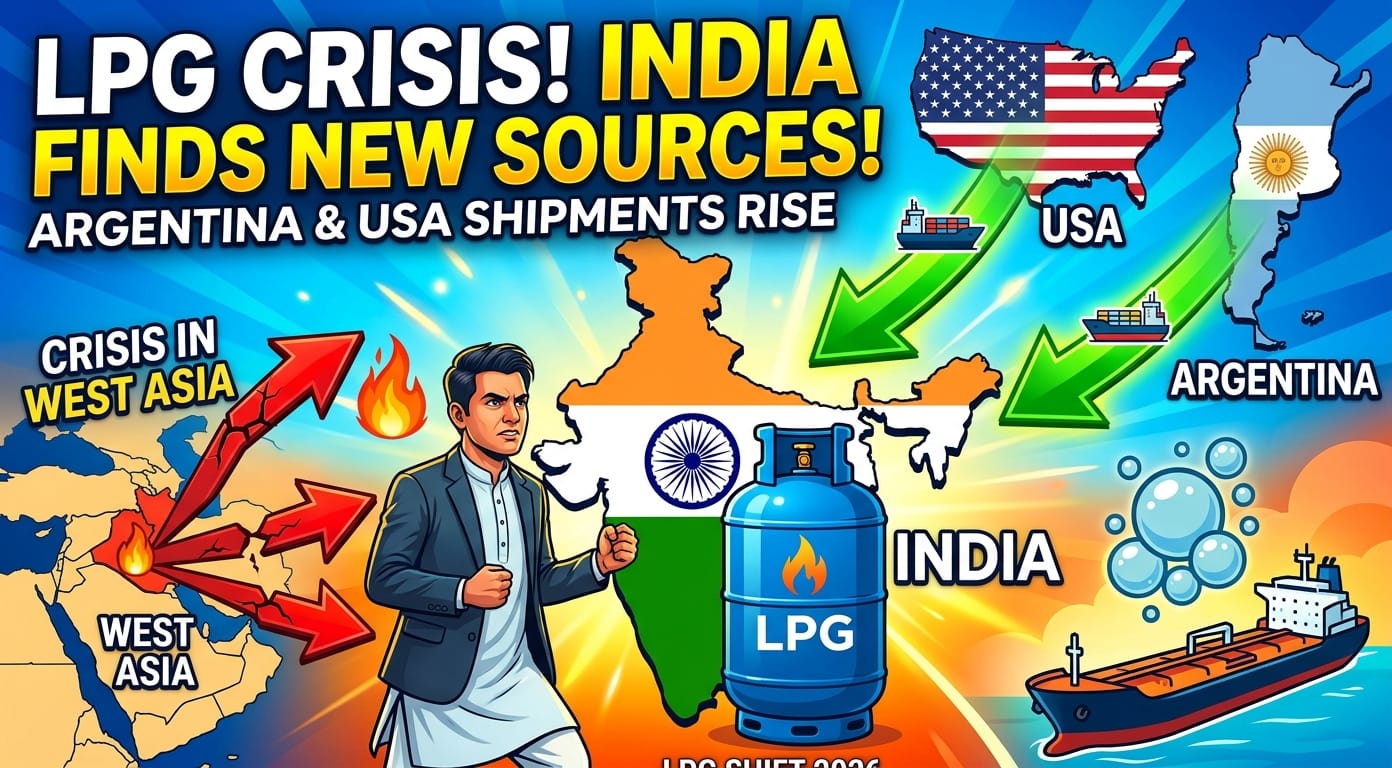
The government is stepping up efforts to find alternative sources of LPG due to the conflict in West Asia, which is affecting existing energy routes and creating fuel shortages across several southern nations. In recent days, the government has expanded its efforts to identify reliable suppliers, and new shipments from both Argentina and the United States are now expected.
According to officials familiar with the matter, one shipment from the US recently reached the Mangaluru port, while another cargo arrived from Argentina earlier this month. This marks a growing move by India to diversify its LPG supply sources and maintain stability in the domestic market.
Argentina, in particular, has emerged as an unexpected but significant new partner in this supply chain shift. The South American nation exported 50,000 tonnes of LPG to India in the first three months of 2026 — more than double the 22,000 tonnes it supplied during the entire year of 2025. Nearly 39,000 tonnes were shipped from the Port of Bahía Blanca before the recent conflict in West Asia, and an additional 11,000-tonne cargo departed on March 5.
Argentina’s sharp increase in exports is supported by a consistent rise in LPG production from its natural gas reserves. The country produced 259,000 tonnes of LPG in January 2026, according to government data. Annual production stood at 2.63 million tonnes in 2025, slightly up from 2.6 million tonnes in 2024.
India’s oil marketing companies and the Petroleum Ministry have been closely monitoring disruptions in supply since the escalation of the West Asia conflict, which has increased freight rates and restricted shipments from several key oil-producing nations.
Securing cargoes from emerging suppliers like Argentina and the United States is part of a broader strategy to prevent shortages and manage price volatility in the domestic LPG market, which serves millions of Indian households. Industry officials said that India’s early sourcing actions have helped limit import delays and stabilize delivery schedules across coastal refineries and bottling plants.
Argentina’s role in India’s energy framework is expected to grow further this year as Buenos Aires commissions a new natural gas liquids fractionation unit at its Bahía Blanca processing complex in 2026. The project will boost export capacity and allow Argentina to target Indian and broader Asian markets more aggressively.
This rise of the South American nation coincides with India’s push to develop geographically diverse and politically stable sources of petroleum and gas imports.
The growing trade relationship between India and Argentina further strengthens this energy cooperation. Bilateral trade between the two countries reached $6.34 billion between January and November 2025, marking a year-on-year increase of nearly 37%. India has now become Argentina’s fifth-largest trading partner and export destination.
The trade basket continues to be dominated by agricultural and food products — particularly soybean and sunflower oils — but the recent inclusion of hydrocarbons and critical minerals signals a deepening strategic partnership. Agreements between ONGC Videsh Ltd and Argentine oil firm YPF, signed in 2023, have laid the foundation for oil and gas collaboration. In addition, India’s state-owned company Khanij Bidesh India Ltd (KABIL) signed a landmark lithium exploration agreement in Argentina in 2024, securing rights to five blocks in the Catamarca province.
The latest imports of LPG from Argentina and the US highlight how India’s energy planners are responding swiftly to external shocks by diversifying sources of supply. As war-related disruptions in West Asian energy flows continue to impact global trade, New Delhi’s flexibility in finding new suppliers has become crucial to ensuring domestic energy security.
With both Argentina and the US scaling up their hydrocarbon exports, India’s policy decisions today could shape a more stable and diversified ecosystem for LNG and LPG imports in the coming years — safeguarding consumers and supporting long-term energy independence goals.