As tensions in West Asia shut down the Strait of Hormuz, India’s energy system has come under pressure, but the government has moved quickly to reassure citizens that there is no shortage of fuel or cooking gas. The closure of this key shipping route has disrupted crude‑oil and gas flows from the Middle East, which normally account for around half of India’s crude imports and a large share of its LNG and LPG shipments.
In response, the Ministry of Petroleum and Natural Gas has stressed that refineries are running at high capacity, crude inventories are adequate, and stocks of petrol and diesel remain sufficient nationwide.
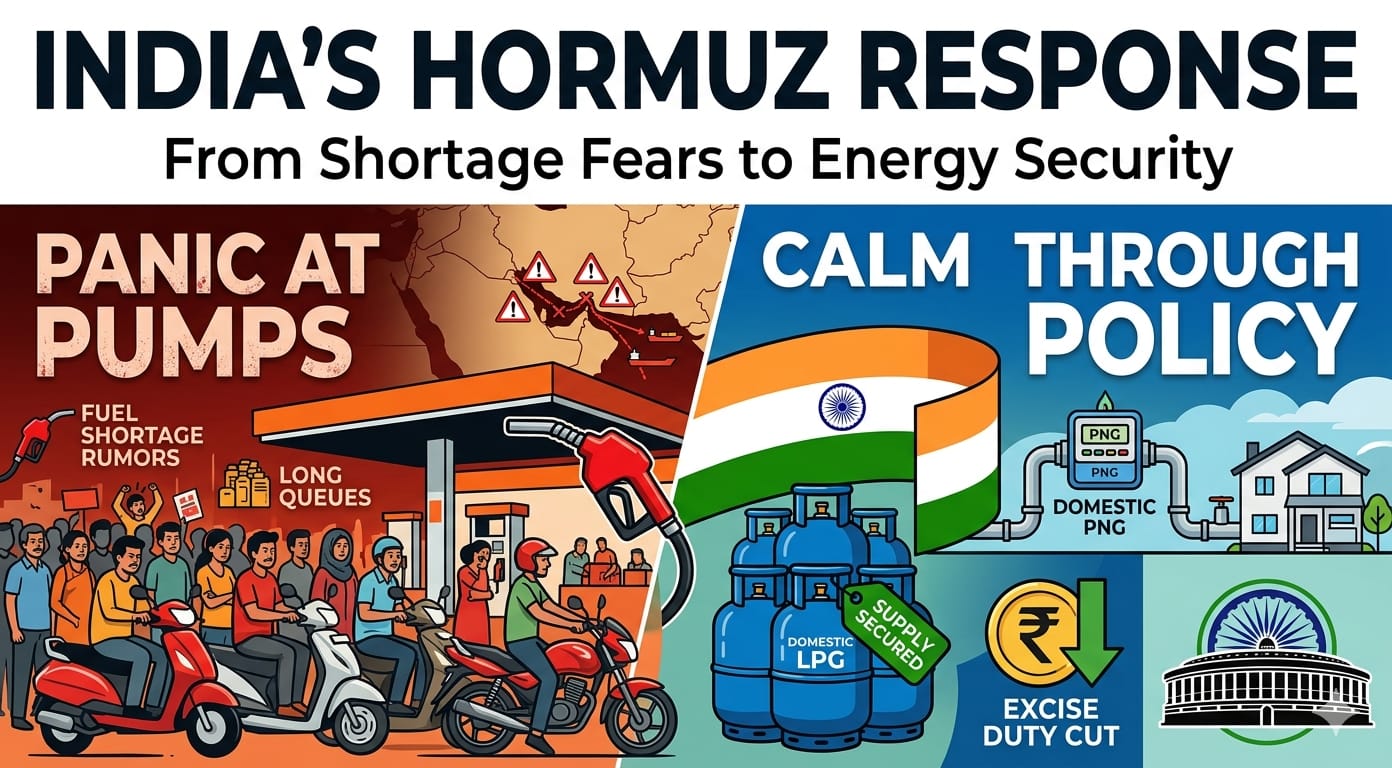
In the first phase of the crisis, rumours about possible shortages led to temporary spikes in demand, with some retail outlets in a few states reporting unusually long queues and heavy crowding at petrol pumps.
The ministry clarified that these episodes were driven by panic buying rather than any structural shortfall, and reiterated that there are adequate stocks of petrol and diesel available at all fuel stations across the country. To further ease pressure on the system, the government has cut the excise duty on petrol by ₹10 per litre and removed the excise duty on diesel entirely, effectively bringing the duty on diesel to zero.
At the same time, to discourage exports that could drain domestic supplies, the Centre has imposed an export levy of ₹21.50 per litre on diesel and ₹29.50 per litre on aviation turbine fuel (ATF).
Parallel to the fuel measures, the government has tightened its grip on the gas and LPG supply chain to protect households and essential services. Supplies of piped natural gas (PNG) and compressed natural gas (CNG) have been prioritised and kept at 100 per cent allocation, while industrial and commercial users are being supplied at about 80 per cent of their average consumption.
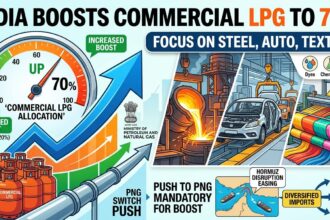
Fertiliser plants, which are critical for food security, are receiving roughly 70–75 per cent of their usual gas supply, with the government arranging additional LNG cargoes from alternate sources to cover the gap. In parallel, the expansion of city gas distribution networks is being fast‑tracked by streamlining approvals and pushing a shift from LPG to piped natural gas (PNG), which is seen as a more efficient and stable option for urban households.
In the LPG segment, the impact of the geopolitical situation has been visible, yet the government says deliveries have remained normal without any reported nationwide shortages. Daily refill deliveries have consistently exceeded 54–55 lakh cylinders, and the ministry has tightened checks to curb diversion and black‑marketing of cylinders.
Commercial LPG supply, which had been throttled during the initial phase of the crisis, is now being gradually restored to around 70 per cent of pre‑crisis levels, with priority given to hotels, restaurants, food‑service outlets and key industries. The government has also increased kerosene allocations to states and stepped up enforcement, conducting about 2,900 raids and seizing around 1,000 cylinders in recent weeks to crack down on hoarding.
To support the shift away from cylinder‑based cooking, the Centre has highlighted that more than 2.9 lakh new PNG gas connections were added in just the month of March 2026, easing pressure on LPG stocks.Companies such as Indraprastha Gas, Mahanagar Gas, GAIL Gas and BPCL are offering incentives to households to switch to piped natural gas, and a small but notable number of users have already surrendered their LPG connections in favour of PNG. States have been directed to step up daily monitoring, hold regular briefings, counter misinformation on social media, and fast‑track clearances for gas‑infrastructure projects.
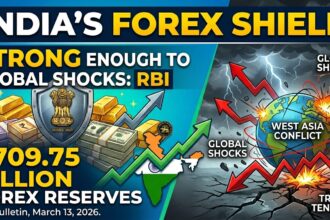
Through all these steps, the government is trying to strike a delicate balance: keeping the pumps and gas chains running smoothly, insulating households from the worst shocks of the Hormuz disruption, and convincing the public that there is no need for panic buying of petrol, diesel or LPG. Whether the Strait of Hormuz remains closed for weeks or longer, officials say, India’s current stock buffers, diversified import sources and domestic policy measures should be enough to safeguard essential energy supplies in the near term.