Rahul Gandhi’s China-centric jibe meets a new reality as Apple’s supply chain quietly spreads across eight states in India with 40 suppliers of components now in the country.
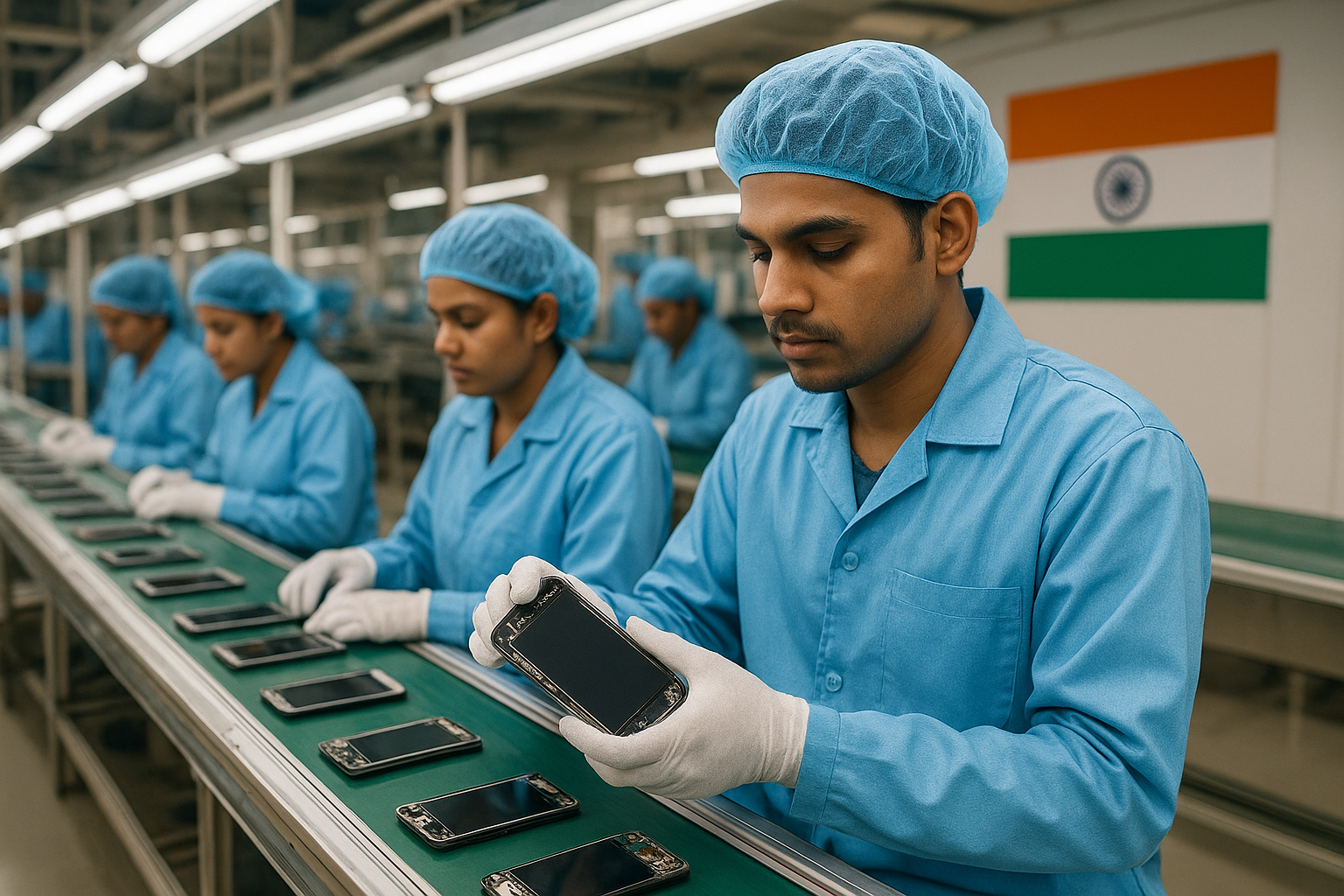
For years, the image of Indian electronics plants as glorified screwdriver shops was not entirely wrong: The high-value components, precision tooling and critical sub-assemblies mostly came from China and East Asia, while Indian workers tightened the last few screws. But as Apple’s India story enters a new chapter, that punchline is beginning to look seriously outdated.
Apple’s India journey genuinely started with assembly lines, first in Tamil Nadu and then in Karnataka, where contract manufacturers like Foxconn and Tata Electronics began putting together iPhones for both export and domestic sale. That narrow footprint fed the “we only assemble” narrative that Rahul Gandhi weaponised in his critique of Make in India, arguing that the profits and real value still sat in Chinese factories. Although, in his rhetoric, he chose to ignore the fact that Congress lead UPA surrendered India’s manufacturing potential to China and his own economic advisors have always been advocates of services over manufacturing.
Yet, quietly and deliberately, Apple has shifted gears: Its manufacturing web now stretches across eight Indian states with more than 40 suppliers plugged into its global supply chain, a scale and spread that simply did not exist a few years ago.
The new Apple map of India reads like a supply-chain atlas: beyond the original hubs in Karnataka and Tamil Nadu, Apple-linked firms are now operating in Gujarat, Kerala, Haryana, Telangana, Maharashtra and Uttar Pradesh. These are not just warehouses or assembly sheds; they are plants making components, sub-assemblies and even specialised equipment for Apple’s production lines—activities that add real value before a single iPhone is snapped together.
Industry reports point to a growing cast of Indian names—Hindalco in Gujarat, Wipro PARI and Bharat Forge in Maharashtra, SFO Technologies in Kerala, VVDN Technologies in Haryana, Aequs in Karnataka—joining the Apple ecosystem as suppliers of enclosures, precision mechanical parts, electronics and automation gear.
This is where Rahul Gandhi’s claim that “all components are made in China” collides with the facts on the ground. No one denies that India still imports a large numbers of chips, displays and advanced modules, but when more than 40 suppliers across eight states are manufacturing parts and equipment for Apple, the notion that India is doing only final assembly falls apart.
These Indian facilities feed not just the iPhone plants in Sriperumbudur and Hosur, but in some cases Apple’s global supply network itself, meaning components designed, machined and tested in India end up in devices sold around the world.
This deeper localisation also changes the economic story. Every time a new domestic firm replaces an imported component, a slice of the iPhone’s bill of materials shifts from Chinese factories to Indian ones, bringing with it skilled jobs, higher-value capabilities and long-term investment in tooling and R&D.
Apple’s Indian vendors are ramping up production of enclosures, mechanical assemblies and display-related parts—segments that together account for a significant chunk of a device’s cost, making the move from low-end assembly towards real manufacturing unmistakable. The government’s production-linked incentive schemes may be contested in politics, but they are clearly nudging global giants to bet big on local supply chains rather than treating India purely as an end-of-line workshop.
Of course, the story is not finished: India still depends heavily on imported semiconductors and advanced components, and catching up with China’s scale will take years of consistent policy, infrastructure and skill-building. Yet the evidence from Apple’s expanding supplier base makes one thing clear—India is no longer just the place where phones are snapped together for China’s profit; it is steadily becoming a place where more and more of those phones are truly made. Rahul Gandhi’s quip captured yesterday’s problem; Apple’s 40 suppliers across eight states are a glimpse of tomorrow’s Make in India reality.