
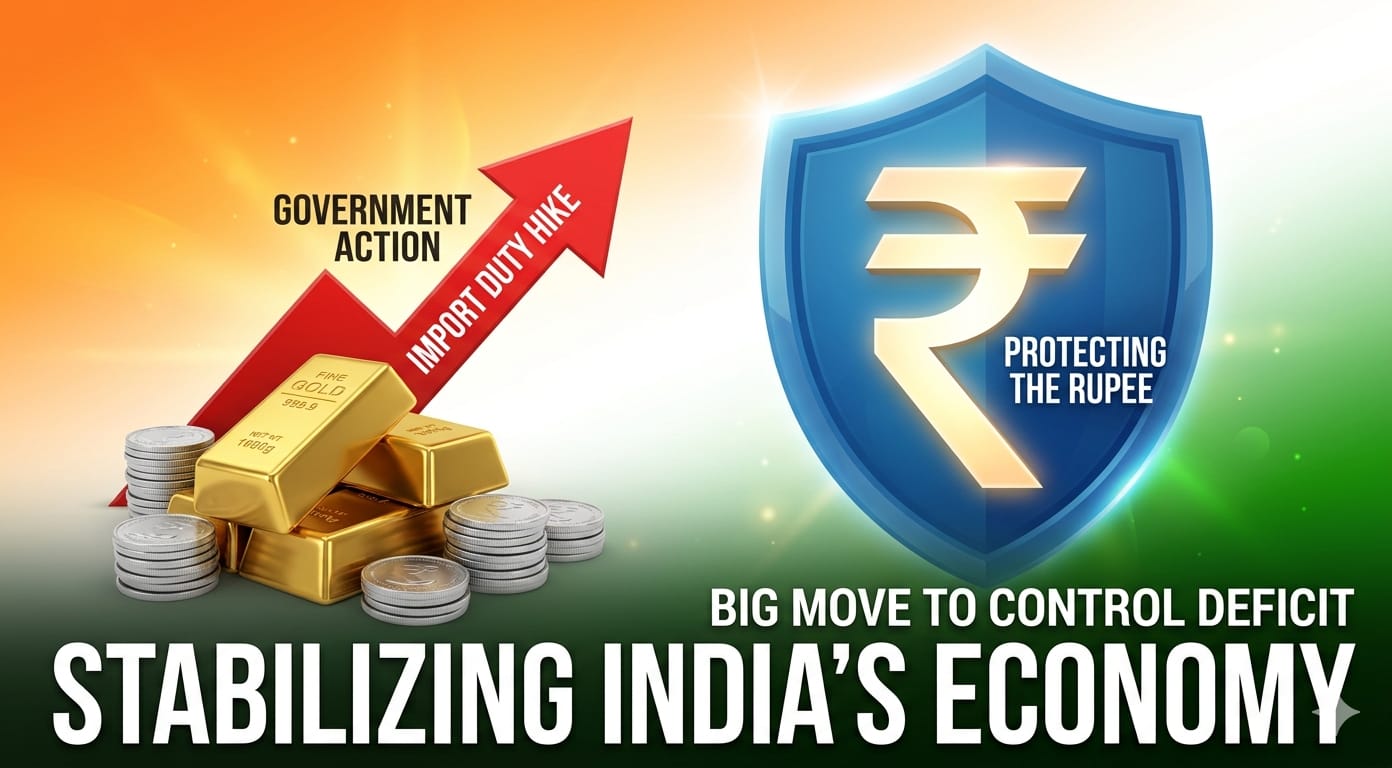
The government has taken a strong step to protect its economy by increasing the import duty on gold and silver from 6% to 15%. Since India is one of the largest consumers of gold globally, heavy imports of the metal put a significant burden on foreign exchange reserves and widen the trade deficit. By making gold and silver more expensive through higher duties, the government aims to reduce demand for imports and stabilize the rupee.
The reason behind this move is deeply connected to how India’s economy functions. Gold is not just a luxury item in India; it is culturally significant and widely used for savings and investments. However, unlike other investments, gold does not generate income or contribute directly to economic productivity.
When people buy imported gold, it increases the outflow of dollars from the country, weakening the rupee. At a time when global uncertainties, especially due to tensions in West Asia, are affecting oil prices and trade flows, India’s import bill is already under pressure. Higher gold imports only add to this stress.
Prime Minister Narendra Modi’s recent appeal for austerity reflects the seriousness of the situation. By encouraging people to reduce gold purchases and fuel consumption, and by promoting work-from-home and carpooling, the government is trying to reduce overall import dependence. Fuel and gold are among the biggest contributors to India’s import bill, so even small changes in consumption patterns can have a large impact on the economy.
The expected immediate effect of this policy is a drop in demand for gold and silver in the formal market due to higher prices. This could help reduce imports and ease pressure on the current account deficit. A lower deficit generally supports the rupee, as it reduces the demand for foreign currency. This is why the Chief Economic Advisor has emphasized that stabilizing the rupee is one of the most important economic priorities right now.
However, this move also comes with risks. Industry experts have raised concerns that higher import duties could revive gold smuggling in India. In the past, whenever duties were increased sharply, illegal channels for bringing gold into the country became more active. Smuggled gold does not contribute to tax revenues and creates parallel markets, which can distort prices and harm legitimate businesses. After duties were reduced in 2024, smuggling had declined, but this new hike may reverse that trend.
Looking ahead, the long-term impact of this decision will depend on how consumers and markets respond. If people shift their investments from gold to financial instruments like mutual funds, bonds, or equities, it could benefit the broader economy by channeling savings into productive sectors. On the other hand, if demand remains strong and moves to informal channels, the policy may not achieve its full objective.
There is also a broader global context to consider. As the global economic order shifts and geopolitical tensions continue, countries like India are focusing more on economic stability and self-reliance. Measures like import duty hikes are part of a larger strategy to reduce vulnerability to external shocks. However, such steps need to be balanced carefully to avoid unintended consequences like inflation or black market growth.
The government’s decision to raise gold and silver import duties is a strategic move aimed at protecting the rupee and controlling the trade deficit during a period of economic uncertainty. While the policy may help in the short term, its success will depend on effective enforcement, consumer behavior, and broader economic conditions in the coming months.

